Living walls offer far more than visual appeal. Also known as “green walls” or “vertical greenery”, they introduce planting into buildings and urban spaces where conventional landscaping may not be practical.
As well as improving the appearance of buildings, living walls support wider sustainability and urban greening objectives by introducing more vegetation into densely developed environments. They also provide environmental and ecological benefits, including helping to improve air quality, moderate urban temperatures, and support biodiversity, while creating more engaging spaces for the people who use them.
In this guide, we explore the key benefits of living walls and how they support people, buildings, and the wider environment.
Contents
- The Key Benefits of Living Walls
- Environmental Benefits of Living Walls
- Ecological Benefits of Living Walls
- Health & Wellbeing Benefits of Living Walls
- Aesthetic Benefits of Living Walls
- Economic & Commercial Benefits of Living Walls
- Business Benefits of Living Walls
- Are Living Walls Environmentally Friendly?
- FAQs
The Key Benefits of Living Walls
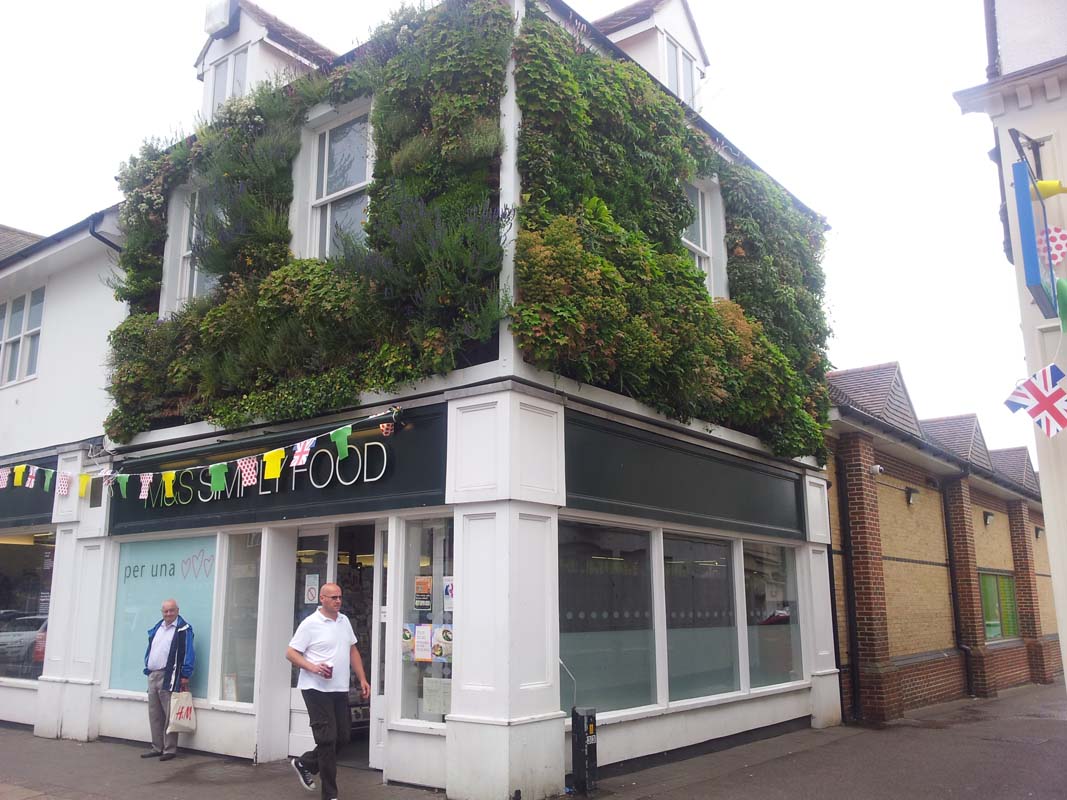
Living walls provide a combination of environmental, ecological, and practical benefits, including:
- Supporting sustainability and urban greening objectives
- Introducing greenery where conventional landscaping is limited
- Improving air quality
- Helping to reduce urban heat
- Supporting biodiversity and wildlife
- Helping to manage rainwater and surface runoff
- Improving building performance
- Reducing noise in some environments
- Supporting health and wellbeing
- Enhancing the appearance of buildings and public spaces
Environmental Benefits of Living Walls
One of the biggest reasons for introducing living walls into urban environments is their ability to address some of the environmental challenges associated with dense development.
Improve Air Quality
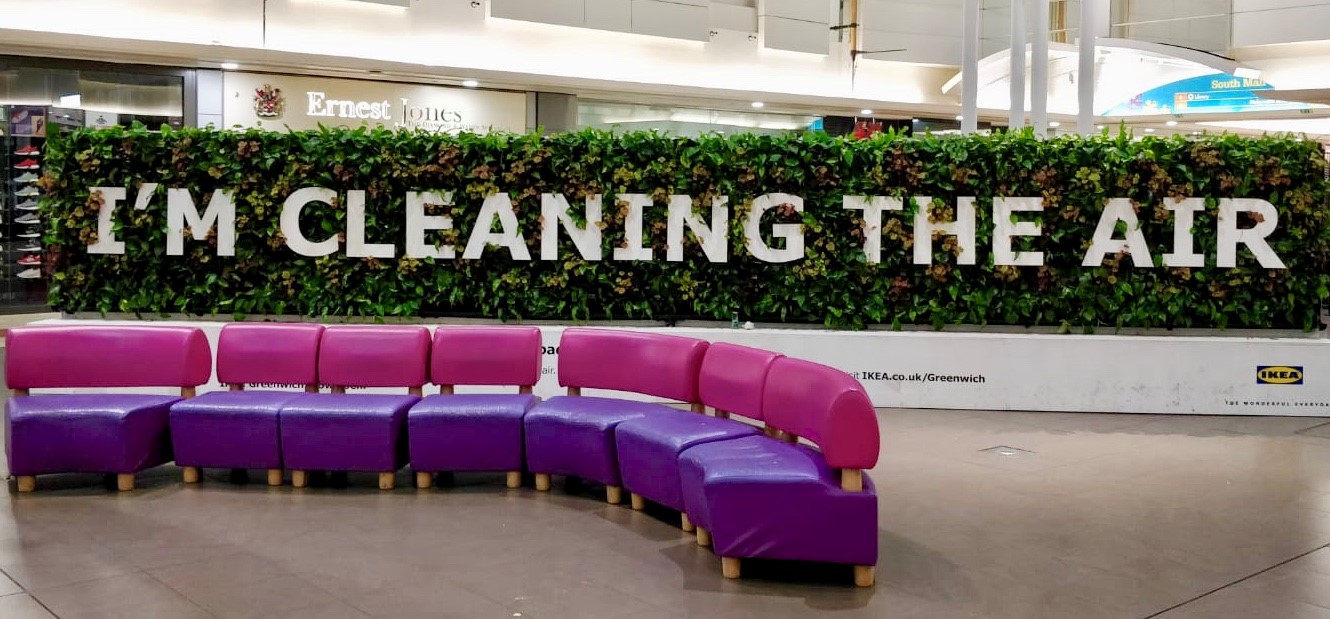
Plants help capture airborne particles and pollutants on their leaves, while the vegetation and growing medium also influence the movement of air around a building.
In urban environments, living walls contribute to better local air quality, particularly where they are positioned close to pollution sources such as busy roads and pedestrian areas. Research into green walls has found evidence of reductions in particulate pollution, depending on factors including plant density, wall design, location, and airflow.
Reduce the Urban Heat Island Effect
Cities are becoming significantly hotter than surrounding rural areas because roads, pavements, and buildings absorb and retain heat. For properties like data centres, managing heat and energy consumption is a particularly important consideration.
Living walls can help moderate higher temperatures through a combination of shading, evapotranspiration, and the additional layer of vegetation between the building and the surrounding environment. Research reviews have found that green walls produce measurable cooling effects, depending on the system, climate, orientation, and surrounding conditions.
Reduce Heat Loss & Energy Use
In research carried out by Scotscape with the University of Plymouth in 2021, retrofitting an external living wall to a pre-1970s masonry cavity wall building reduced heat loss through the wall by 31.4% compared with the bare wall.
Other research has also found that vegetated walls can reduce heat transfer compared with bare walls.
Support Biodiversity
Living walls provide vertical habitat for insects, pollinators and birds, while other forms of vertical urban greening extend this benefit into streets and other spaces where conventional planting is difficult. For example, Scotscape's LivingPillars® are designed to introduce planting to street-lighting columns, helping connect existing green spaces and create biodiversity corridors in built-up areas.
Biodiversity performance varies significantly according to plant selection and substrate, highlighting the importance of careful design rather than treating every green wall as equally beneficial for wildlife.
Help Manage Rainwater
Vegetation and growing media can intercept some rainfall, allowing water to be temporarily retained before it evaporates, is absorbed by the plants, or passes through the system. This helps slow the movement of water into drainage systems during rainfall events.
Some living wall systems are also designed to incorporate water collection or rainwater harvesting, depending on the specification. Research into vertical greening systems has identified their potential contribution to stormwater management.
Reduce Noise Pollution
The combination of vegetation and growing media absorbs, deflects, and diffuses some sound, helping to reduce noise levels in certain environments. Recent research has found evidence of noise reduction from green walls, depending on factors including wall construction, substrate, vegetation density and the characteristics of the surrounding space.
This makes living walls particularly useful around busy roads, commercial buildings and other noisy urban environments.
Ecological Benefits of Living Walls
The ecological benefits of living walls go beyond simply adding more plants to a building.
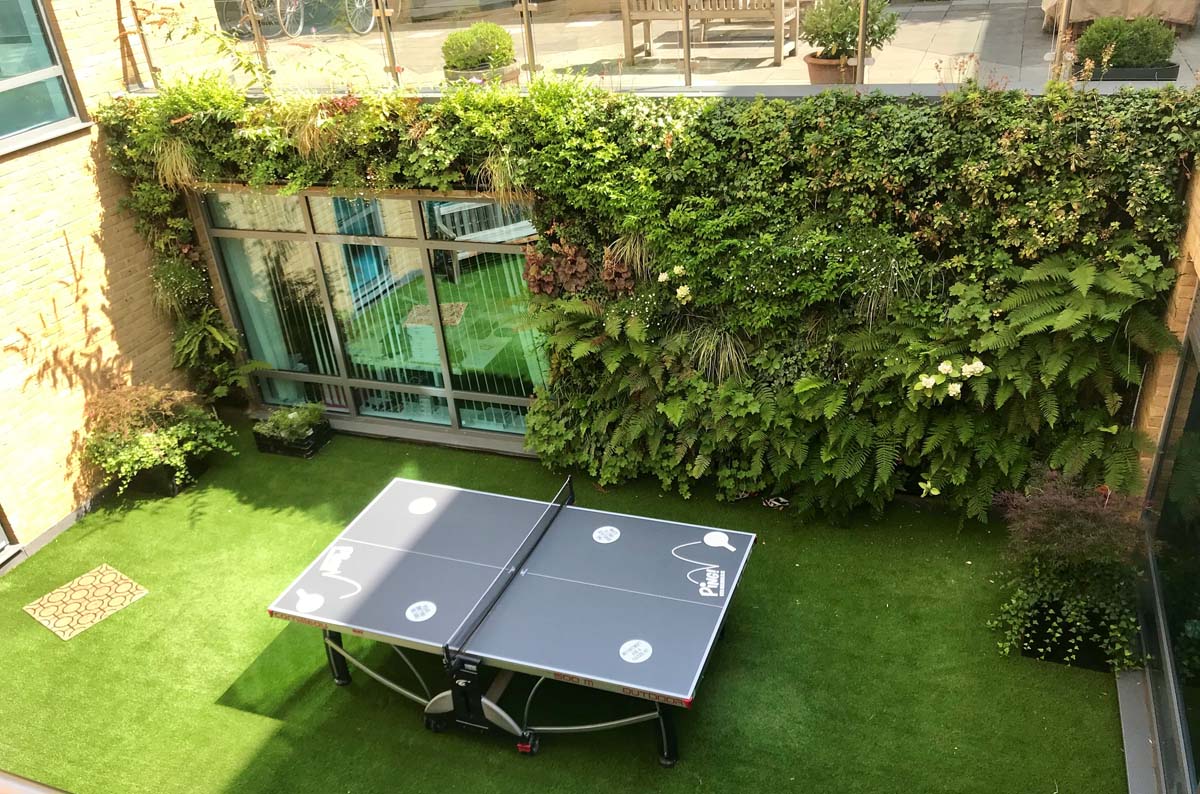
In heavily developed areas, vertical greenery creates habitats where horizontal space is limited. A thoughtfully designed living wall supports insects and pollinators, provides shelter for wildlife, and contributes to a more diverse urban environment.
Create Habitat in Built-Up Areas
Living walls transform otherwise hard, sterile surfaces into planted areas that provide resources for wildlife.
The ecological value will depend heavily on the plants used, their diversity, and the wider surroundings. Choosing suitable species and incorporating features (such as insect or bird habitats) helps increase the value of the wall for wildlife.
Support Pollinators
Flowering plants provide nectar and pollen for bees, butterflies, and other pollinating insects.
A living wall designed with pollinators in mind can therefore form part of a wider network of planted spaces across a town or city. Using a suitable range of plants also provides resources across different seasons rather than concentrating flowering into a short period.
Improve Urban Green Connectivity
Urban wildlife struggles when green spaces are isolated from one another. Living walls cannot replace parks or natural habitats, but they add smaller pockets of vegetation between existing green spaces.
LivingPillars® introduce additional planted areas into streets, helping connect existing green spaces and extend habitat through the urban environment.
This contributes to a more connected urban green infrastructure network, particularly in areas where opportunities for traditional planting are limited.
Health & Wellbeing Benefits of Living Walls
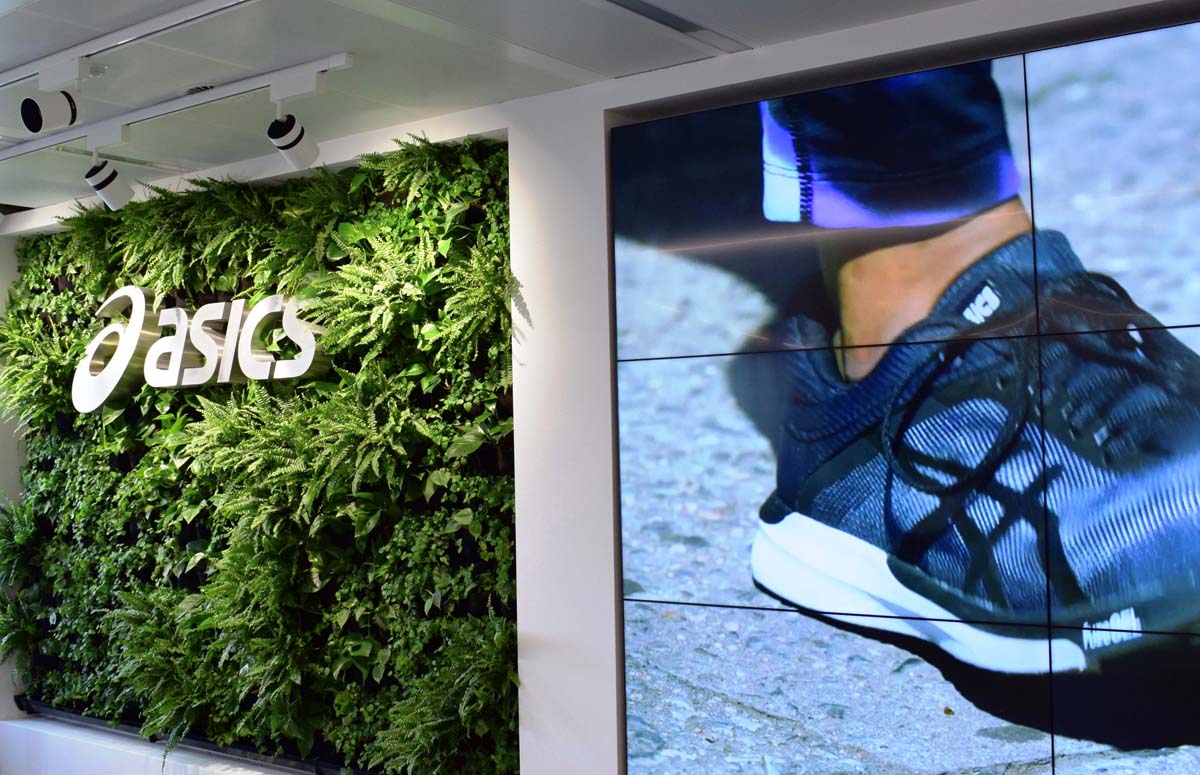
The benefits of living walls are not limited to the environment. Bringing more greenery into the places where people live and work also supports health and wellbeing.
Reduce Stress & Improve Wellbeing
Research into green walls and their relationship with wellbeing is still developing, but incorporating vegetation into buildings is widely associated with the principles of biophilic design and creating more restorative environments.
For offices, hospitality environments, schools, and other commercial interiors, living walls provide an immediate connection to nature that would otherwise be difficult to create.
Support Better Indoor Environments
Indoor living walls contribute to a more visually pleasant and engaging environment while helping to introduce natural elements into heavily built interiors.
The precise effects on indoor air quality, humidity, and thermal comfort are influenced by the living wall system and the wider building environment. However, carefully designed indoor planting can form an important part of a wider healthy-building strategy.
Support Productivity & Engagement
Biophilic environments also influence how people experience workplaces and other commercial spaces. Natural elements make environments feel more welcoming and engaging, which is one reason living walls are increasingly used in offices, reception areas, hospitality venues, and shared spaces.
Aesthetic Benefits of Living Walls
One of the most obvious benefits of a living wall is its ability to transform a space visually.
Enhance Buildings & Public Spaces
Living walls add colour, texture, and natural variation to buildings that may otherwise be dominated by brick, concrete, glass, and other hard surfaces.
They can be used to soften large façades, brighten internal spaces, or turn an underused wall into a defining architectural feature.
Strengthen Biophilic Design
Biophilic design focuses on creating stronger connections between people and the natural world.
Living walls are a natural fit for this approach because they introduce living vegetation directly into the built environment. They are particularly effective in offices, hospitality venues, retail spaces, and residential developments where creating a visible connection to nature is a priority.
Create More Memorable Spaces
A well-designed living wall becomes a focal point that helps a building or place stand out.
For commercial properties, this makes entrances, receptions, communal areas, and public spaces more distinctive while contributing to a stronger overall sense of place.
Economic & Commercial Benefits of Living Walls
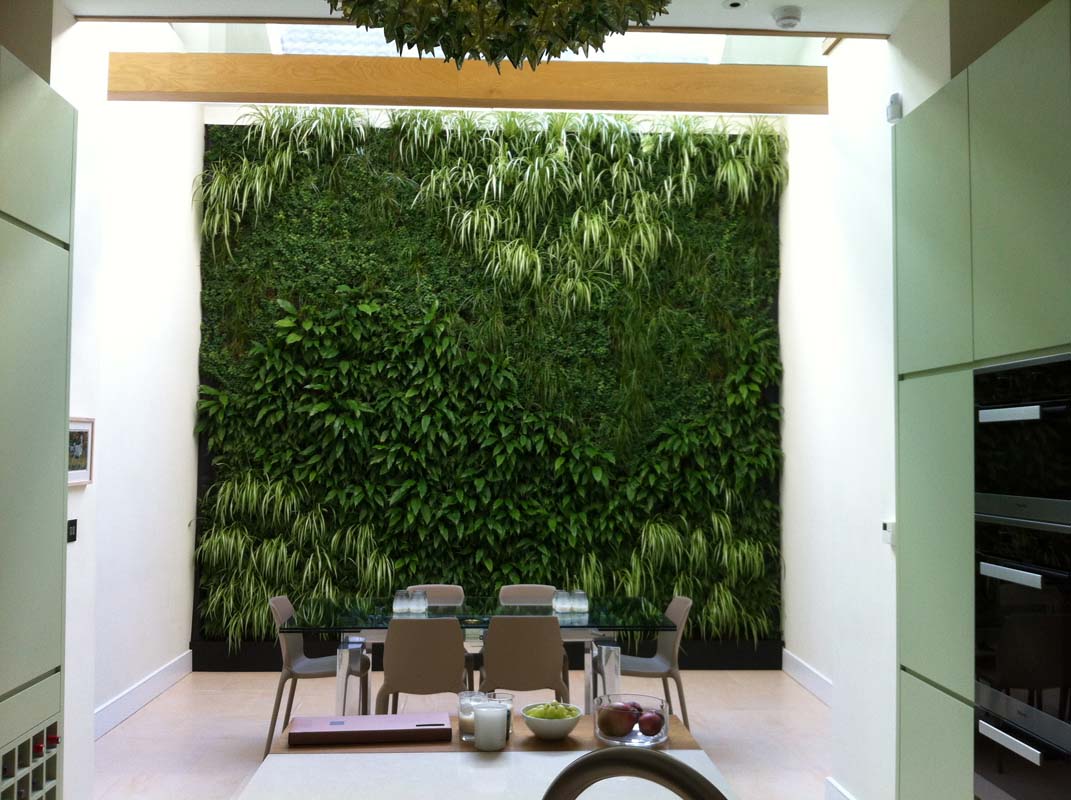
The value of living walls isn't purely environmental or aesthetic; they also contribute to wider commercial and property objectives.
Help Improve Building Performance
Where an external living wall contributes to thermal regulation and reduced heat transfer, it may help lower energy demand for heating and cooling.
The extent of any financial saving will depend on the building and the living wall system, so energy benefits should always be assessed as part of the wider project rather than assumed.
Protect Building Surfaces
External vegetation provides an additional layer between a building façade and elements such as direct sunlight, rain, and temperature fluctuations.
This may help reduce exposure to weathering, although the extent of any protective effect depends on the wall construction, system design, and maintenance regime.
Enhance Property Appeal
Green infrastructure makes buildings and developments more attractive to occupiers and prospective buyers.
Living walls help demonstrate a visible investment in sustainability and design, while creating a more appealing environment for people using the building.
Business Benefits of Living Walls
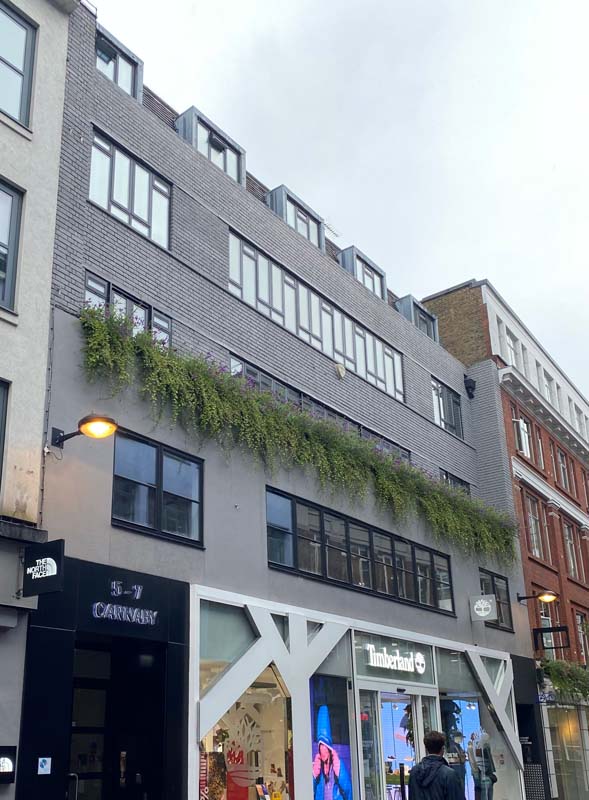
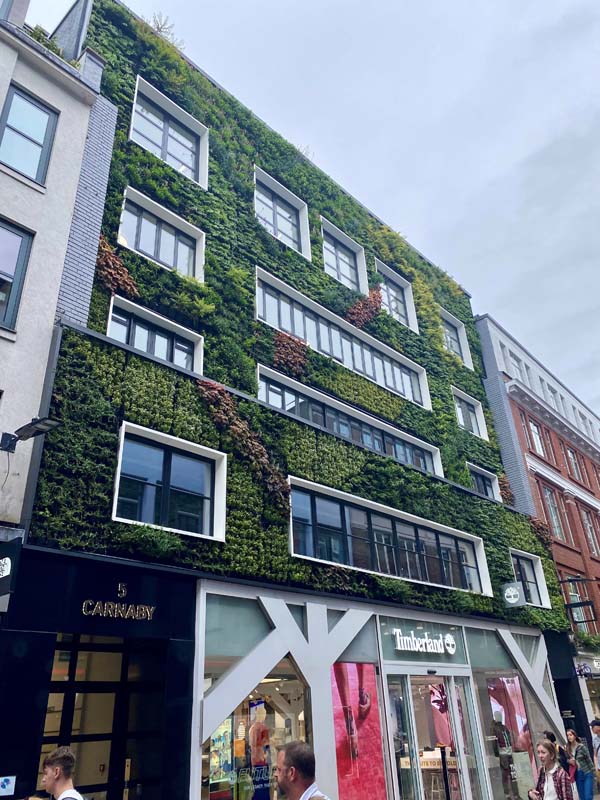
For businesses, living walls bring together environmental, wellbeing, design, and commercial benefits in one feature.
Support Sustainability & Urban Greening Objectives
Living walls contribute to wider sustainability and urban greening strategies, particularly on projects where there is limited space for conventional planting.
Depending on the project and local requirements, green infrastructure contributes towards planning, biodiversity, or ESG objectives. The role of a living wall should always be assessed against the specific requirements of the development rather than assumed to provide automatic compliance.
Create Better Working Environments
Indoor living walls help create workplaces that feel more natural, welcoming and engaging.
Combined with other biophilic design measures, they support the overall experience of employees and visitors while making better use of prominent internal spaces.
Strengthen Brand Perception
A well-maintained living wall is highly visible. For businesses, this creates an opportunity to communicate a commitment to design and the quality of the environment.
This is particularly valuable for offices, retail spaces, hospitality venues, and other customer-facing environments.
Attract Customers & Visitors
Living walls create distinctive spaces that encourage people to stop, explore, and engage with their surroundings.
In retail, hospitality, and other public-facing settings, a striking green wall becomes part of the customer experience rather than simply another decorative feature.
Are Living Walls Environmentally Friendly?
The overall environmental performance of a living wall depends on factors including the system used, the materials involved, irrigation requirements, plant selection, maintenance, and lifespan.
2026 research into the life cycle performance of green wall systems highlights the importance of looking beyond the visible benefits and considering the environmental impacts of the system throughout its life.
The most effective approach is therefore to specify a living wall that is appropriate for its location, designed for long-term plant health, and supported by an appropriate irrigation and maintenance strategy.
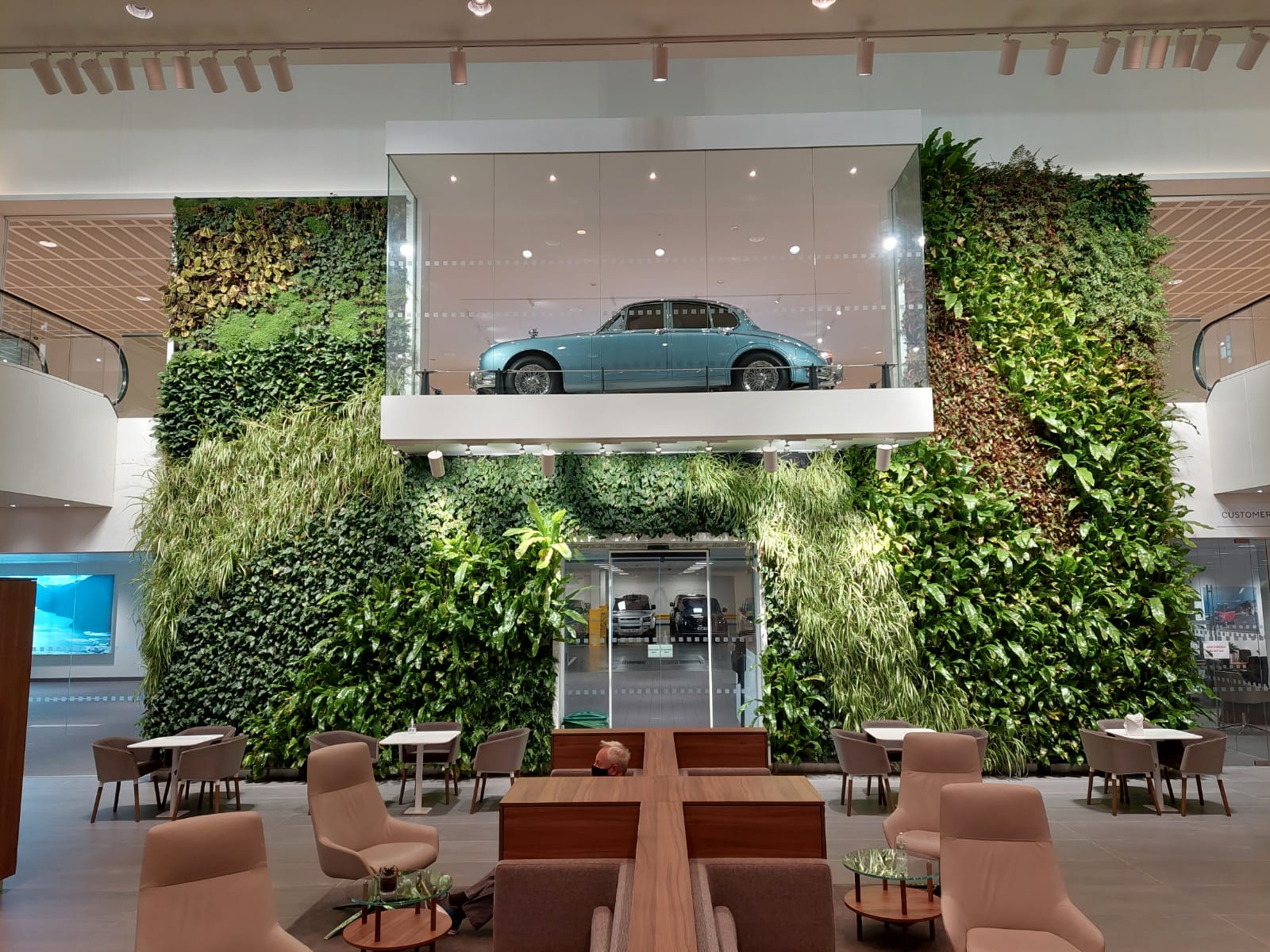
Bring the Benefits of Living Walls to Your Project
Living walls can do much more than transform the appearance of a building. With the right design, they improve the experience of the people using a space and contribute to wider environmental and sustainability objectives.
At Scotscape, our team designs, installs, and maintains living walls for a wide range of internal and external applications.
Talk to us about your living wall project
FAQs
-
What are the main benefits of living walls?
The main benefits of living walls include improved air quality, reduced urban heat, increased biodiversity, potential thermal and acoustic benefits, improved wellbeing, and enhanced visual appeal. They also support wider sustainability and urban greening objectives.
-
Do living walls improve air quality?
Living wall vegetation can capture some airborne particles and influence local pollutant levels. The effectiveness relies on factors such as plant density, system design, location, and airflow, so living walls should form part of a broader approach to improving air quality.
-
Can living walls reduce the urban heat island effect?
Yes, living walls can help moderate temperatures through shading and evapotranspiration, potentially reducing surface and local air temperatures. The scale of the effect varies according to climate, wall design, orientation, and surrounding conditions.
-
Do living walls support biodiversity?
They can. Living walls introduce additional vegetation and provide habitat, food, and shelter for insects, pollinators and other wildlife. Plant selection and wall design are particularly important when biodiversity is a key objective.
-
Are living walls suitable for existing buildings?
Yes, living walls can be installed on both new and existing buildings, including retrofit projects. However, the building structure, façade, access, irrigation requirements, and maintenance arrangements all need to be considered during design.


