Living walls, also known as green walls or vertical gardens, have become an increasingly popular feature in urban landscapes and residential homes.
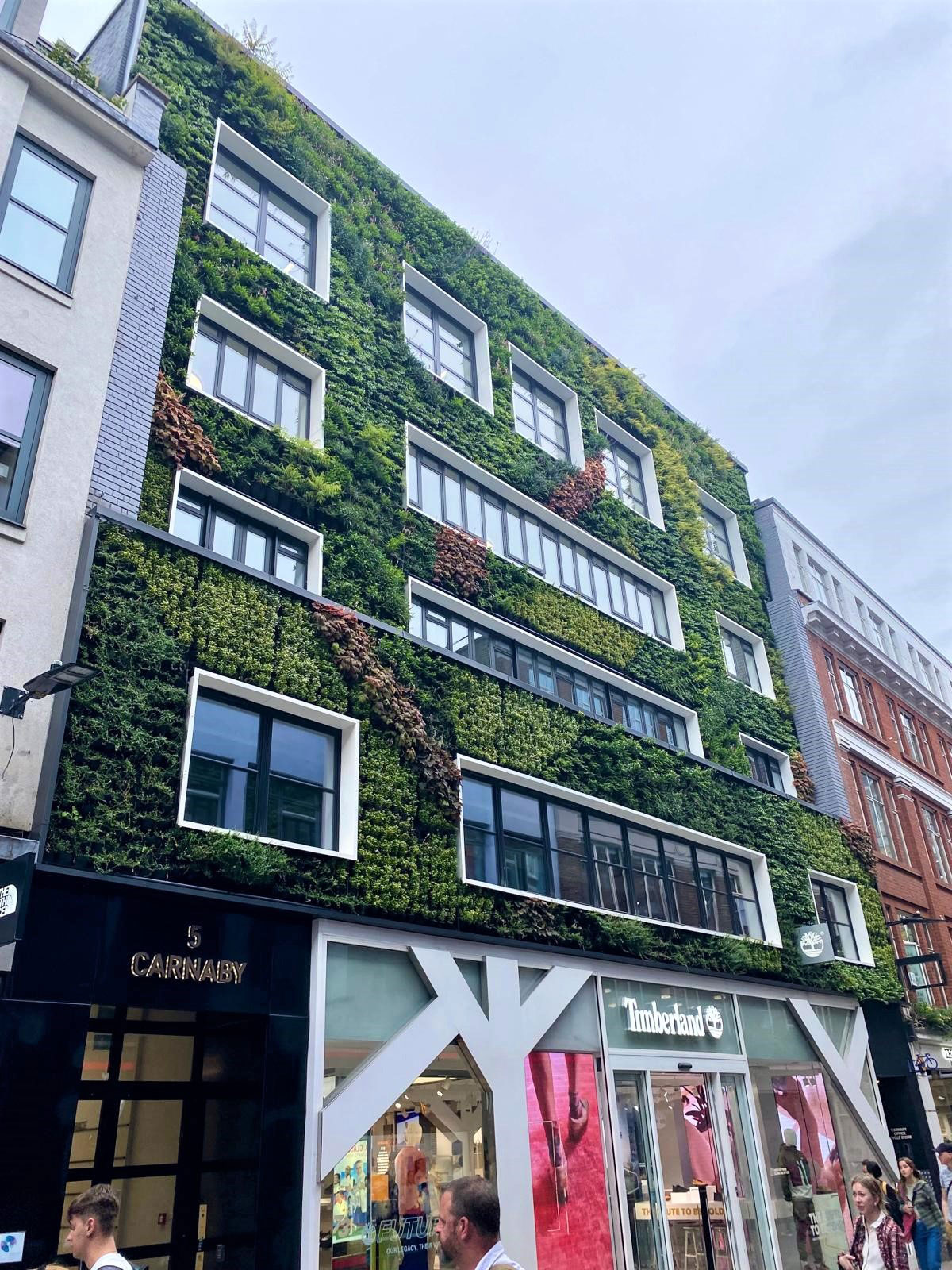
Beyond their visual appeal, living walls increase property value whilst providing significant environmental benefits such as improved air quality, noise reduction and, most importantly, enhanced biodiversity.
For developers and architects, living walls play a crucial role in meeting Biodiversity Net Gain (BNG) requirements, making them an attractive addition to new and existing developments.
Although the initial investment may seem significant, the long-term benefits—including energy savings, increased property value, and environmental impact—make living walls a worthwhile addition to any space.
Picture: Carnaby Street, London 2024
The Costs of a Living Wall
From simple DIY kits starting at just £50 to large, high-spec interior installations reaching over £1,500 per square metre, the variation is huge.
That’s because no two living walls are the same. The final cost depends on system type, size, location, height, access, irrigation, and maintenance requirements.
If you’re wondering what a living wall might cost for your project, read on—we’ll break it down so you can understand what affects pricing and where your budget might sit.
Factors Affecting the Cost of a Living Wall
The cost of a living wall varies based on multiple factors:
- System Type
Modular pre-grown, site-planted, hydroponic, semi-hydroponic or compost-based systems all have different price points. - Size and Scale
Although larger walls will benefit from economies of scale, often they are on commercial sites, which bring their own logistical and time-consuming challenges. - Plant Design
The design brief and plant availability will have an effect on cost. Interior plants are more expensive than exterior plants. - Location
Interior walls tend to be more expensive due to lighting requirements and irrigation challenges. - Height
Access equipment such as scaffolding, cherry pickers or scissor lifts will be required for installation and maintenance. - Irrigation & Drainage
Automated systems add to upfront costs but can lower the maintenance costs and risk of plant failure - Installation Complexity
Structural subframe requirements can influence costs. - Maintenance
Regularity of maintenance visits and subsequent costs will depend on plant choice and location
System Type
With over 50 different living wall systems available today, the choice is daunting! Choosing the right one depends on budget, project scale, location and maintenance requirements.
Broadly, living walls fall into two categories:
- Pre-grown panels/modules: Delivered ready-planted and installed directly onto the building.
- Site-planted systems: Plants are delivered and planted directly onto a pre-prepared framework or system that has been installed ‘on site’
These two categories can then be subdivided into 3 types;
- Hydroponic (no compost/soil)
- Semi-hydroponic (part compost/soil)
- Compost-based systems
It can be daunting when trying to decide which system is right for you. At Scotscape, we can offer a range of systems, including our semi-hydroponic fabric-based solution, designed for superior plant health and irrigation accessibility. This means we can also advise you on which is best for you, depending on your needs.
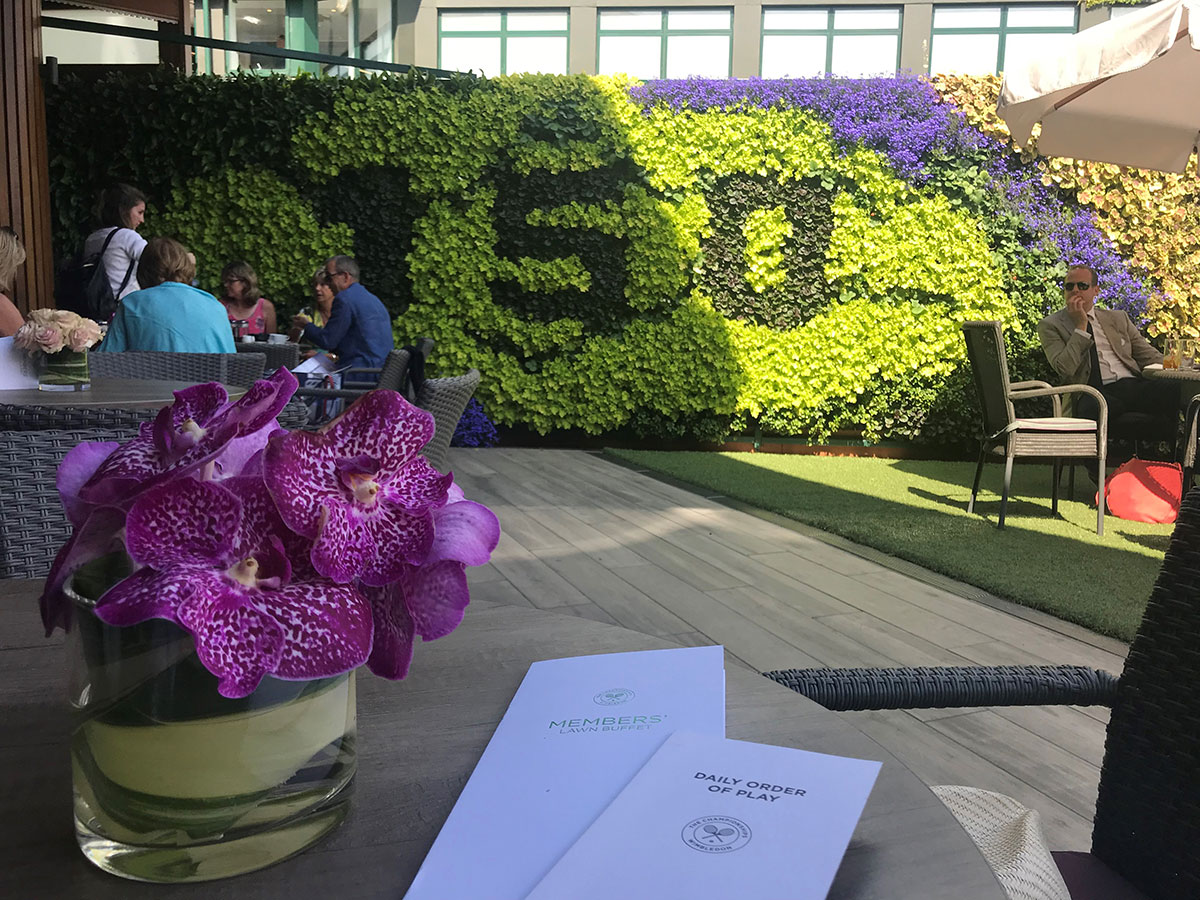
AELTC members enclosure 2017
Size and Scale
Living Walls come in all shapes and sizes. Economies of scale apply with walls typically over 100 m2. However, the type of access equipment used can counteract this saving.
Large, low-level walls that can be reached from ground level will offer the best value for money from an installation and maintenance perspective.

Skygarden, London 2025
Plant Design
A well-designed living wall is more than just greenery—it’s a lifeline for biodiversity and human well-being!
Thoughtful plant selection ensures longevity, with resilient species providing year-round food for pollinators.
Vibrant colours and textures offer visual delight, uplifting moods and reducing stress in urban spaces.
Small trees and large shrubs can be used to increase the foliage cover to help attract invertebrates and nesting birds
The right plants don’t just beautify; they clean the air, absorbing pollution and improving health.

Portakabin office perennial planting 2020
Location
Interior Living Walls tend to be at the higher end of the cost structure.
Not only are interior plants more expensive than exterior varieties, but you may also have to factor in interior lighting to ensure the health of the plants.
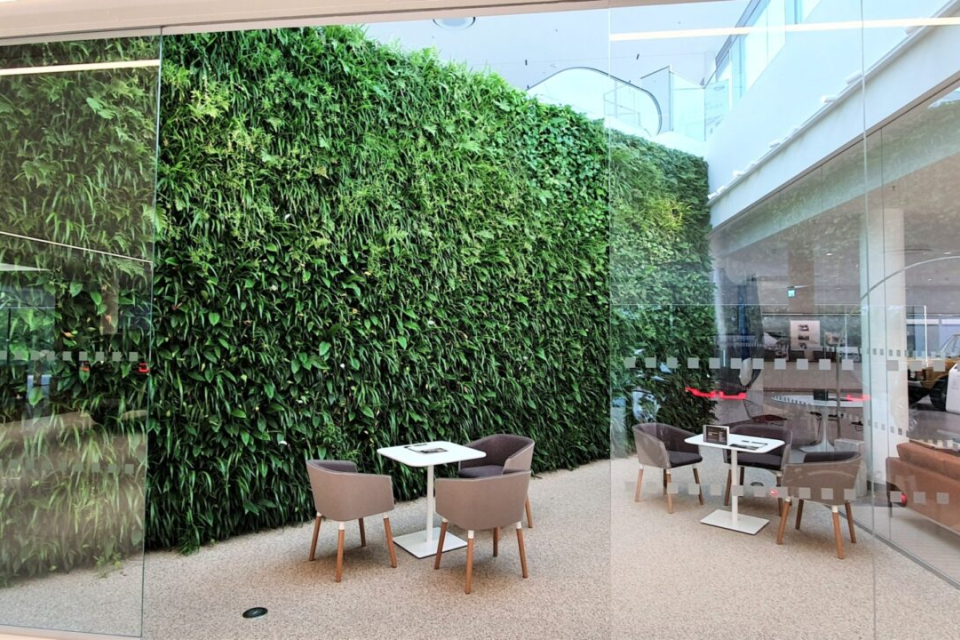
Irrigation systems need to be carefully planned as they navigate through the building. Recycling the surplus irrigation negates the need to install complex drainage systems.
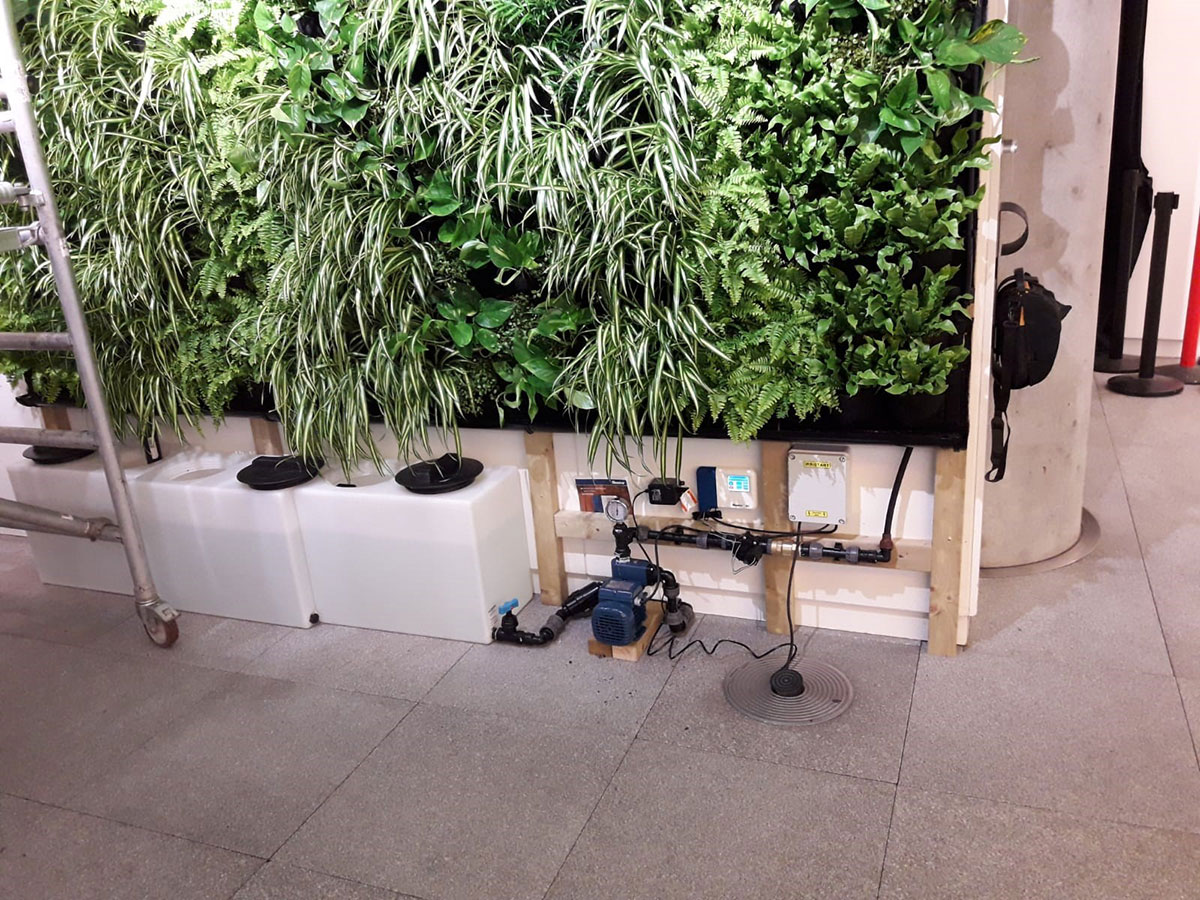
Re-circulating interior irrigation system
Height
If the living wall is installed over 2 metres, some form of mechanical equipment will be required.
Scaffolding is at the top end of access costs, but it reduces the time taken for installation as there is access to all parts of the wall at all times.
Scissor lifts provide great access with a decent area to load out plants, but you do require a solid base on which to place the lift.
Cherry pickers can reach awkward areas, but are slow and cannot carry many plants.

.jpg)
Team London Bridge 2019 under construction
Irrigation: The Lifeline of Living Walls
No matter which category or class, all living walls require a reliable irrigation system—they cannot survive on rainwater alone.
Due to the density of planting, very little rainwater reaches the substrate, making a well-designed irrigation system essential.
Living wall irrigation options include:
- Manual watering: Suitable for smaller, DIY installations but not practical for large-scale walls.
- Tap timers: Available at garden centres, these provide basic automation for small living walls.
- Fully automated systems: Typically featuring a tank, pump, with Wi-Fi connection and sensors in the substrate that monitor moisture levels and can call for irrigation as required.
We always recommend rainwater harvesting systems to maximise sustainability and efficiency.
Bio control management of pests and diseases can be carried out using the irrigation system, providing a considerable saving on the need to access the plants to carry out more conventional controls.

‘Skygarden’ irrigation system 2023
Installation Complexity
It is good practice to form a ventilated air gap between the rear of the LivingWall system and the building structure to remove any risk of damp. A galvanised steel structure is one such method which ensures longevity.
Powder-coated trims can also be used to finish off the reveals and edges of the Living Wall.
.jpg)

Berkeley 1st, Mayfair 2022
Maintenance
The maintenance of your living wall system is one of the most important aspects, but often the least talked about.
Living walls require ongoing maintenance. Without regular monitoring, seasonal pruning, and irrigation management, they will not survive.
To keep costs down, access should be discussed before constructing a living wall.
A maintenance contract should include regular visits by qualified professionals to typically manage:
- Pests and diseases.
- Seasonal pruning and any plant replacement.
- Irrigation system monitoring and adjustments.
- Fertilisation and nutrient balancing.
Investing in a living wall means committing to its upkeep.
At Scotscape, we offer comprehensive living wall maintenance services to protect and sustain your green investment.

‘Digby Road, London 2012
The Key Benefits of a Living Wall
After the initial investment, a living wall offers numerous advantages:
- Supports biodiversity: Attracting pollinators and birds.
- Enhances air quality: Filtering pollutants PM2.5 – 10 and absorbing gases such as NO2 and CO2
- Increases property value: Studies show that properties with well-maintained green spaces, including living walls, can command higher prices
- Creates a visually stunning, natural environment: Using a plant design that includes year-round colour and interest
- Provides noise insulation and absorption: Living Walls make indoor and outdoor spaces quieter.
- Improves building efficiency: Improves insulation, subsequently reducing heating and cooling costs
- Regulates temperature: Helping counter the urban heat island effect.
- Mental Health: Reducing stress & anxiety – exposure to greenery has been proven to lower cortisol levels, helping people feel calmer and more relaxed.
With limited planting space in urban areas, living walls offer a practical and sustainable solution to help our cities become greener, healthier spaces to live, work, and play.
Our Project Examples
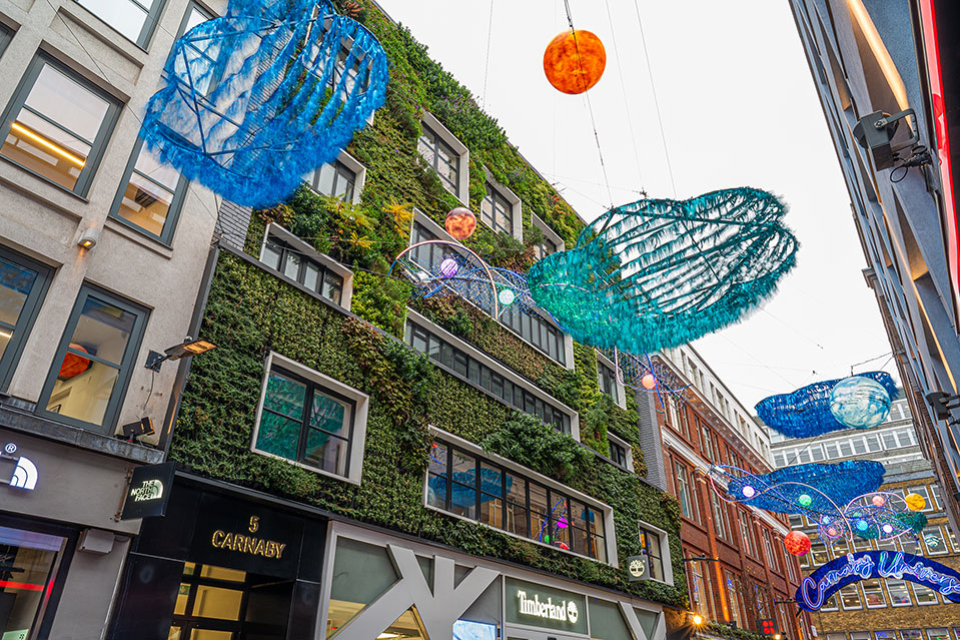
The cost of living wall isn’t the only major factor you should consider before making a decision. You should also consider the quality of the living wall you’re going to get. Here at Scotscape, we pride ourselves on offering the highest quality living walls to businesses around the UK. Here are just two examples of living walls we’ve created for our clients.
How Much Will Your Living Wall Cost?
Because there are so many variables, the cost of a living wall can only be determined based on project-specific details.
The best way to get an accurate, reliable cost estimate is to contact us, the experts, for more detail about your project so that we can advise accordingly
Get in Touch to Transform Your Space With Our Stunning Living Walls!
We not only have a passion for living walls and their ability to bring biodiversity into our cities and help clean the air, but 15 years of accumulated knowledge, which we would love to use to help advise on your project.
Please do send us your project details to This email address is being protected from spambots. You need JavaScript enabled to view it., we’ll be in touch with a free, no-obligation quote of the cost of your living wall.

Aquatic Centre 2012


