If you're preparing a major development in London, meeting the Urban Greening Factor (UGF) requirements should be considered from the earliest design stages.
Many planning applications fall short because urban greening is treated as something to add later, rather than an integral part of the design. By then, opportunities to introduce trees, outdoor living walls, Living Pillars®, and other green infrastructure can be limited, making it more difficult and costly to achieve the required score.
This guide explains how the Urban Greening Factor works, how it's calculated, and, most importantly, the practical ways you can improve your UGF score before submitting a planning application.
What Is the Urban Greening Factor?
The Urban Greening Factor is a planning tool introduced through Policy G5 of the London Plan (2021) to measure the amount and quality of green infrastructure within a development.
Rather than simply counting green space, the UGF assigns different weightings to landscape features based on the environmental benefits they provide. Features such as mature trees, biodiverse planting and intensive green roofs contribute more towards a scheme's score than sealed paving or hardstanding.
For most major developments, London boroughs expect applicants to demonstrate that their proposals achieve minimum UGF targets:
|
Development Type |
Minimum UGF Score |
|---|---|
|
Residential developments |
0.4 |
|
Commercial developments |
0.3 |
Many planning authorities outside London are also beginning to adopt similar guidance, with Natural England publishing a Model Urban Greening Factor that local authorities can adapt.
Why Your UGF Score Matters
The Urban Greening Factor is a practical way of designing developments that are better suited to modern urban environments. While meeting the minimum score is essential for many planning applications, projects that embrace urban greening from the start often deliver wider benefits for places and people.
Considering UGF early can help developers:
- Reduce planning delays
- Demonstrate compliance with London Plan Policy G5
- Improve biodiversity and climate resilience
- Reduce overheating and surface water flooding
- Create healthier environments for residents, employees and visitors
- Improve the long-term value and attractiveness of developments
The earlier greening is integrated into the design, the easier it becomes to achieve a strong score without compromising the wider scheme.
How Is the Urban Greening Factor Calculated?
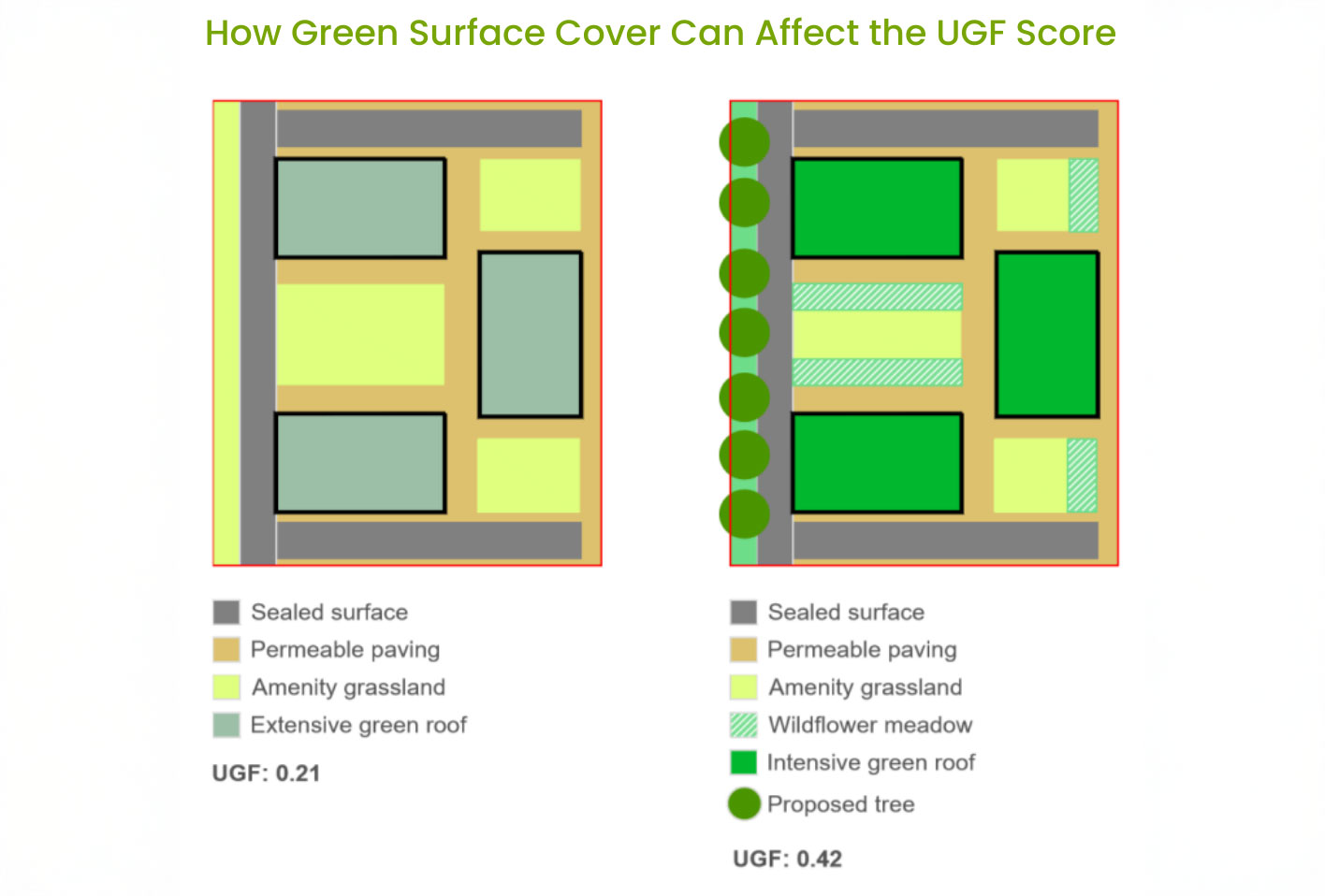
Image Credit: https://www.london.gov.uk/sites/default/files/urban_greening_factor_lpg_pre-consultation_draft.pdf
The Urban Greening Factor calculation itself is relatively straightforward.
Each type of surface within the site is assigned a weighting between 0 and 1, depending on its ecological value.
The weighted areas are added together before being divided by the site's total area.
Urban Greening Factor Formula
UGF = Total Weighted Green Infrastructure ÷ Total Site Area
For example, a 1,000m² development might include:
|
Surface Type |
Area |
Weighting |
Score |
|---|---|---|---|
|
Tree canopy |
200m² |
1.0 |
200 |
|
Semi-natural planting |
150m² |
1.0 |
150 |
|
Intensive green roof |
100m² |
0.9 |
90 |
|
Extensive green roof |
150m² |
0.7 |
105 |
|
Permeable paving |
100m² |
0.3 |
30 |
|
Sealed hardstanding |
300m² |
0.0 |
0 |
Total weighted score = 575
UGF = 575 ÷ 1,000 = 0.575
This would comfortably exceed both London's commercial and residential minimum requirements.
How To Meet London’s Urban Greening Factor Requirements
Successful developments usually follow a structured process that often looks like this:
1. Identify Your Target Score
Understand whether your development needs to achieve a minimum score of 0.3 or 0.4 and confirm any borough-specific planning guidance.
2. Assess Your Existing Site
Review the amount of hardstanding, planting, tree cover, and existing green infrastructure already available.
This provides a baseline from which improvements can be designed.
3. Identify Where You're Losing Points
Large expanses of impermeable paving, excessive roof coverage and limited planting are common reasons developments struggle to achieve compliance.
Understanding where your site loses potential points allows improvements to be targeted effectively.
4. Introduce High-Value Green Infrastructure
Rather than adding isolated landscape features, consider how multiple interventions can work together.
Trees, rain gardens, SuDS, living walls, and green roofs often deliver greater environmental benefits when integrated into an overall landscape strategy.
5. Recalculate Before Submission
Before your planning application is submitted, review the updated UGF score, and ensure all drawings, calculations and assumptions align.
8 Practical Ways to Improve Your Urban Greening Factor Score
#1 Plant More Trees
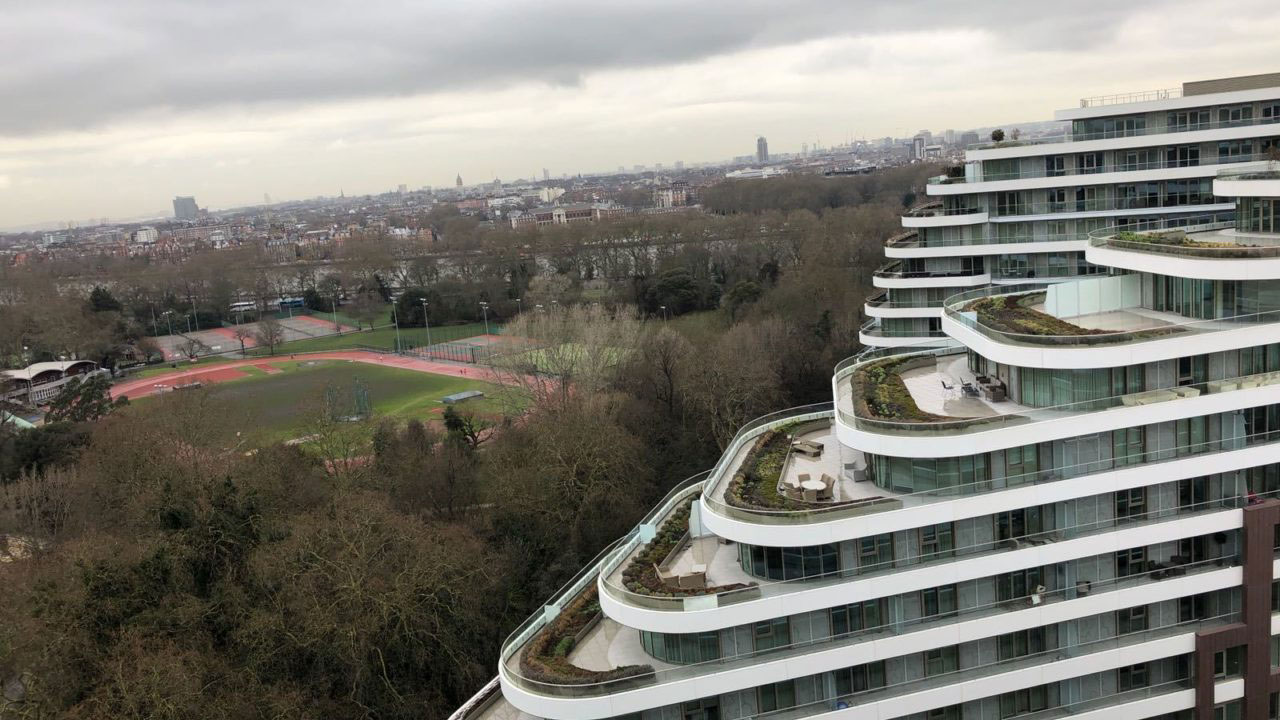
Tree planting is one of the most effective ways to improve an Urban Greening Factor score. Mature trees provide extensive canopy cover, making a significant contribution to UGF calculations while reducing the urban heat island effect, improving air quality, supporting biodiversity, and creating more attractive public spaces.
When incorporating trees into a development, it's important to consider species selection, future canopy size, underground services, root protection, and long-term maintenance. Early coordination with landscape architects and highways authorities can help maximise planting opportunities while avoiding expensive redesigns later in the project.
#2 Install Green Roofs
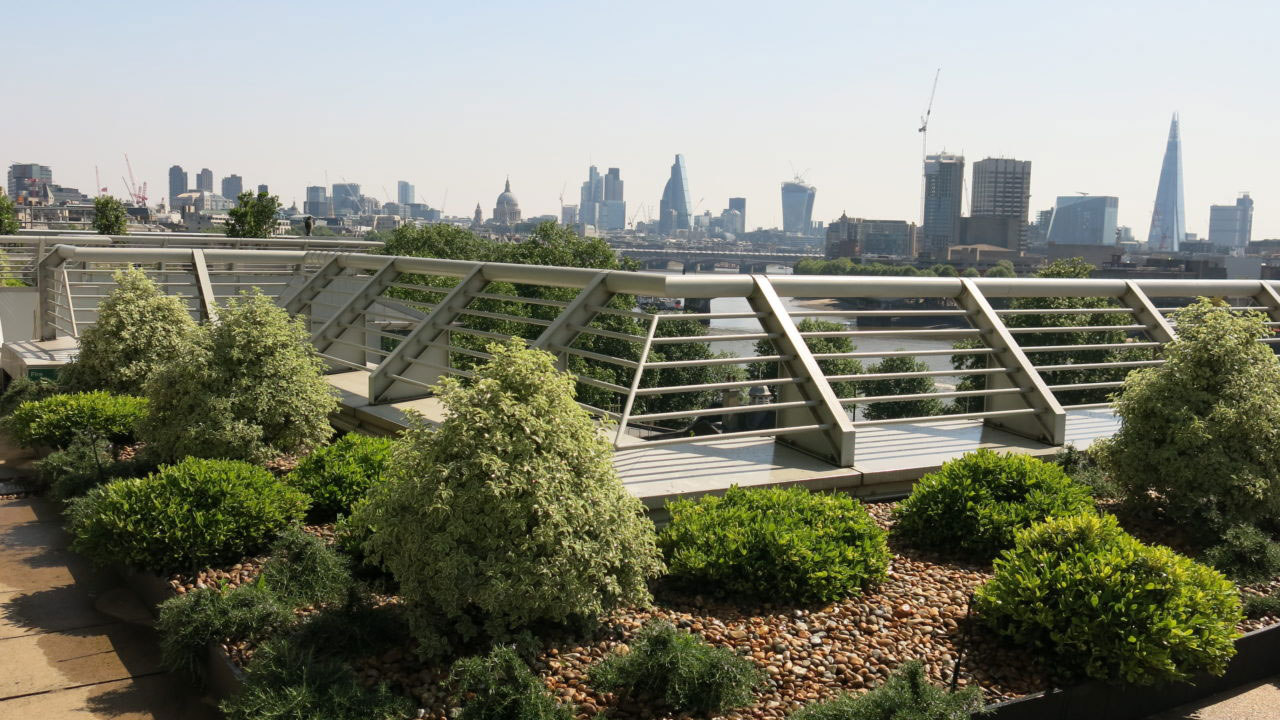
Green roofs provide an excellent opportunity to increase UGF scores, particularly where ground-level planting space is limited. By transforming otherwise unused roof space into living landscapes, they add valuable green infrastructure without reducing the site's usable footprint.
Extensive green roofs are generally lighter and lower maintenance, while intensive systems can support a greater variety of planting and amenity space. Both help absorb rainfall, improve insulation, reduce surface water runoff, and create habitats for birds and pollinating insects.
#3 Introduce Living Walls
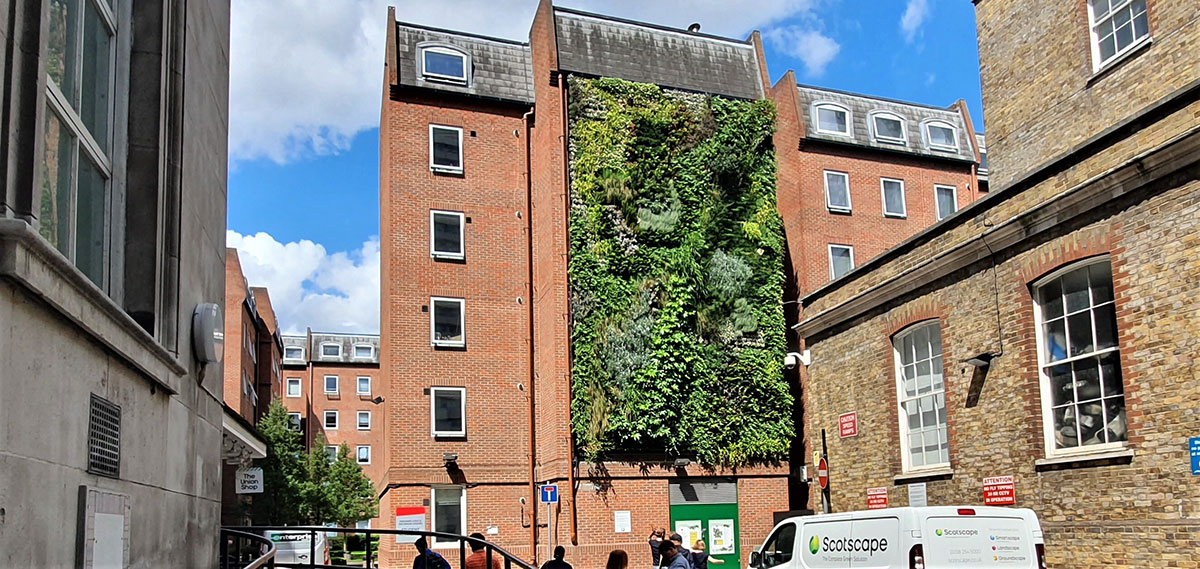
Living walls allow developments to introduce meaningful greenery where horizontal planting space is restricted. By transforming façades and other vertical surfaces into planted environments, they maximise green infrastructure within dense urban settings.
As well as contributing towards UGF objectives, living walls improve building appearance, enhance biodiversity, reduce noise pollution, and help moderate temperatures through natural insulation. They're particularly valuable in London and other city-centre developments where increasing ground-level planting is both expensive and impractical to install.
#4 Incorporate Living Pillars®
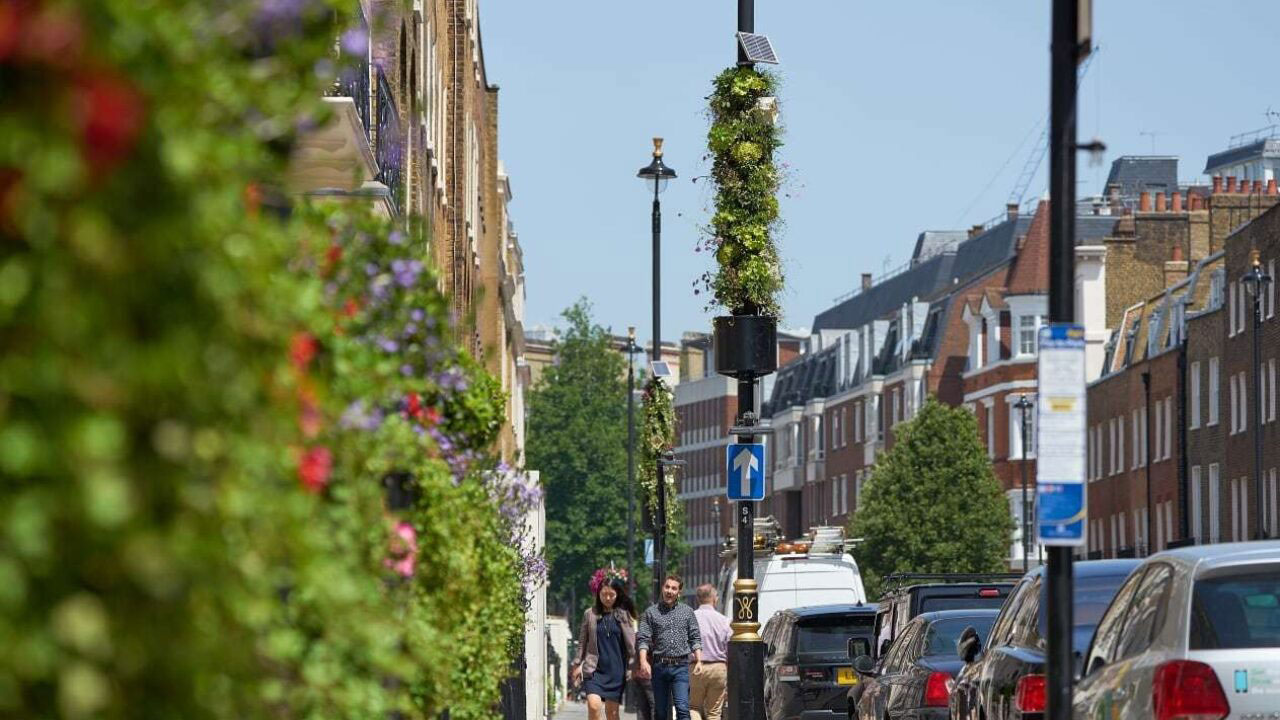
Where pavement space is limited, and underground services make tree planting difficult, Living Pillars® provide an innovative way to introduce planting into existing streetscapes. Installed onto lighting columns, they transform existing infrastructure into vertical green assets without reducing pedestrian space.
As well as contributing towards urban greening objectives, Living Pillars® help create biodiversity corridors, improve the appearance of public spaces and can help mitigate the "street canyon effect", where pollution becomes trapped between buildings. Their solar-powered, recirculating irrigation system also makes them a sustainable option for dense urban environments.
#5 Consider Sustainable Drainage (SuDS)
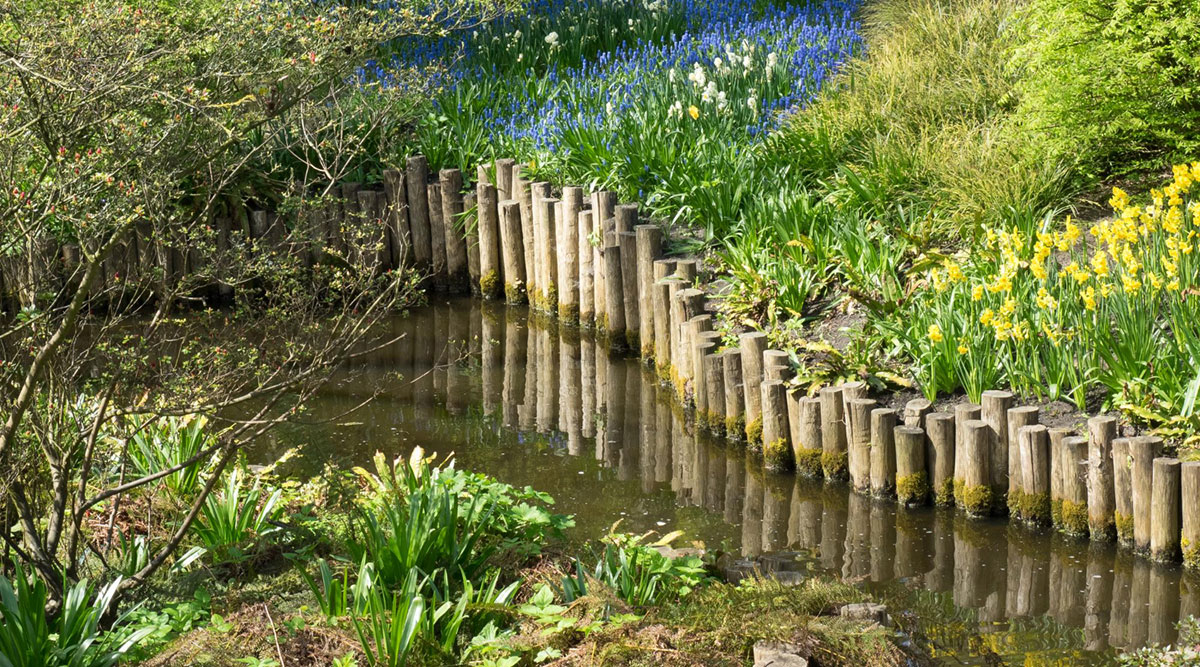
Sustainable Drainage Systems (SuDS) play an important role in urban greening by managing rainfall more naturally. Features such as rain gardens, bioswales, permeable paving, and planted attenuation areas help reduce flood risk while supporting biodiversity and enhancing the landscape.
Integrating SuDS into public and private spaces allows developments to satisfy multiple planning objectives at once. Well-designed systems contribute towards UGF while creating resilient environments for the future.
#6 Replace Hardstanding Where Possible
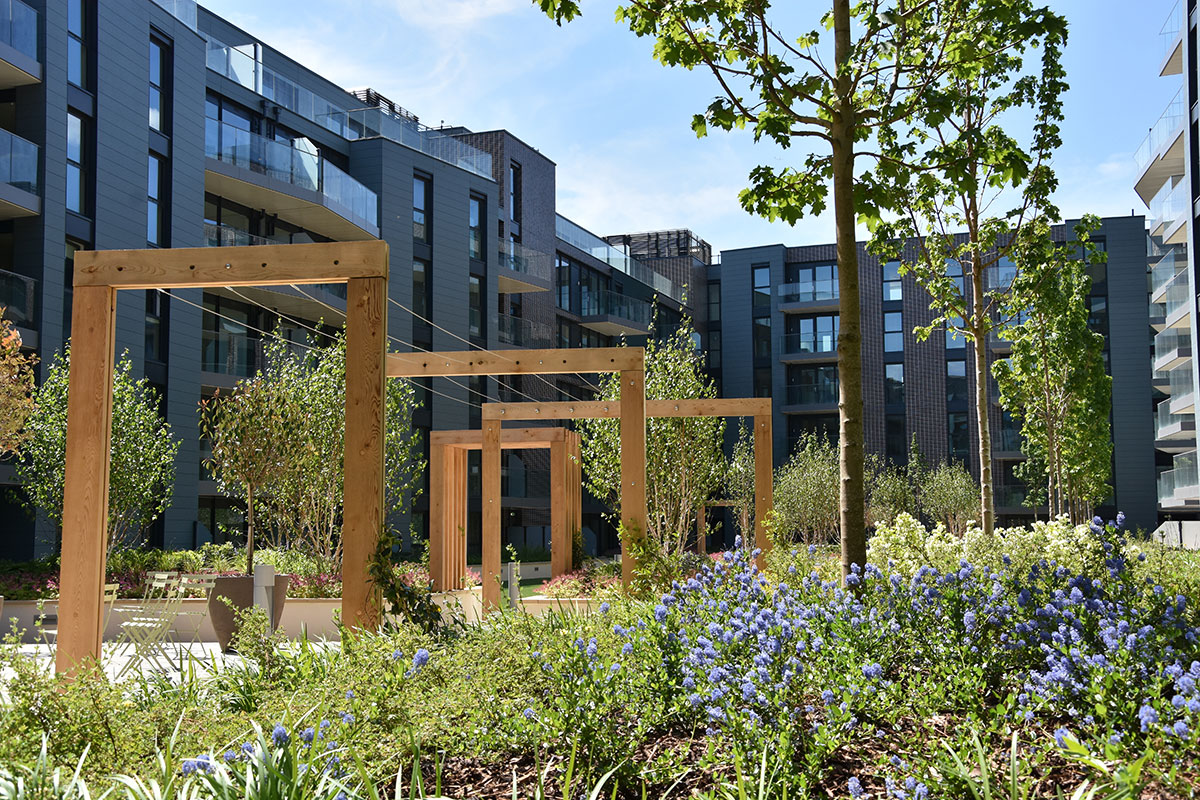
Large areas of impermeable surfacing, such as concrete paving, contribute very little towards your UGF score. Reviewing the site layout often reveals opportunities to replace unnecessary hardstanding with greener alternatives that provide far greater environmental value.
Introducing permeable paving, planting beds, rain gardens, or landscaped communal areas can significantly improve a site's UGF while supporting drainage and creating more pleasant spaces for building users.
#7 Create Micro Forests & Biodiverse Planting Areas
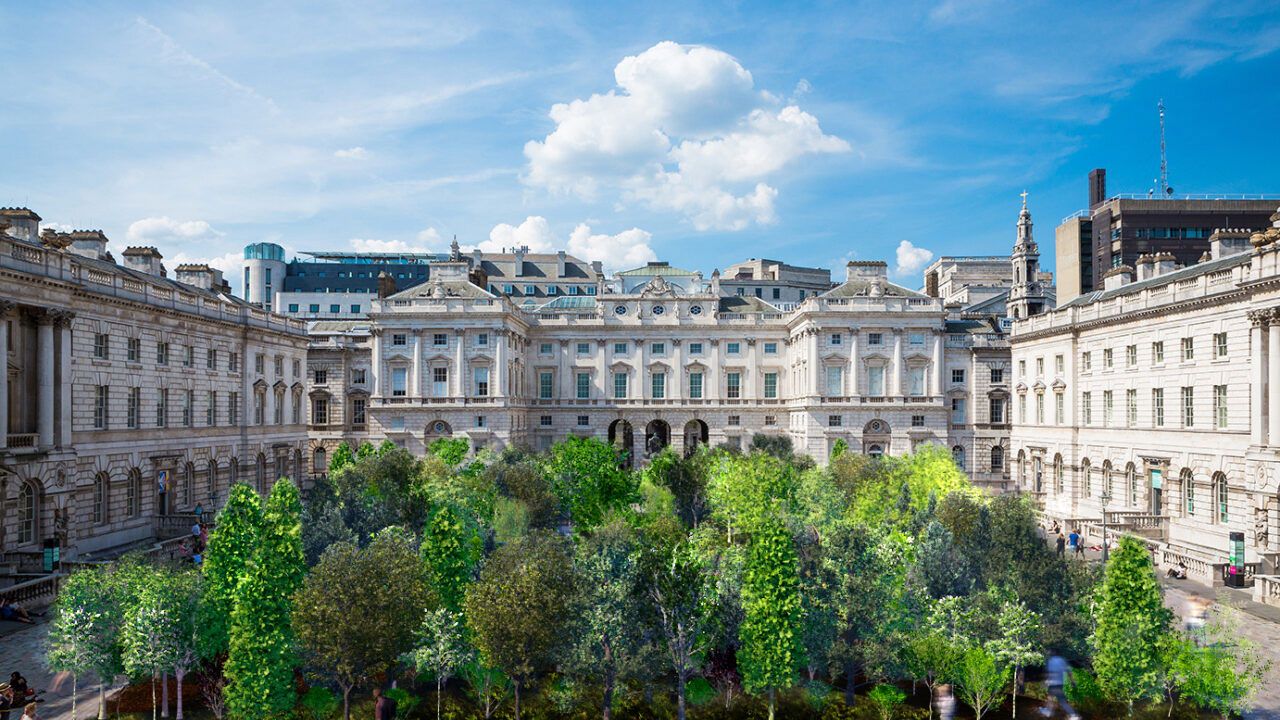
Micro forests, pocket parks, and biodiverse planting schemes allow developments to make the most of underused land while delivering substantial ecological benefits. These spaces improve air quality and help reconnect fragmented urban ecosystems.
Using native trees, shrubs, and pollinator-friendly planting instead of simple amenity grass delivers greater ecological value while creating attractive outdoor spaces that improve wellbeing for residents, employees, and visitors. However, micro forests need more land for installation, unlike living walls and Living Pillars®.
#8 Think About Greening From Day One

Perhaps the most effective way to achieve a strong Urban Greening Factor score isn't any single landscape feature - it's making urban greening a core design principle from the outset.
Projects that consider UGF during the concept design stage have far greater flexibility to incorporate trees, green roofs, living walls and sustainable drainage into the overall design. Involving landscape specialists early helps reduce planning risk and often delivers significantly higher UGF scores.
Common Reasons Developments Miss Their UGF Target
Developments that fall short typically do so because urban greening hasn't been fully integrated into the design process, making it difficult to introduce meaningful green infrastructure without compromising other aspects of the development.
Some of the most common challenges include:
- Urban Greening Is Considered Too Late: Waiting until the building layout has been finalised often leaves little room for trees, green roofs, SuDS, or other high-value greening measures without redesigning the scheme.
- Space Isn't Used Effectively: Roofs, façades, and underused areas are often overlooked, despite offering valuable opportunities for green roofs, living walls, Living Pillars®, or biodiverse planting.
- Landscape & Drainage Are Designed Separately: Integrating Sustainable Drainage Systems with landscape design creates multifunctional spaces that improve drainage, biodiversity, and UGF simultaneously.
- Greening Features Are Removed During Value Engineering: Measures such as green roofs or living walls are sometimes cut to reduce costs, potentially affecting planning compliance and long-term environmental performance.
- UGF Is Treated As a Standalone Requirement: The strongest developments consider UGF alongside Biodiversity Net Gain (BNG), climate resilience, and placemaking, creating schemes that are both planning-compliant and environmentally responsible.
Planning for urban greening from the outset gives design teams greater flexibility, helping create developments that are easier to approve and more attractive places for people to live, work, and visit.
Do You Need Urban Greening Factor Consultants?
While some smaller developments can prepare UGF calculations internally, larger or more complex schemes often benefit from specialist support.
Urban greening consultants can help:
- Develop landscape strategies that maximise UGF
- Identify the most effective greening interventions
- Coordinate green infrastructure with architects and engineers
- Produce planning-ready UGF calculations and supporting information
- Balance UGF alongside Biodiversity Net Gain, drainage, and wider planning requirements
Bringing specialists into the project early usually provides greater flexibility than attempting to improve scores once designs have been finalised.
The Wider Benefits of Urban Greening
While many developers initially focus on achieving the minimum UGF score required for planning approval, the benefits of urban greening extend far beyond compliance, including:
Environmental Benefits
Urban greening helps developments become more resilient to climate change while improving the surrounding environment. Key benefits include:
- Improves air quality by filtering airborne pollutants and trapping particulate matter.
- Reduces the urban heat island effect, helping create cooler and more comfortable public spaces during warmer weather.
- Supports biodiversity by creating habitats for birds, pollinators, and other wildlife.
- Reduces flood risk through Sustainable Drainage Systems that slow and manage surface water runoff.
- Builds climate resilience, helping developments adapt to rising temperatures and increasingly frequent heavy rainfall.
Economic Benefits
Green infrastructure isn't just good for the environment - it can also add long-term commercial value to a development.
- Supports smoother planning applications by demonstrating compliance with UGF and wider sustainability objectives.
- Increases property desirability, helping residential schemes attract purchasers and tenants while creating more inviting commercial environments.
- Can reduce operational costs by improving building insulation, reducing cooling requirements, and managing surface water more effectively.
- Protects long-term asset value by creating developments that are more resilient to climate-related risks.
Social Benefits
Successful developments don't just perform well environmentally - they create places where people genuinely want to spend time.
- Improves health and wellbeing by increasing access to attractive green spaces that encourage relaxation and reduce stress.
- Encourages walking and cycling, supporting healthier lifestyles and reducing reliance on vehicles.
- Creates more welcoming public spaces, helping retail, hospitality, and mixed-use developments attract greater footfall and encourage visitors to stay longer.
- Enhances residential developments by creating attractive communal areas that improve residents' quality of life and strengthen a development's appeal.
- Supports employee wellbeing, helping offices and business parks provide healthier, more enjoyable working environments.
How Scotscape Can Help You Meet Urban Greening Requirements
Achieving a strong UGF score isn't about adding more planting at the end of a project. It's about designing greener, healthier, and more resilient developments from the very beginning.
At Scotscape, we work alongside architects, developers, and contractors to deliver urban greening that supports planning compliance while creating places people genuinely enjoy using. From living walls to micro forests, our solutions are designed to maximise both environmental value and long-term project success.
Speak to our specialists today to discuss how we can help your development meet London's Urban Greening Factor requirements.
FAQs
-
What is a good Urban Greening Factor score?
For major developments in London, the London Plan generally expects a minimum score of 0.4 for residential developments and 0.3 for commercial developments. Achieving a higher score can improve the environmental performance of a development and demonstrate a stronger commitment to sustainable design.
-
Does Biodiversity Net Gain replace the Urban Greening Factor?
No, Biodiversity Net Gain and the Urban Greening Factor measure different aspects of environmental performance.
While both encourage greener developments, UGF focuses on the quantity and quality of urban green infrastructure, whereas BNG measures improvements to biodiversity. Most major developments will need to consider both.
-
Is the Urban Greening Factor mandatory?
Policy G5 of the London Plan requires major developments to demonstrate compliance with minimum UGF targets. Outside London, some local planning authorities have adopted or are exploring similar approaches based on Natural England's Model Urban Greening Factor.
-
Who prepares an Urban Greening Factor assessment?
UGF assessments are often prepared collaboratively by landscape architects, environmental consultants, and urban greening specialists as part of a wider planning submission.
Early collaboration between design teams usually produces stronger outcomes than assessing compliance after designs have been completed.


