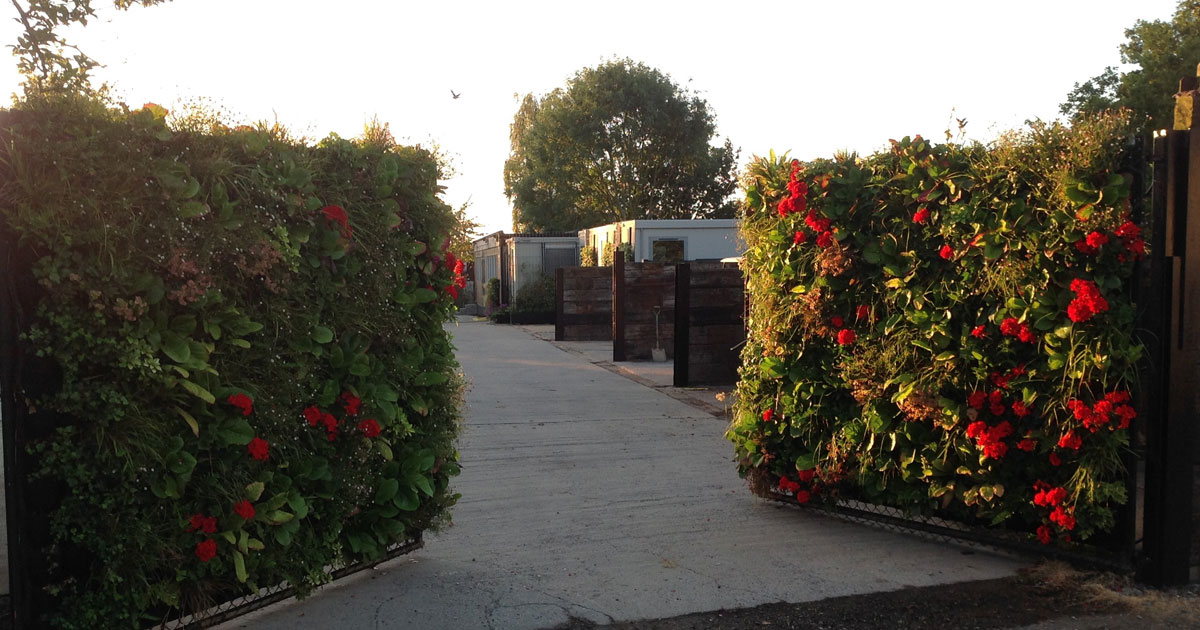
Living walls, also known as vertical gardens or green walls, are transforming the way we experience buildings and cities.
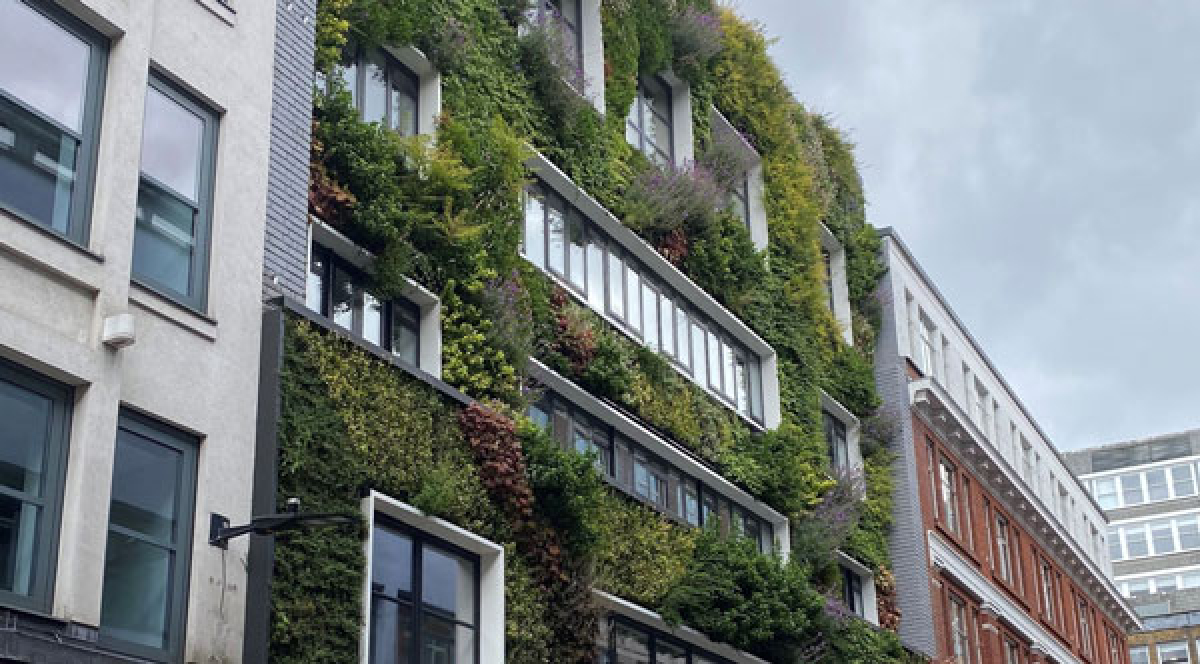
Whether used on a lampost, a building or as a wow factor in a home or office, vertical planting helps cool cities, clean the air, enhance wellbeing, and support biodiversity — all whilst making a powerful visual statement.
But a living wall is only as successful as the plants you choose. Selecting the right plants and planting combinations is essential, and with so many options available, it’s not always obvious where to begin.
That’s where our experience comes in.
Contents
- Why Design and Plant Knowledge is Essential for a Successful Living Wall
- Where Can Living Walls Be Installed?
- Our Top Ten Best Living Wall Plants for Shade in Outdoor Living Walls
- Our Top Ten Best Living Wall Plants for Sun in Outdoor Locations
- Our Top Ten plants for an Indoor Living Wall
- Our Top Ten Plants for our Living Pillar
- Best Living Wall Plants for Biodiversity
- Living Wall Plants for Lower Maintenance
Why Design and Plant Knowledge is Essential for a Successful Living Wall
When we began working with vertical planted systems over 18 years ago, there was little or no information available about what species would thrive in these environments.
Since then, we’ve trialled hundreds of plants in real-world settings, learning which perennials, evergreens, shrubs, and even trees perform best in living wall systems across indoor and outdoor locations.
This constant innovation has helped shape one of the most refined and resilient plant palettes available in the UK.
This article highlights some of the best plants for a living wall, but the most successful outcomes always come from working with our expert design team to deliver the best plant combinations.

Where Can Living Walls Be Installed?
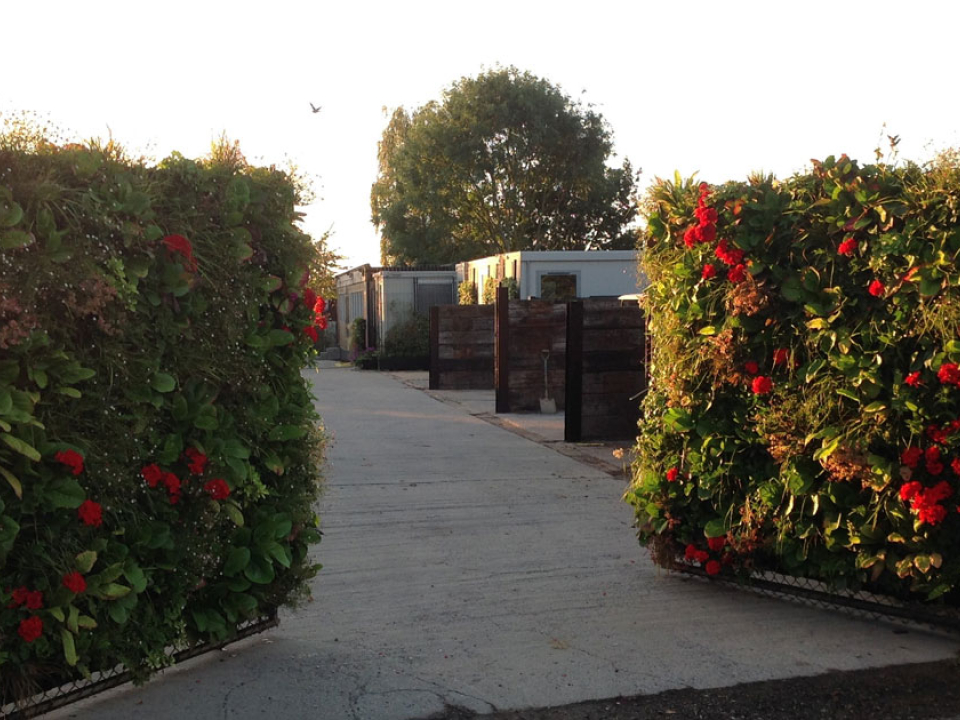
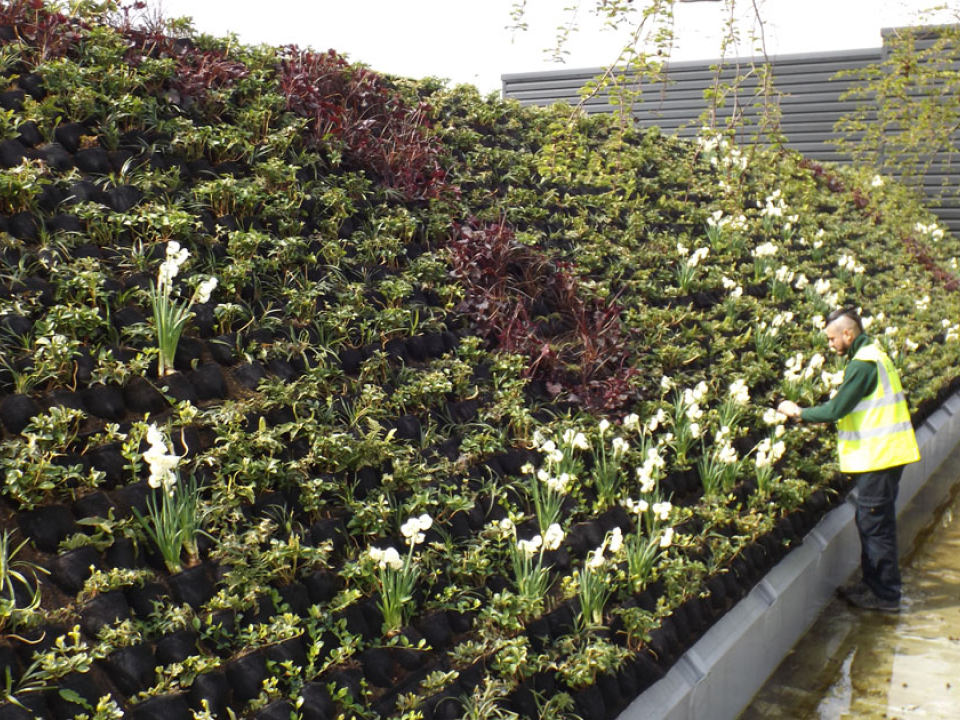
Thanks to their versatility, living walls can be installed in a wide range of locations, indoors and outdoors, on walls, gates or columns, or even sloped roofs, as long as light, water, and drainage are considered early in the design process. Plant selection must respond to the specific conditions of each location to ensure long-term success. Below, we explore the most common settings:
Indoor Spaces
Living walls in interiors such as offices, hotels, retail spaces, healthcare settings, and increasingly in high-end residential properties create calming environments, soften acoustics, and purify the air. But indoor conditions present specific challenges.
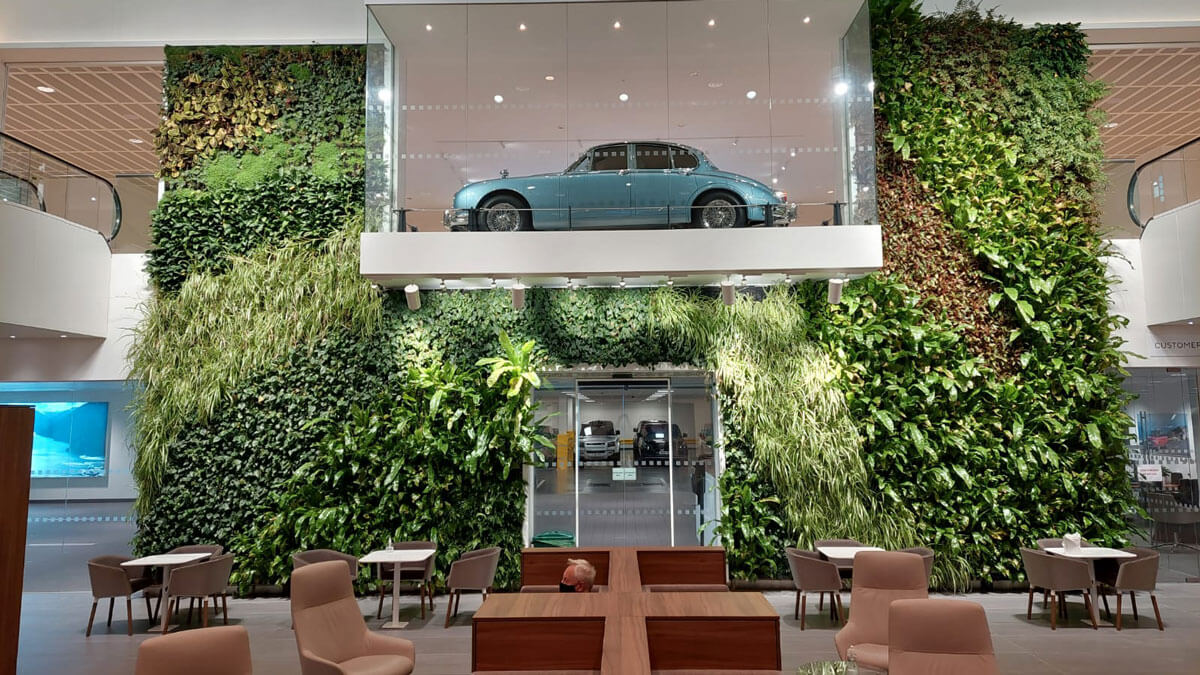
Indoor Living Wall, Jaguar Landrover, Sunbury
Light is the biggest limitation, and standard LUX tests don't tell the full story when it comes to plant health. Instead, we conduct a PTFD (Photosynthetic Photon Flux Density) test, which measures the actual light available for photosynthesis, giving a far more accurate picture of whether a living wall will thrive. With low light levels, we supplement with artificial lighting.
Water and drainage are often challenging indoors. Getting water to the green wall and waste water away can be difficult if it hasn't been planned early. Re-circulating irrigation systems are often used in these settings, reducing water usage and removing the need for external drainage.
For smaller installations, our LivingArt has been designed to help tackle this challenge as a quick-to-install living wall with inbuilt re-circulating irrigation
For more details on how we green interiors, see our Internal Landscaping services.
Outdoor Façades and Boundary Walls
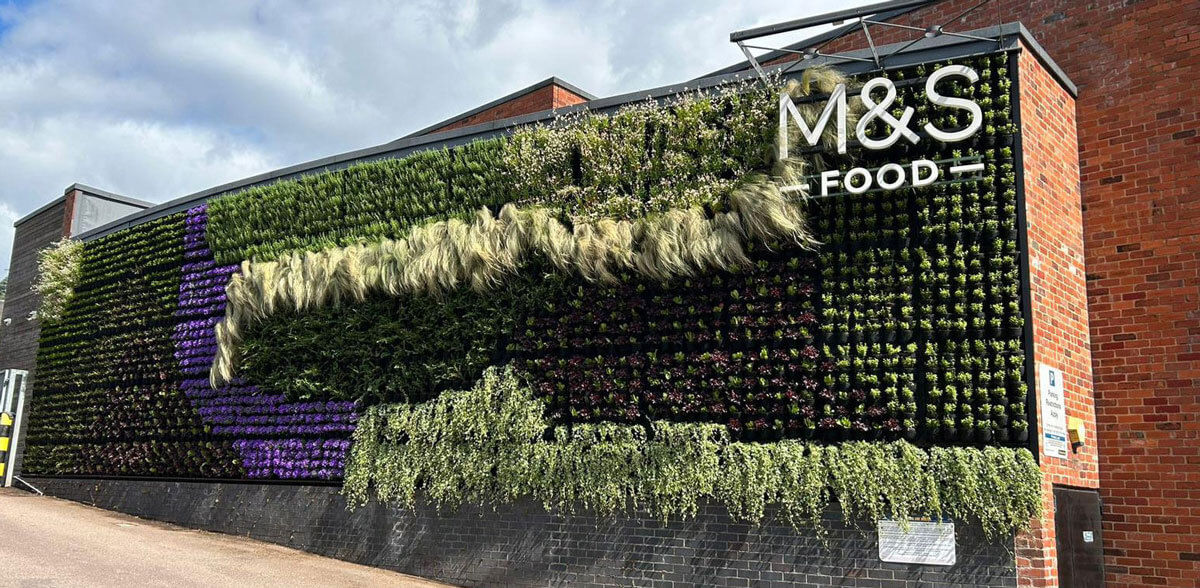
Outdoor Living Wall, M&S Sheffield
Outdoor living walls are exposed to the elements — sun, wind, and rain — so plants must be hardy and resilient. These walls are often installed on building façades, courtyard walls, or around car parks and public spaces. With thoughtful design, they not only add year-round colour and interest but also insulate and encourage urban biodiversity to help support Biodiversity Net Gain objectives. Plant choices here are driven by orientation, exposure, and microclimate, full sun vs. shade, sheltered vs. wind-blown, and we often blend native species with resilient evergreen structure.
Streetscapes and Transport Hubs

Living PillarⓇ, CU Phosco
Where wall space is limited but greening is still desired, our LivingPillarⓇ offers an ideal solution. These column-based green systems are designed for streetscapes, plazas, transport interchanges, and other hard-surfaced environments. They bring nature directly into the public realm and support pollinators. We use a mix of flowering perennials and shrubs suited to windy conditions.
Sloped Green Roof, London Aquatic Centre
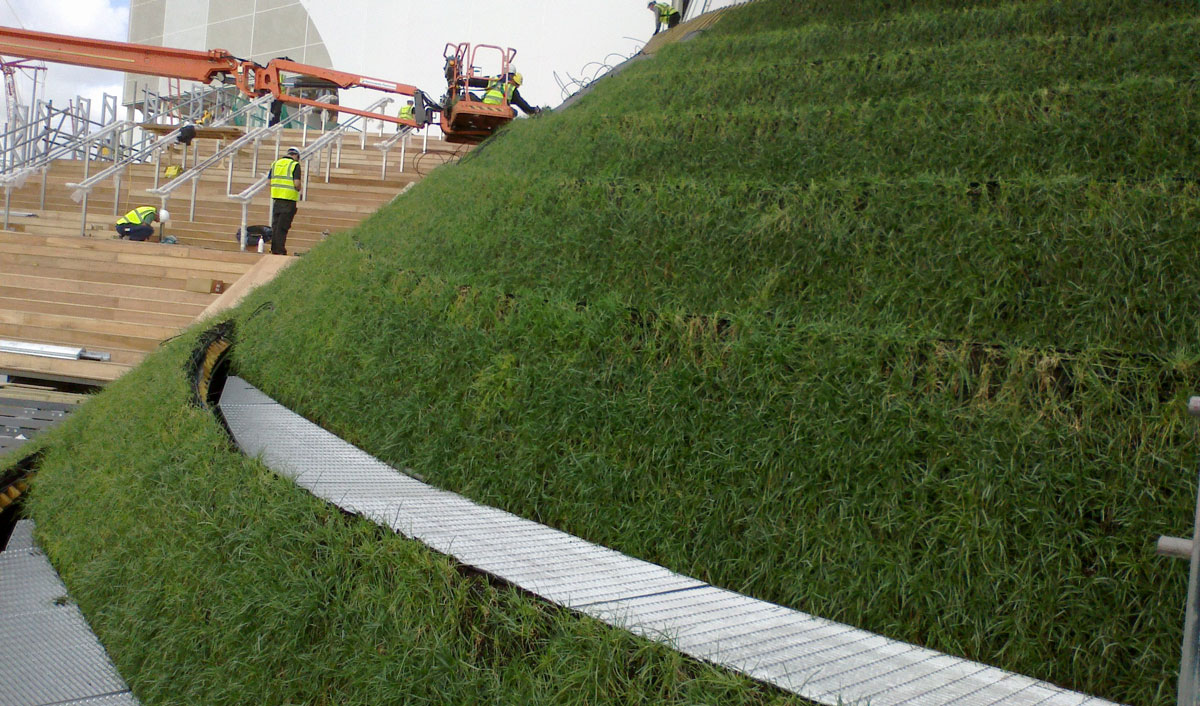
Sloped Green Roof, London Aquatic Centre
While technically not vertical, green roofs, particularly those on a slope, share many of the same design and planting considerations. These spaces can be transformed using low-growing perennials, wildflowers, grasses and even bulbs to help contribute to climate resilience.
Our Top Ten Best Living Wall Plants for Shade in Outdoor Living Walls
Some spaces, like courtyards or north-facing walls, are in constant or partial shade. Here are ten of the best shade-tolerant plants for living walls:
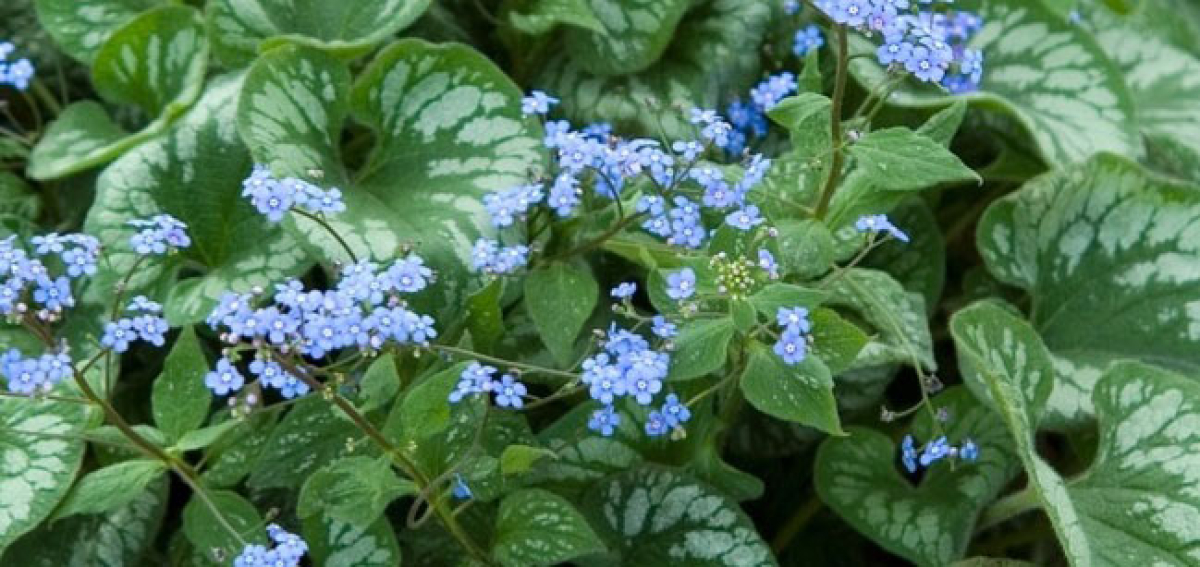
Providing interest with heart-shaped silver and green foliage AND dainty light blue flowers, this deciduous perennial is truly special- perfect for adding brightness to a cool shady spot.
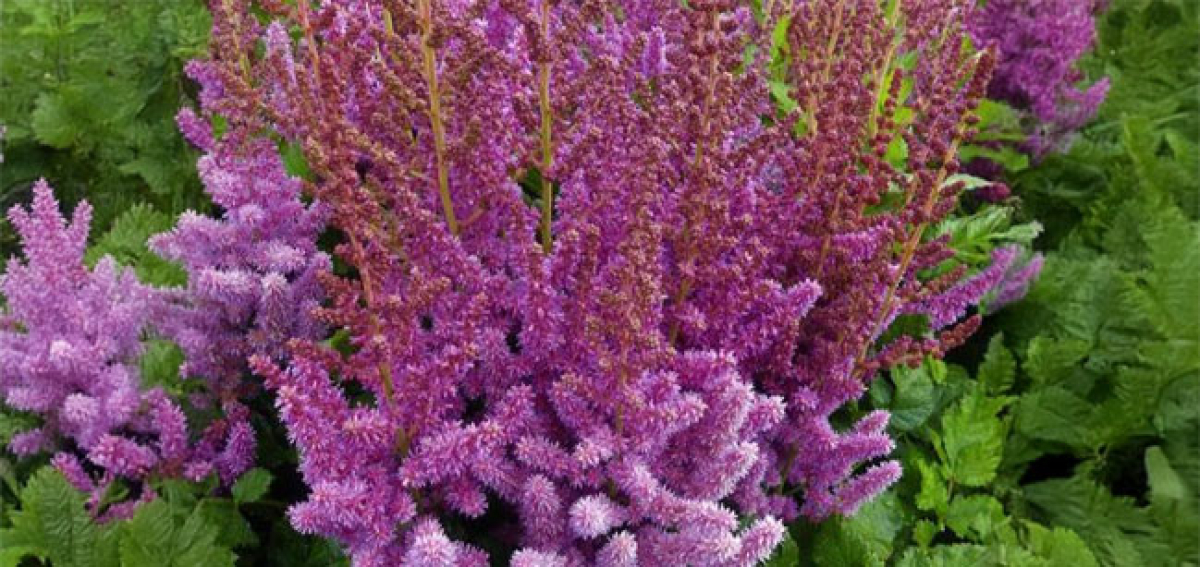
Deciduous, soft perennial with dainty foliage and large plumes of dramatic flowers; perfect for shaded damp spots, pairing well in amongst evergreen ferns. The ‘Visions’ series with their wide range of colours are a personal favourite!

Ornamental grass with soft cascading foliage that provides tactility and connection to the seasons.
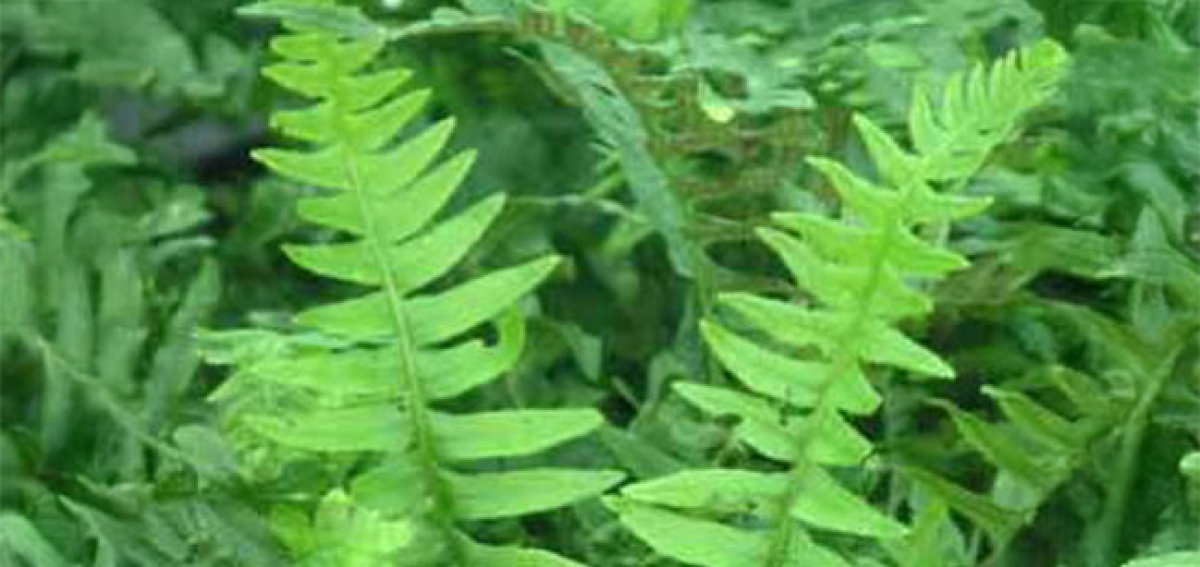
A classic, evergreen native fern that adds texture to shady settings. An epiphytic fern, the common polypody thrives on living walls!
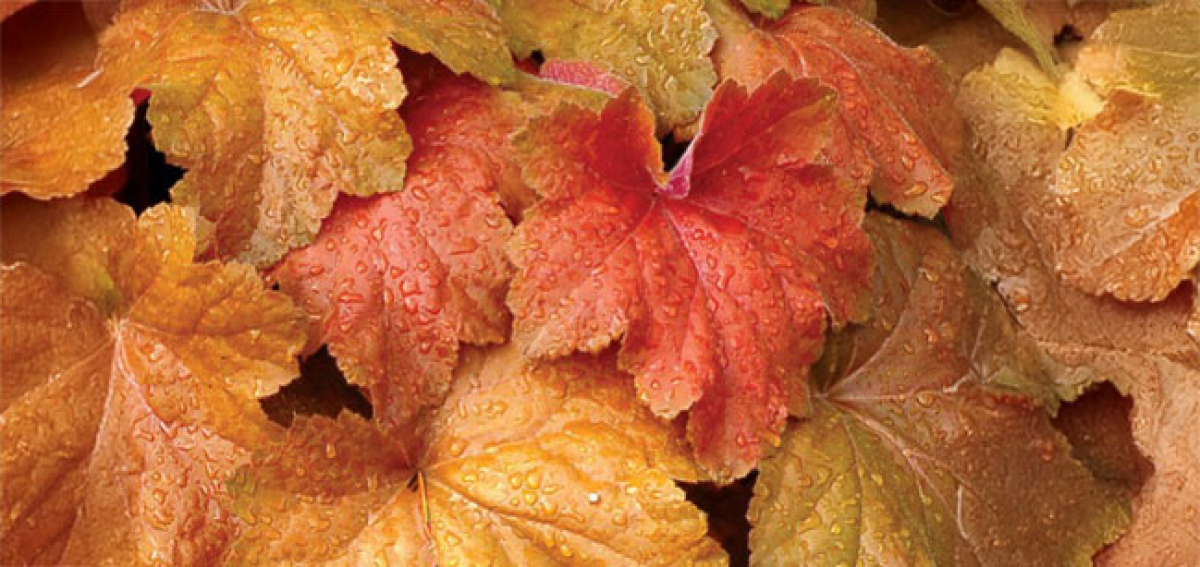
A wide range of foliage colours, sizes and textures that add vibrancy and contrast to any landscape; there is a Heuchera colour for any colour palette. ‘Southern Comfort’, ‘Berry Smoothie’, ‘Lime Rickey’, ‘Silver Gumdrop’, ‘Electric Plum’, ‘Blondie in Lime’ and ‘Grande Amethyst’ are some popular choices on our living walls.

A smaller, spreading taxus ideal for shaded living walls providing year-round coverage with soft dainty new shoots in the growing season.
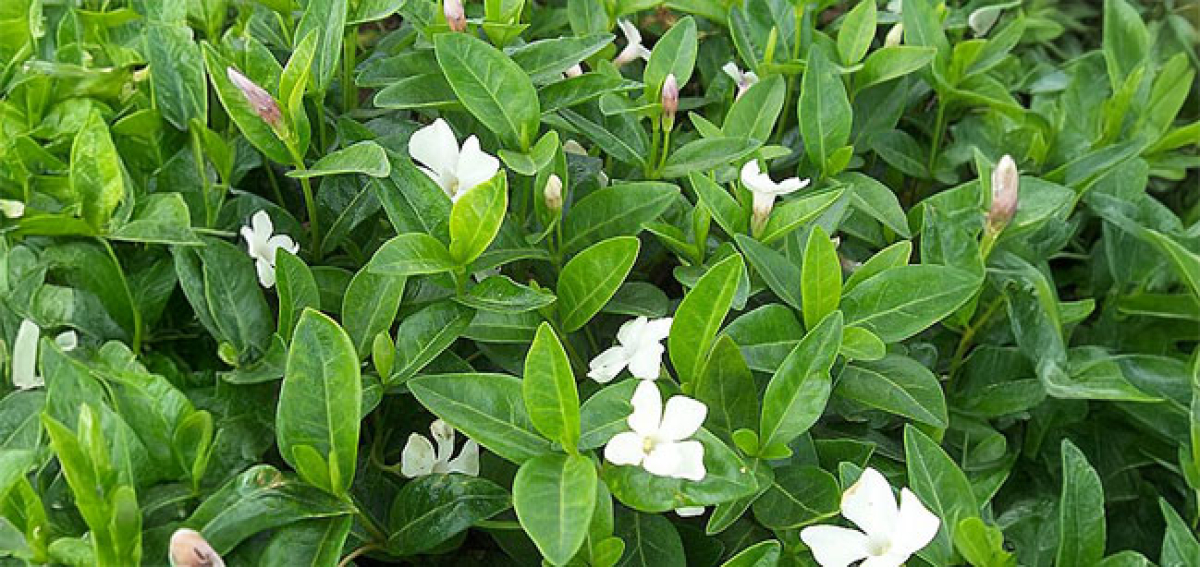
Trailing evergreen with purple or white blooms against glossy, lanced shaped, dark green leaves.
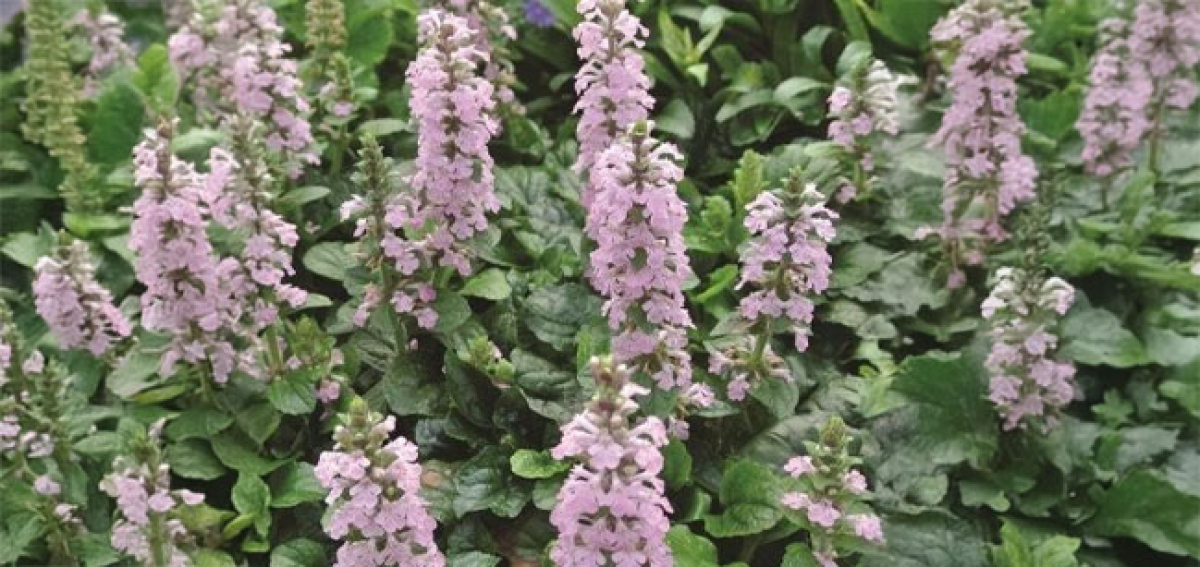
An evergreen, mat-forming perennial with vibrant spikes of flowers from Spring to mid-summer. Favourites include Ajuga reptans ‘Caitlan’s Giant’, Ajuga reptans ‘Rosea’, and Ajuga reptans ‘Alba’.
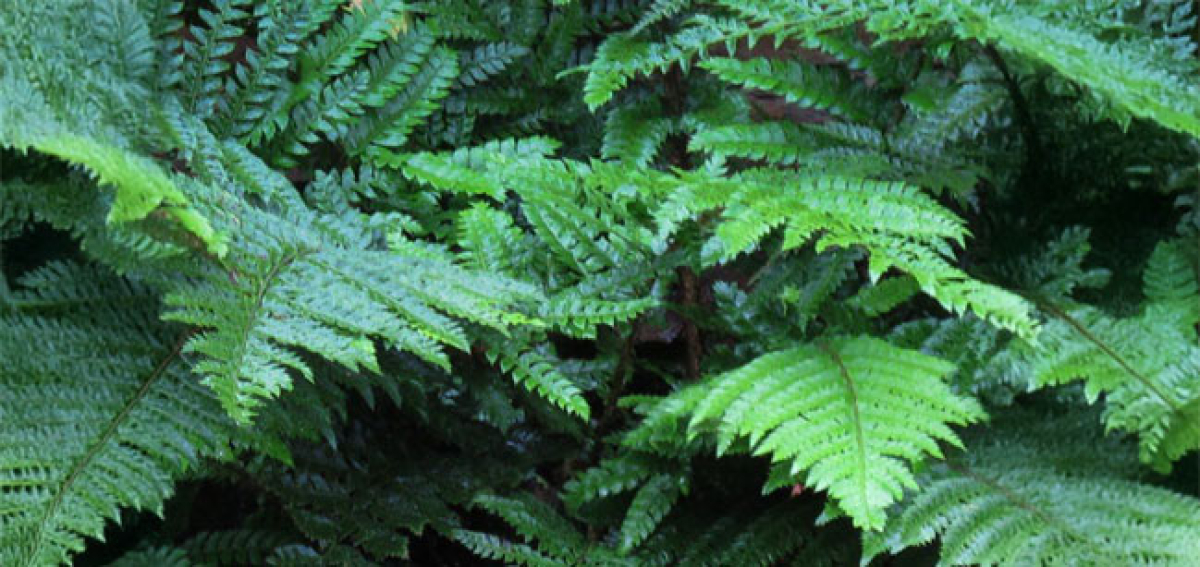
A soft, fronded evergreen fern with glossy dark green foliage in a ‘shuttlecock’ structure.
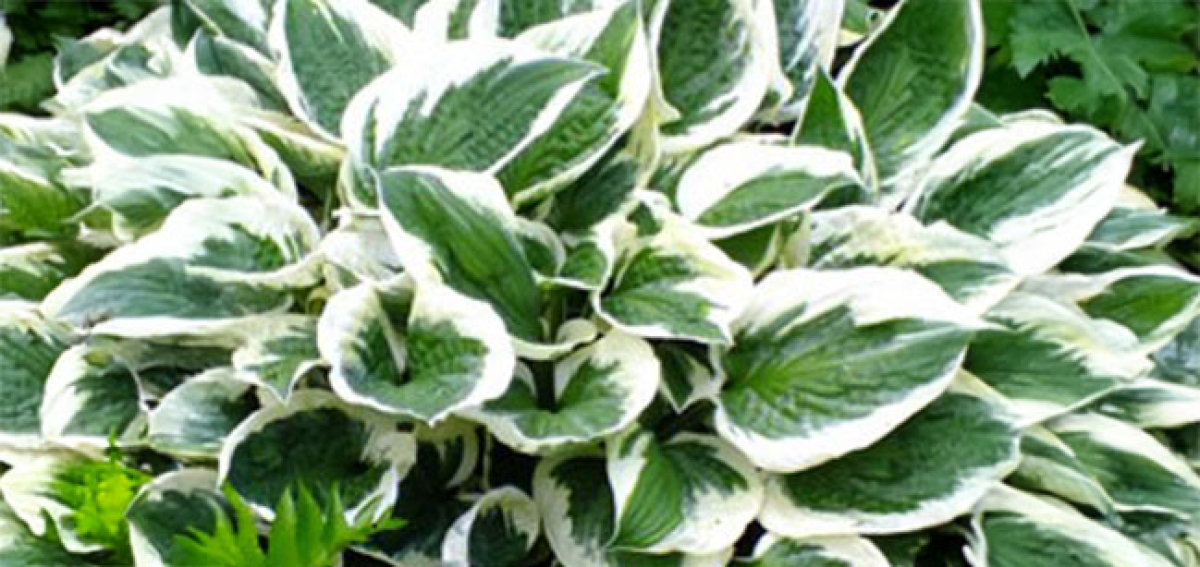
Big, bold and dramatic foliage that creates a statement. Hostas are available in a range of habits, leaf sizes, colours and variegations to suit any shady location. Some particular favourites are the striking Hosta sp. ‘Patriot’, Hosta sp. ‘Blue Mouse Ears’, Hosta sp. ‘Devon Green’, Hosta sp. White Feather’
Download our Exterior Plant Brochure
Our Top Ten Best Living Wall Plants for Sun in Outdoor Locations
Full-sun locations, such as south-facing walls, require sun-loving perennials and drought-tolerant species. Here are our top ten picks:
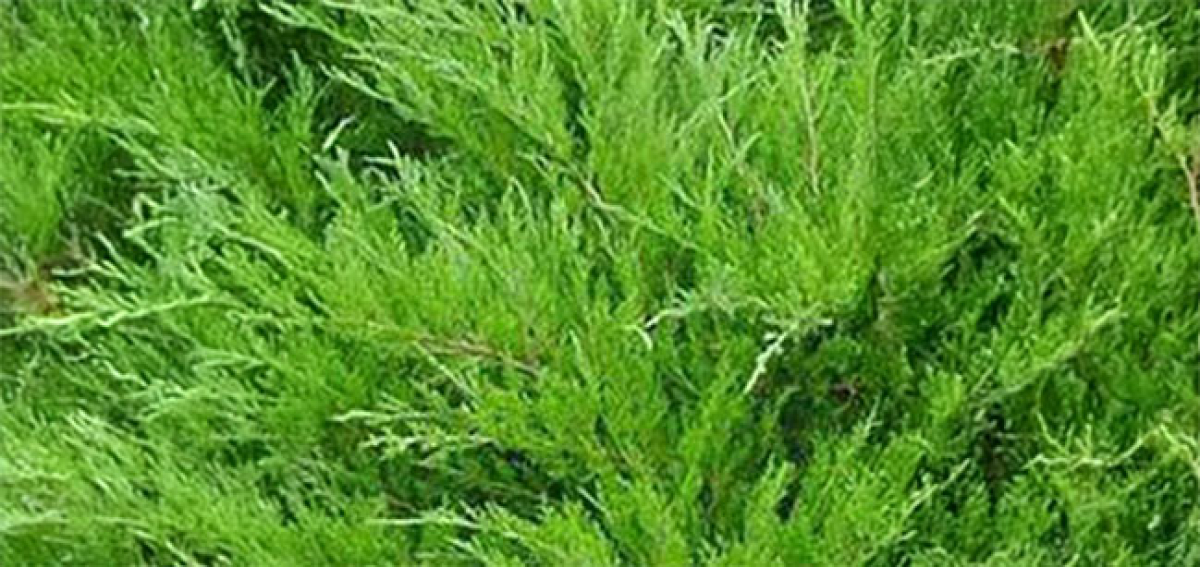
A bright green conifer with arching branches that form in a ‘weeping’ new growth pattern. Like all conifers, this species is hardy and suitable for those tough environments, providing year-round coverage.
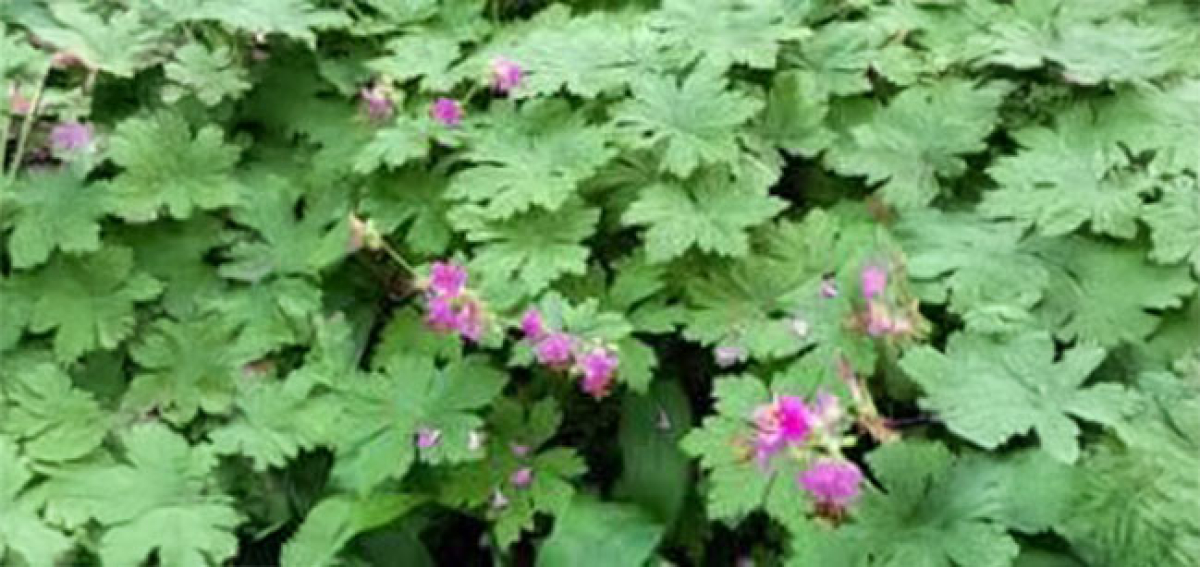
An oldie but a goodie, this tried-and-true, tested perennial can thrive in full sun to partial shade. A semi-evergreen geranium, it provides reddish colouring in Autumn for seasonal interest, and is an excellent choice for pollinators.
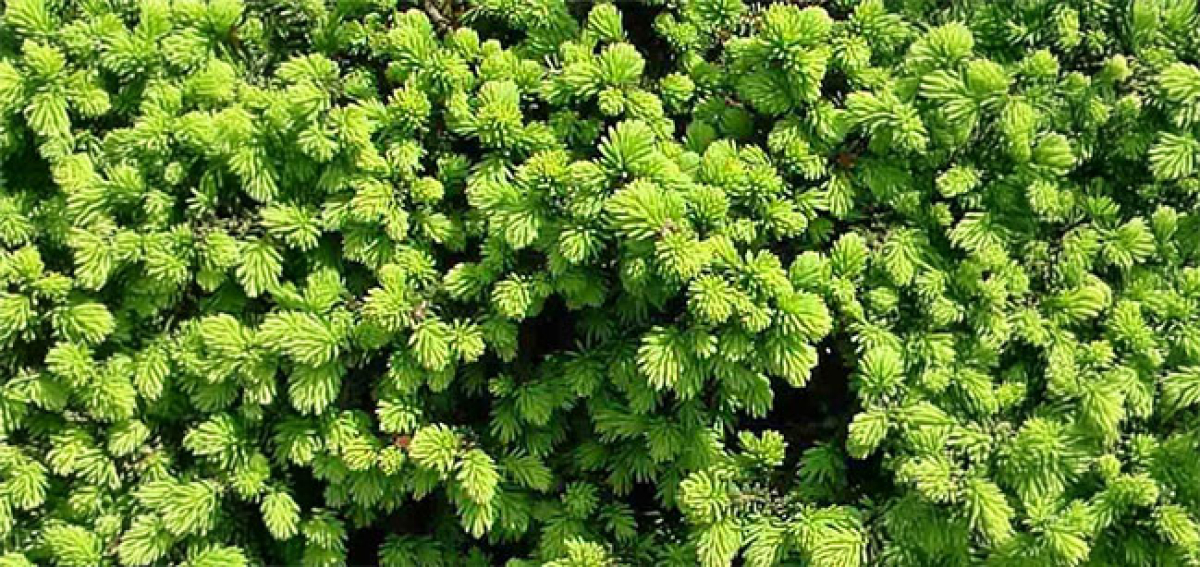
A compact dwarf spruce that is slow-growing, forming a perfect globose mound. With vivid bright green new growth, this plant adds vibrancy to any living wall come Spring.
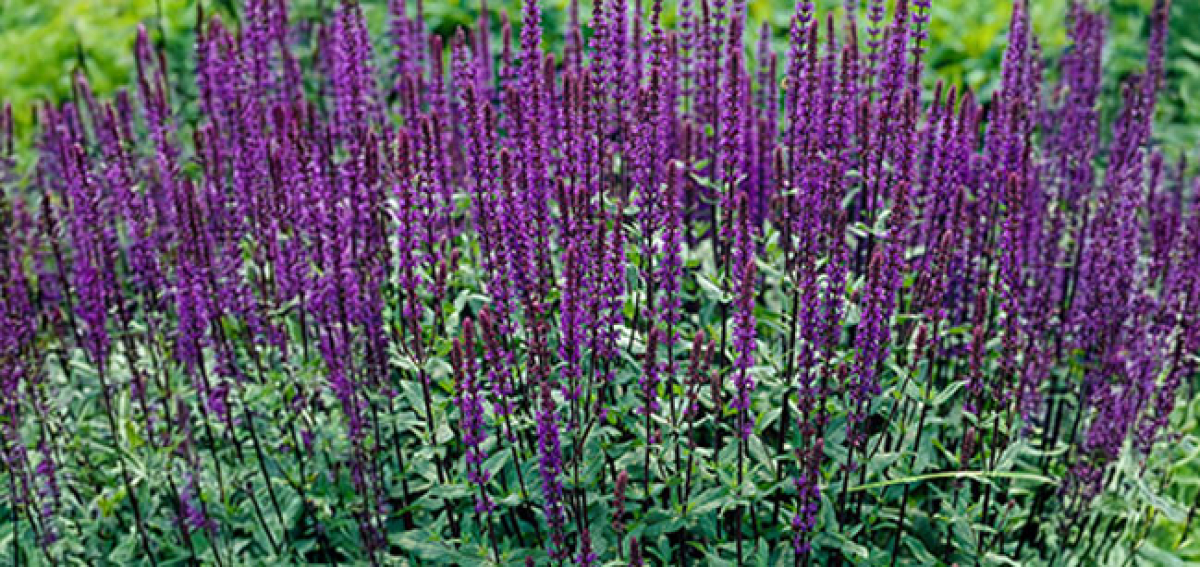
Rich purple spires and strong structure, this salvia is known for its extended flowering period from early Summer to Autumn; perfect for pollinators!
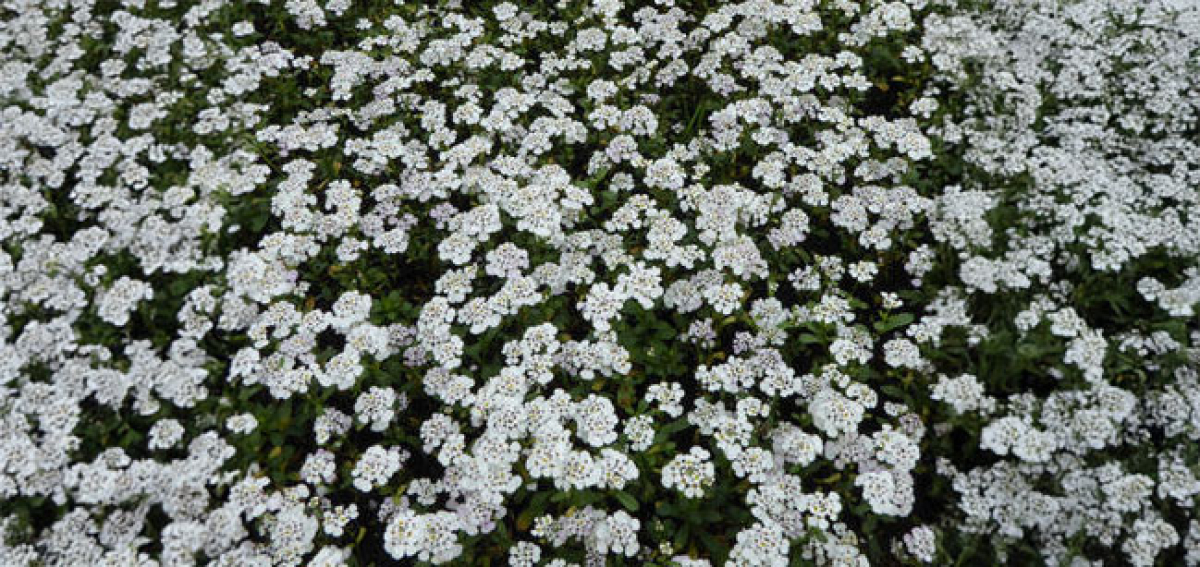
A profusely blooming variety of candytuft, this evergreen flowers from early Spring until September.
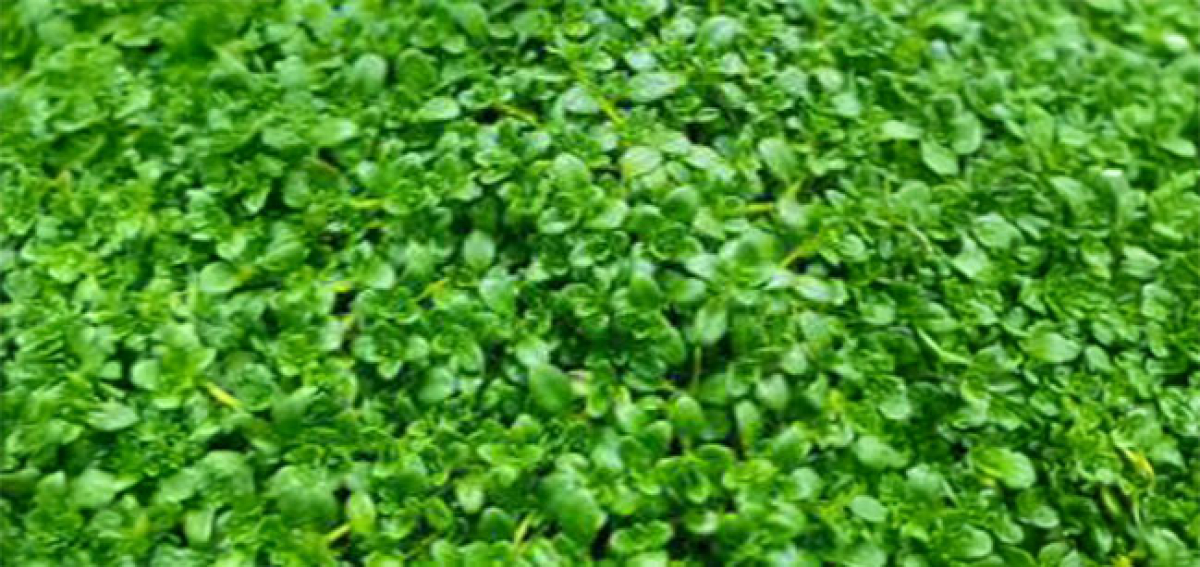
Aromatic groundcover covered with white flowers from June to August. Loved by pollinators and people alike, this groundcover is also edible. Also available in pink and purple varieties.
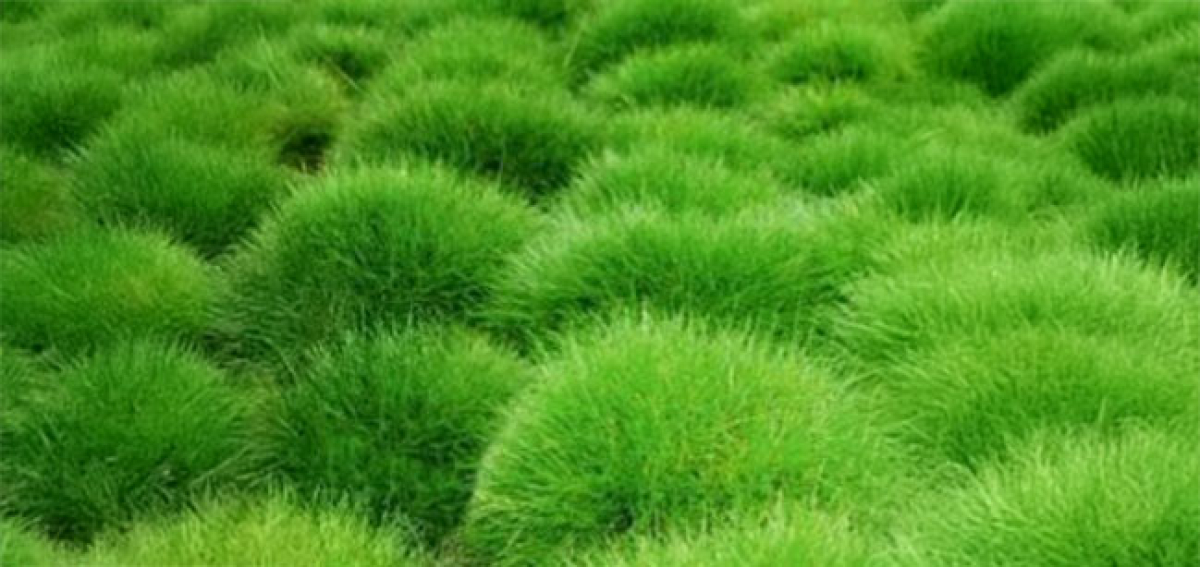
Known as ‘Bearskin Fescue, ’ this ornamental grass forms an evergreen tight mound providing texture and visual interest.
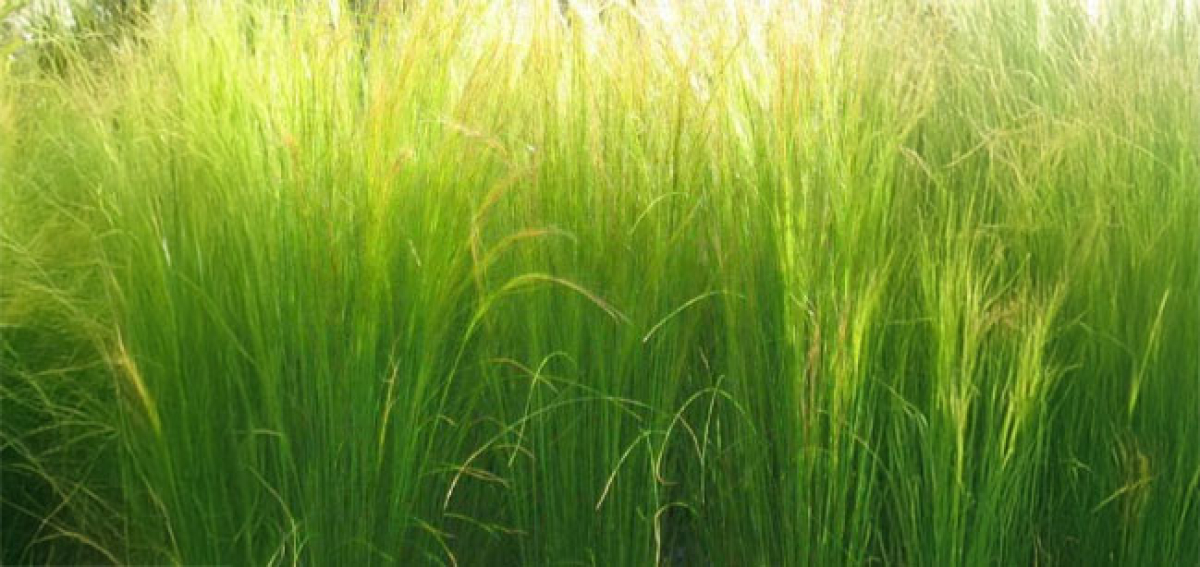
Soft and tactile, this ornamental grass adds a sense of motion to any living wall as the fine feathery foliage moves in the wind. Green new growth in the Spring transitions to a golden colour in the Summer before browning in the Winter; truly celebrating the change of seasons.
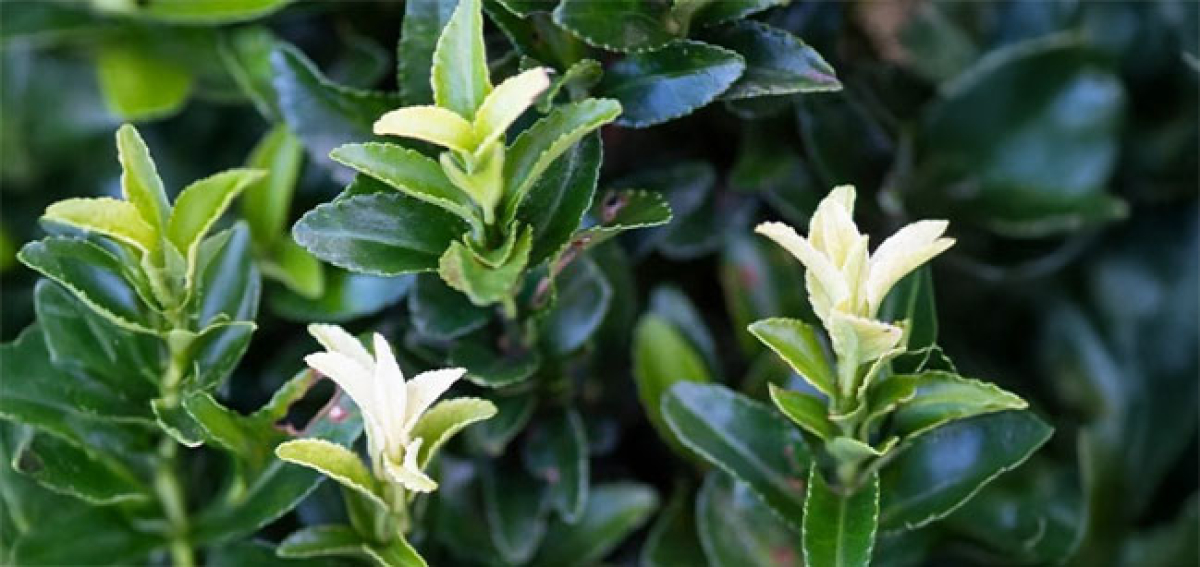
A visually stunning evergreen shrub with a neat upright structure. The new growth emerges greenish white before gradually ageing to a rich, deep emerald. A diverse plant, this plant grows in full sun to partial shade.
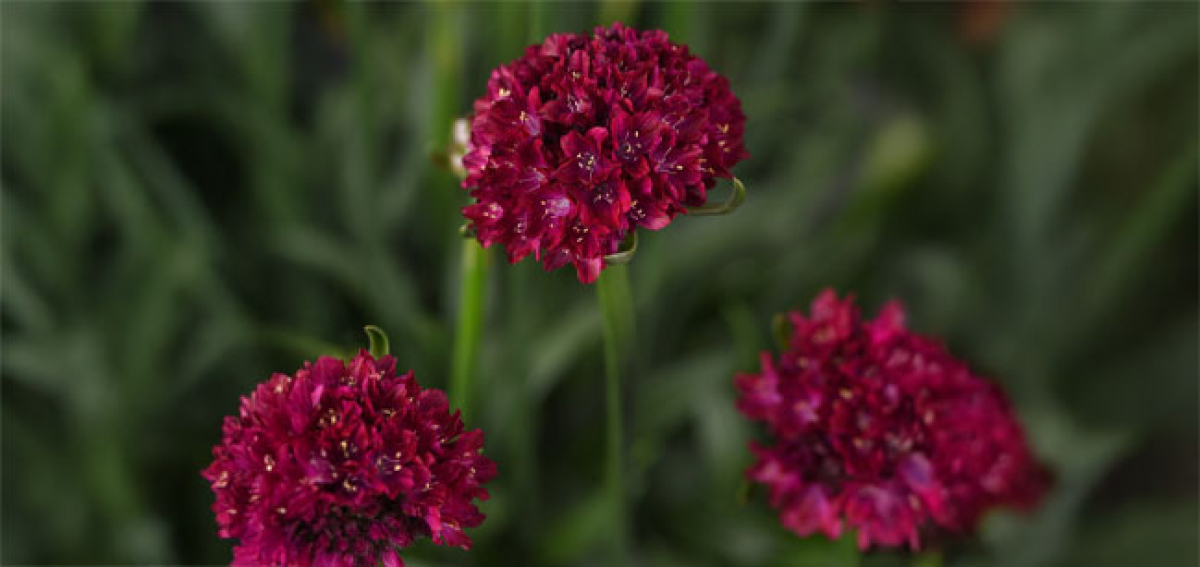
A hardy coastal species with dense clump-forming foliage and bearing clusters of pink, red, white or purple pom-pom blooms. The Armeria ‘Dreameria’ has been cultivated to have an extended flowering period from Spring right through to the first frost.
Download our Exterior Plant Brochure
Our Top Ten plants for an Indoor Living Wall
Indoor spaces require plants that often have to tolerate lower light, humidity, and stable indoor conditions. Here are ideal species for interior living walls:
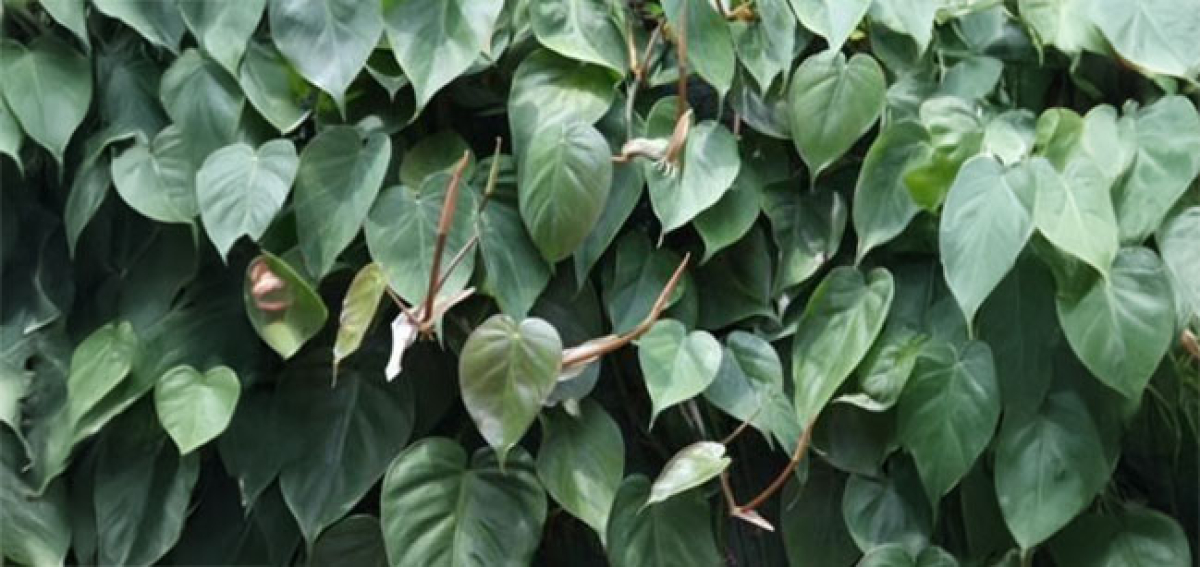
A classic heartleaf climber, adaptable and low-maintenance.
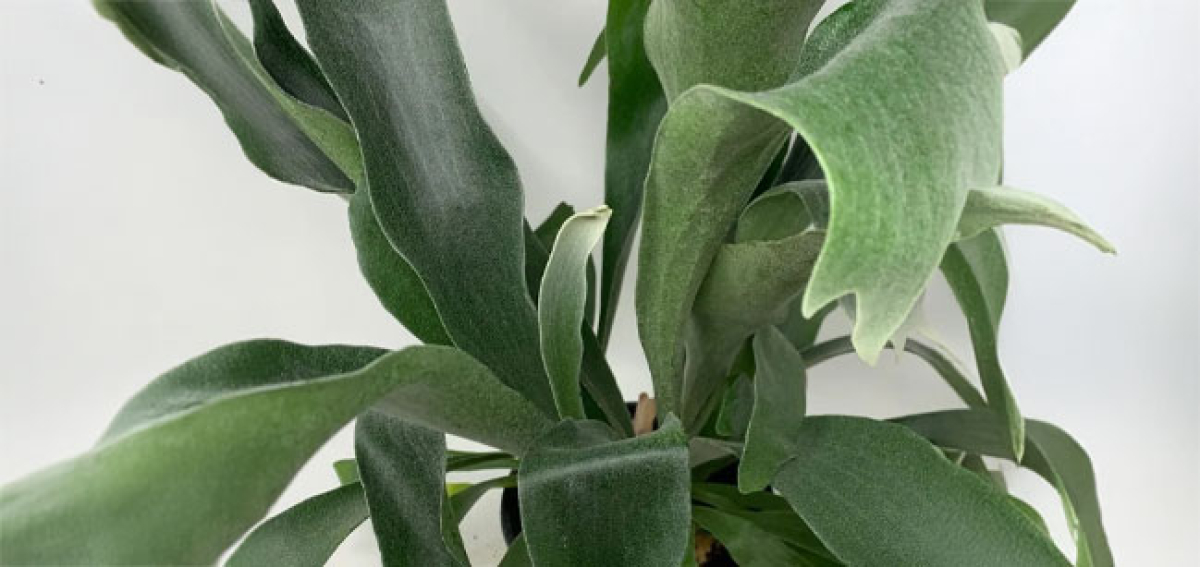
Bold and architectural with foliage that resembles antler prongs; include this epiphytic fern for a bold statement plant.
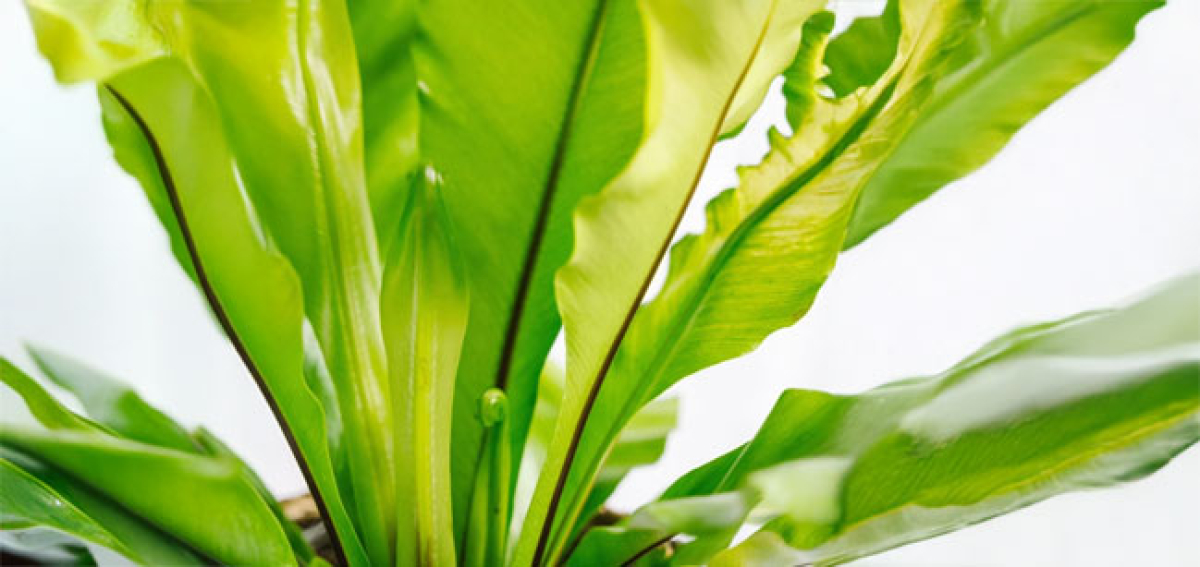
Known for its large, dramatic foliage, these leaves create a statement when light filters through. An epiphytic fern, it is hardy and well-suited to living walls.
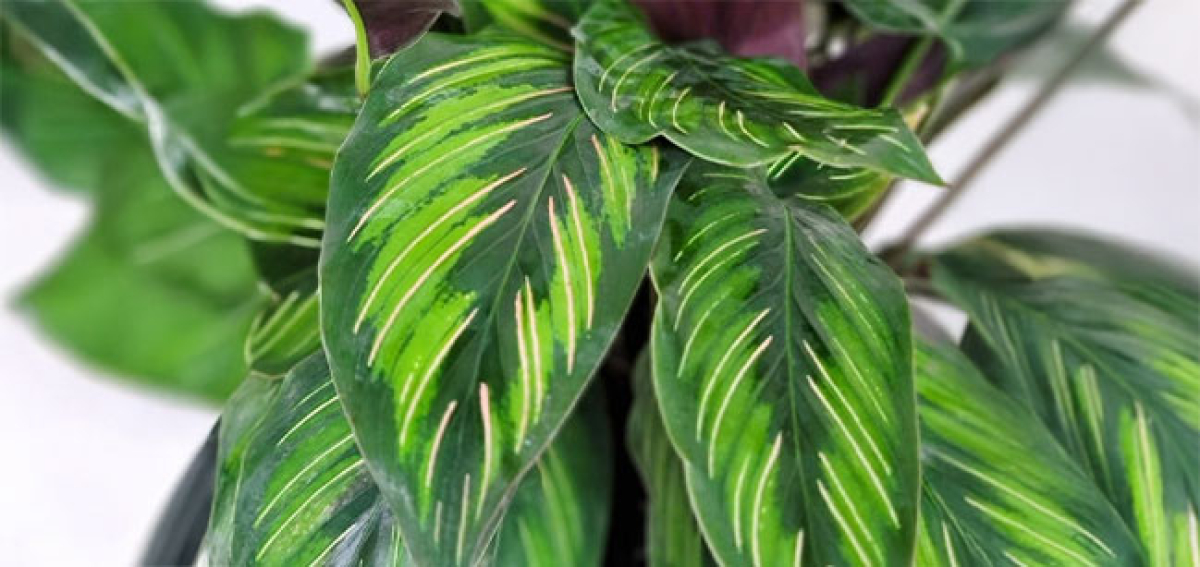
A striking plant know for its dark green leaf edges and vibrant green center, overlayed with intricate silver stripes, and a reddish purple underside; this plant brings pattern onto living walls!
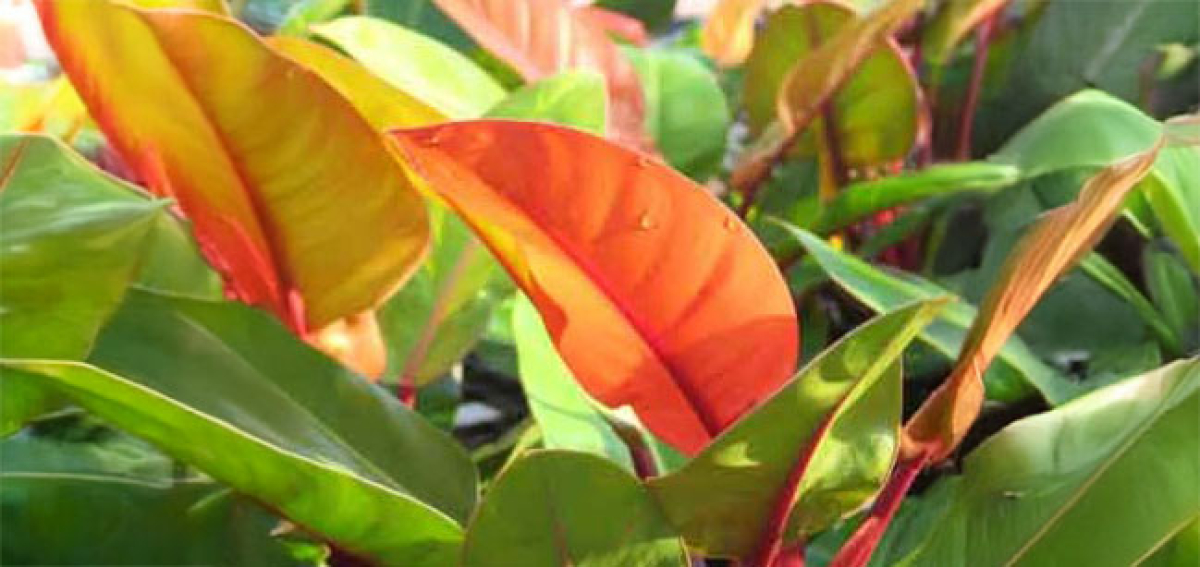
A vibrant non-trailing Philodendron with spectacular foliage colour changes from orange to yellow to eventually green, creating an hombre effect.
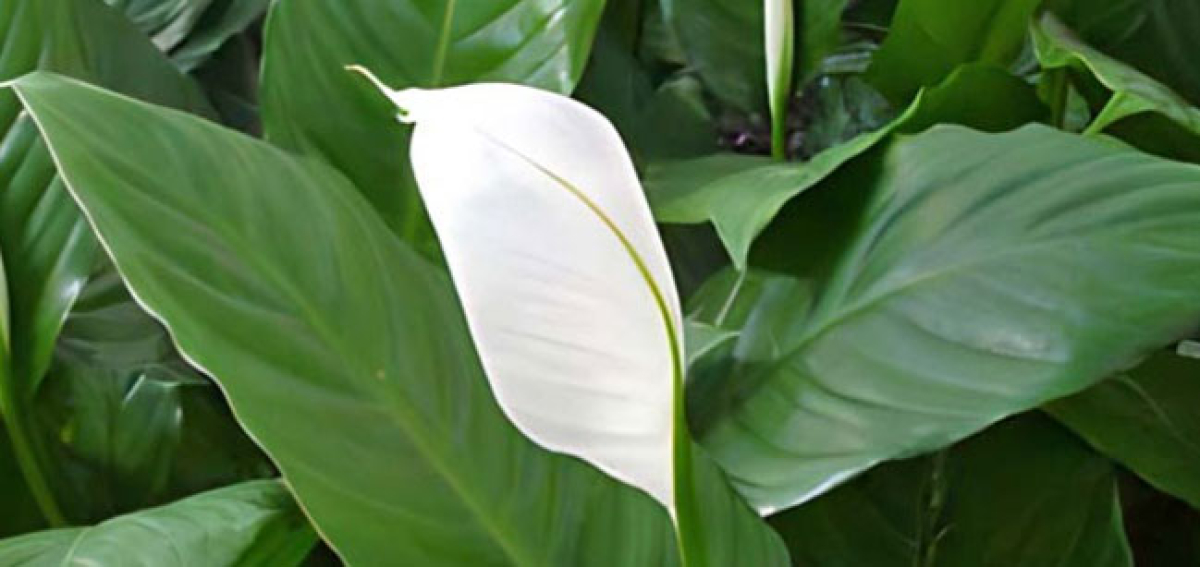
Dark glossy green foliage with graceful white blooms for a touch of elegance.
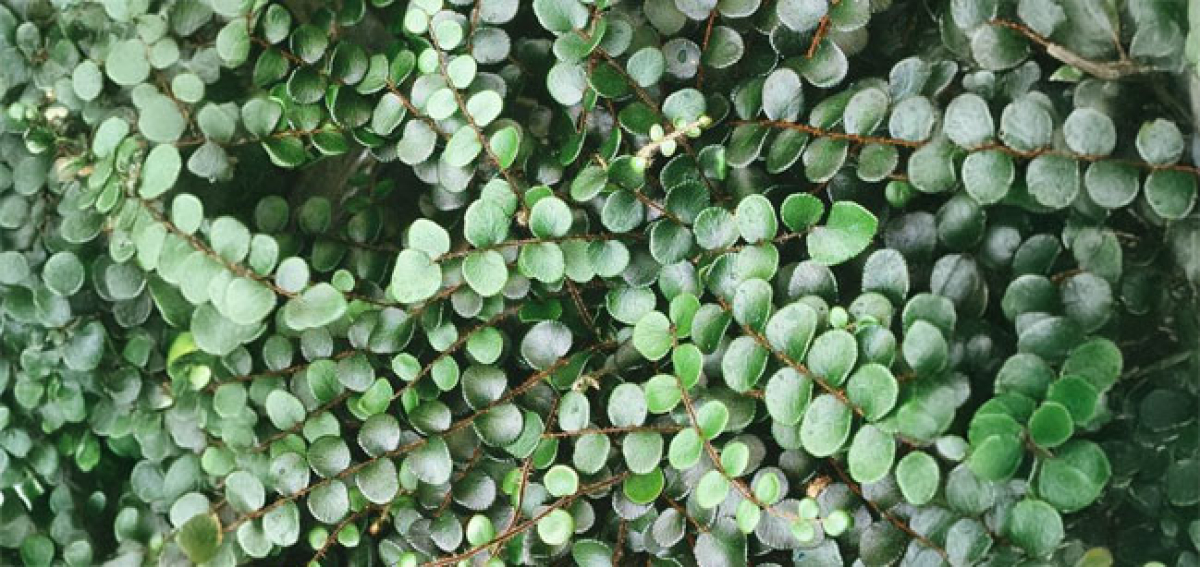
A prostrate fern with small, dark green button-like pinnae on either side of a reddish brown stem that cascades down.
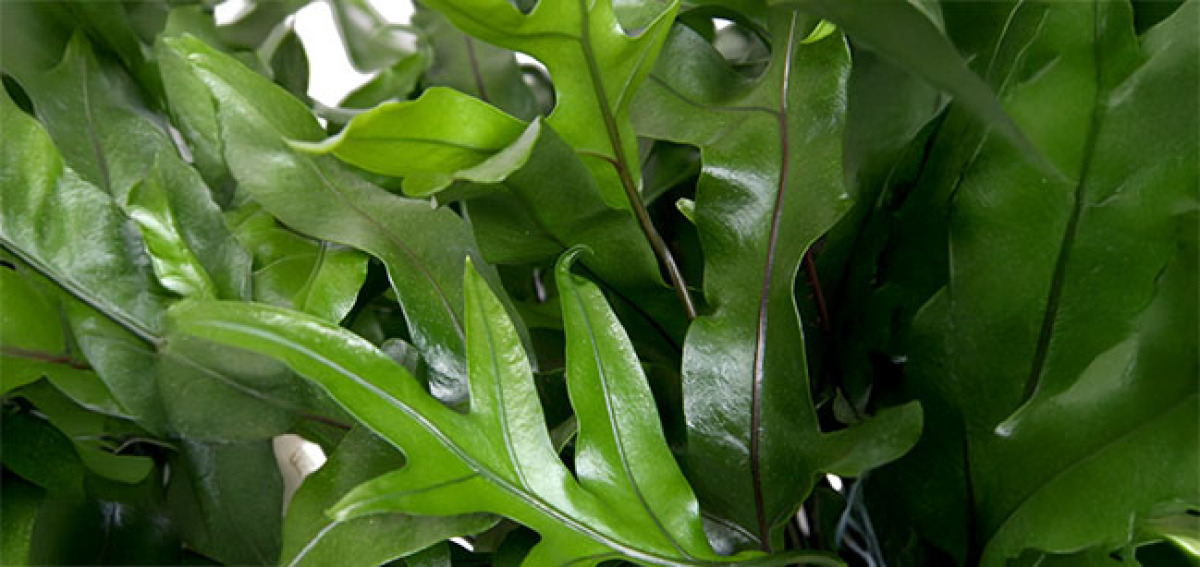
Lush and textured vibrant green foliage with lobes that resemble the feet of kangaroos. This densely growing fern spreads through fuzzy rhizomes that grow along the surface of the living wall structure.
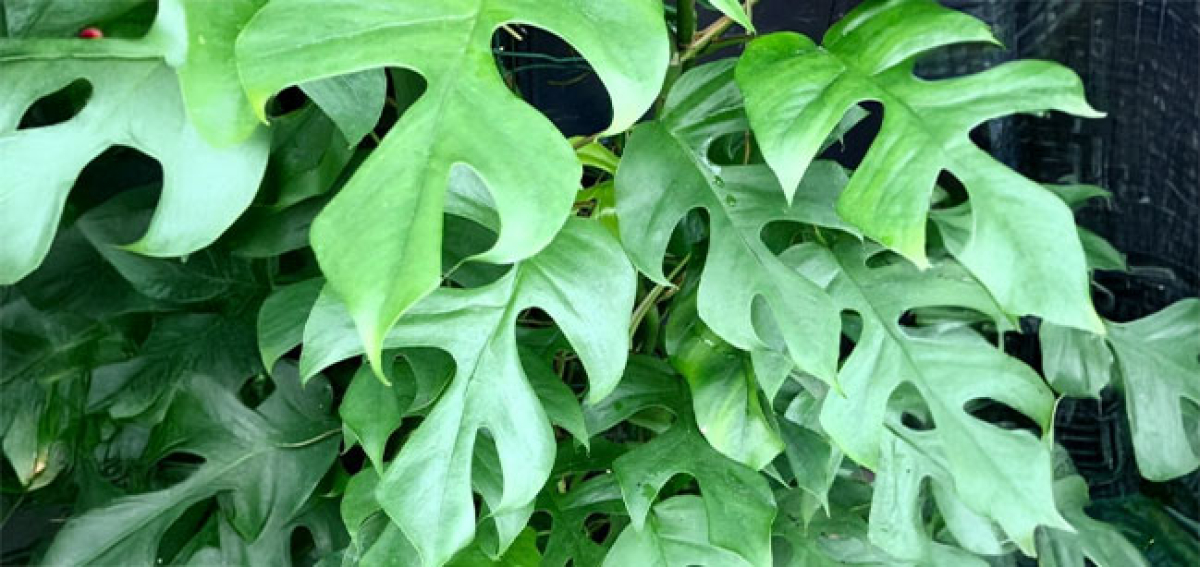
Like monstera, this climbing aroid features the same lobed foliage, however its smaller growth and vining habit are perfect for interspersing amongst other plants on the living wall for an interior jungle.

Srappy blade-like foliage that cascades down, this classic plant adds a sense of softness and texture.
Download our Interior Plant Brochure
Our Top Ten plants for our Living Pillar
To maximise biodiversity and visual impact in these locations, we typically use a combination of perennials and small woody shrubs. The perennials provide nectar and pollen throughout the growing season, while the woody plant structure offers shelter and potential nesting space for birds. Species are selected not just for resilience to wind, sun and shade, but for their ecological value.
Shrubs (Woody Plants for Structure, Shelter & Evergreen Interest)
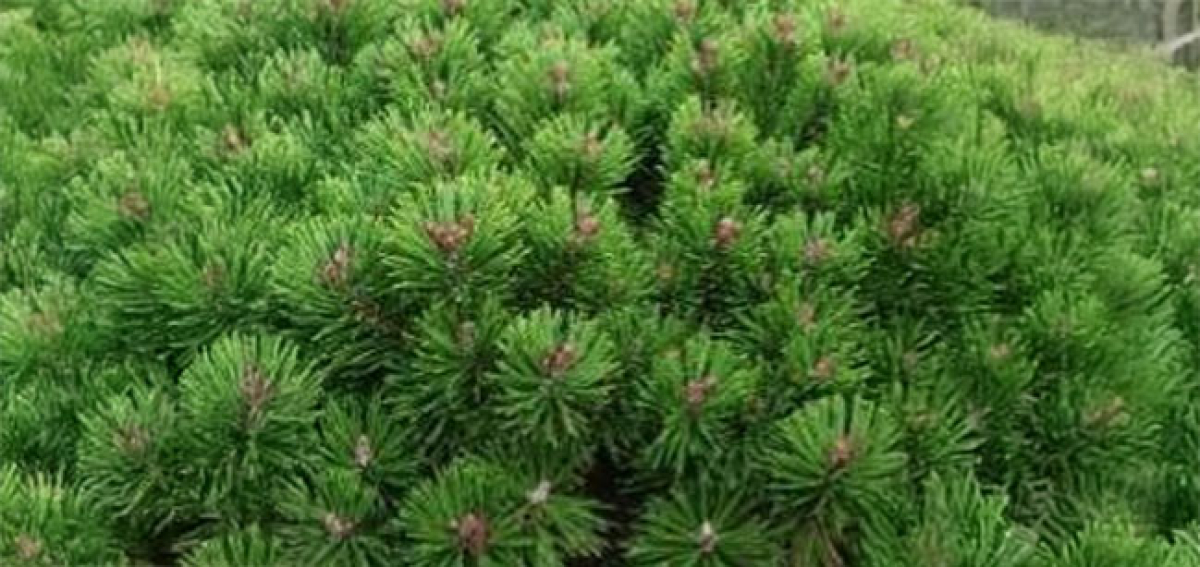
A compact, evergreen conifer with dense needles and a strong architectural shape. Offers winter interest and excellent wind tolerance — ideal for exposed locations.
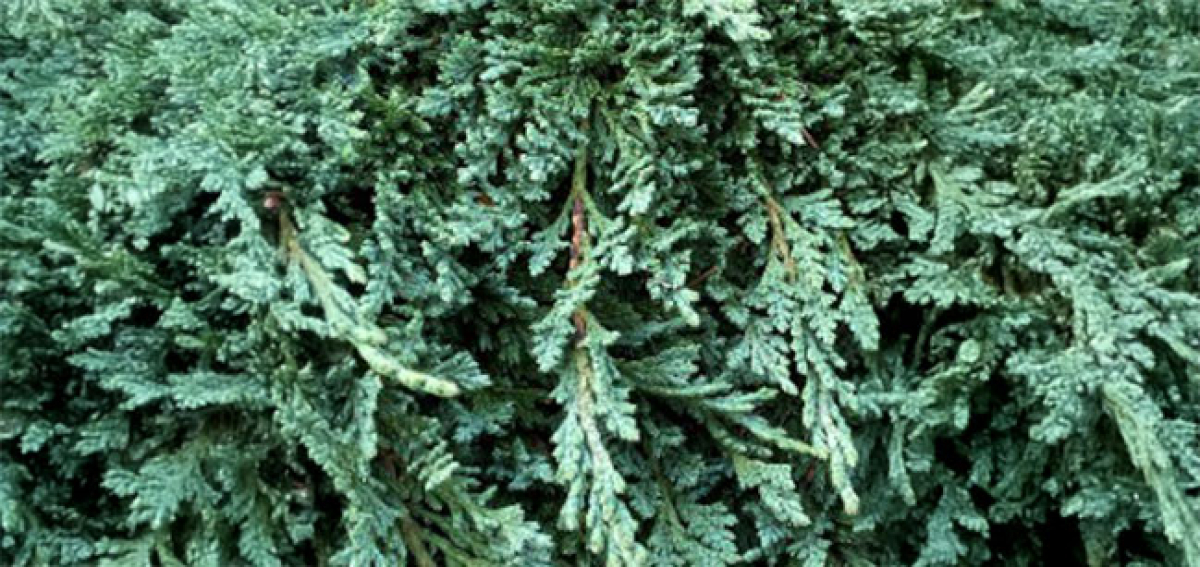
A compact, evergreen coniferous shrub with a trailing habit with cool bluish-green foliage. This junipers cascades like a waterfall! For a green cascading juniper, try Juniperus horizontalis ‘Prince of Wales’.
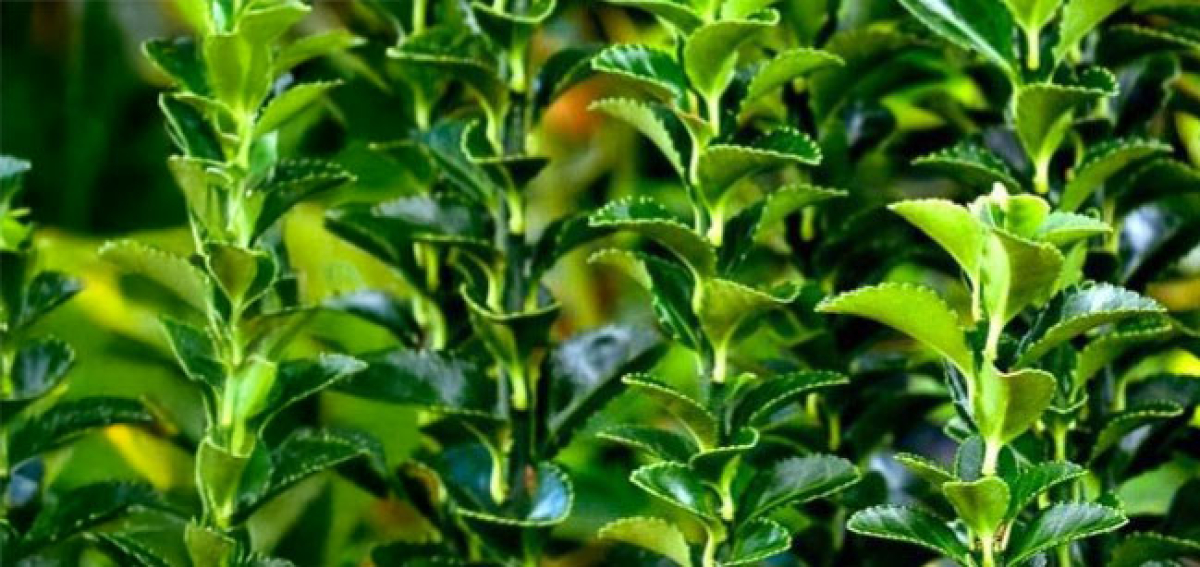
A structured, neat upright growing habit, this evergreen shrub is perfect for providing support to deciduous grasses and perennials, whilst also being a green foliage backdrop for vibrant flowers from surrounding plants.
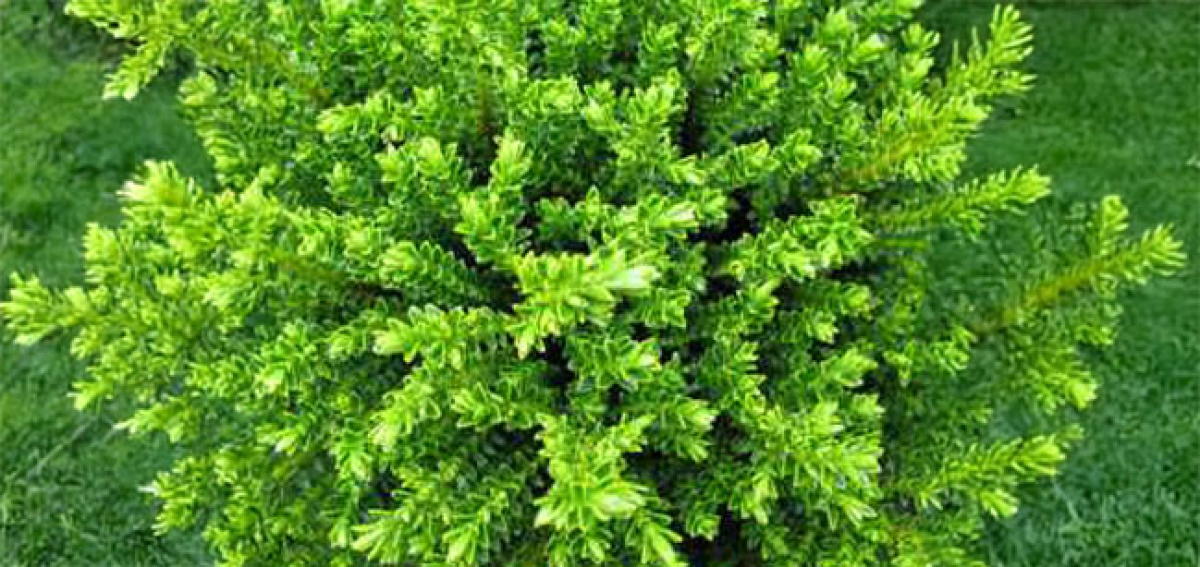
Growing into a small, compact globe of tiny evergreen foliage this slow forming evergreen is tough with low maintenance.
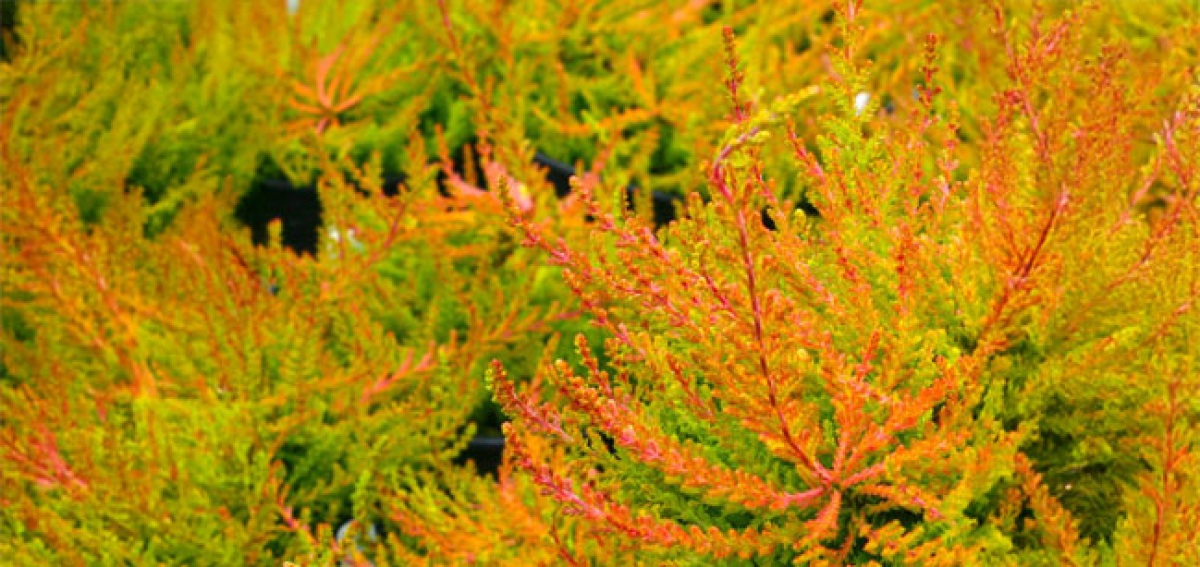
Available in a range of flowers and foliage variants, this hardy evergreen native shrub typically flowers from Summer through to late Autumn. The late flowering period of heather makes this plant highly valuable to pollinators. Some favourites cultivators include ‘Beauty Ladies’ range, ‘Wickwar Flame, ‘Firefly’ and the prostrate variety ‘White Lawn’.
Perennials (Seasonal Colour, Texture & Nectar for Pollinators)
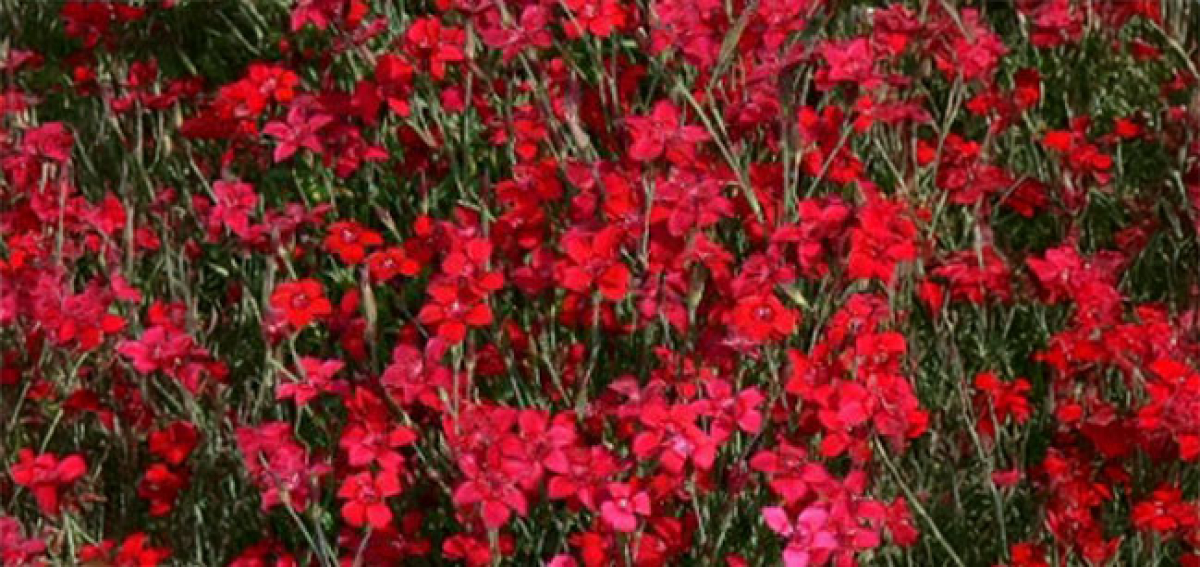
An evergreen perennial forming a mat of green foliage, with clusters of cerise, deep crimson, pink, or white flowers May to July. A truly hardy plant that thrives in full sun to half a day. Some varieties include Dianthus deltoides ‘Albiflorus’, ‘Arctic Fire’, ‘Brilliant’, ‘Flashing Lights’, and ‘Rosea’.
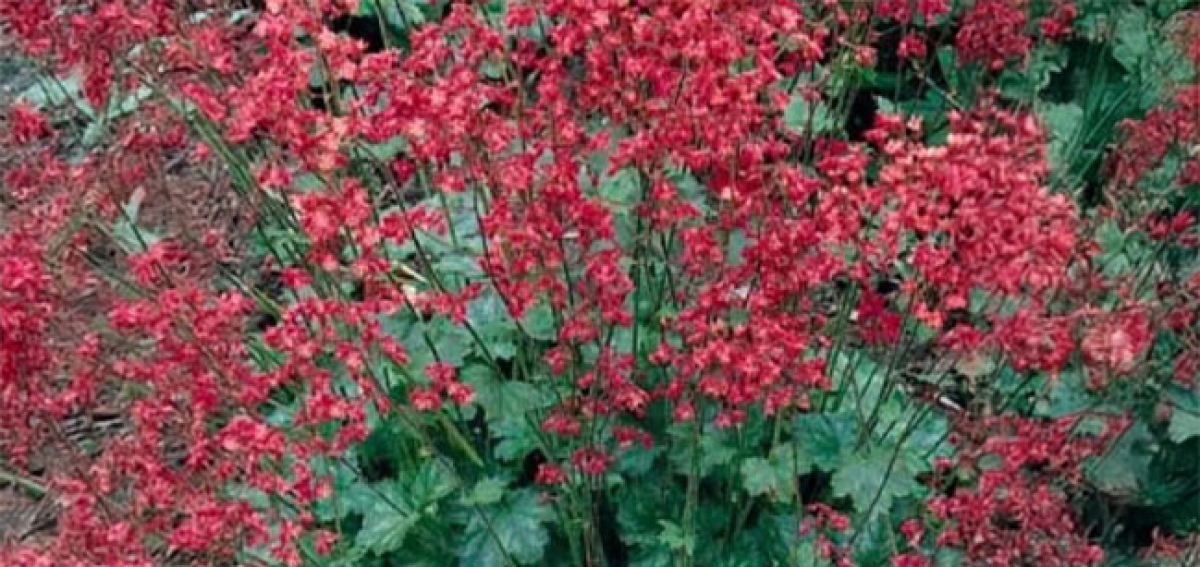
Evergreen perennial with sprays of small, vibrant coral flowers that float like clouds above mounds of dark green foliage. A fantastic perennial for sun or shade that provides pollen for hoverflies and bees.
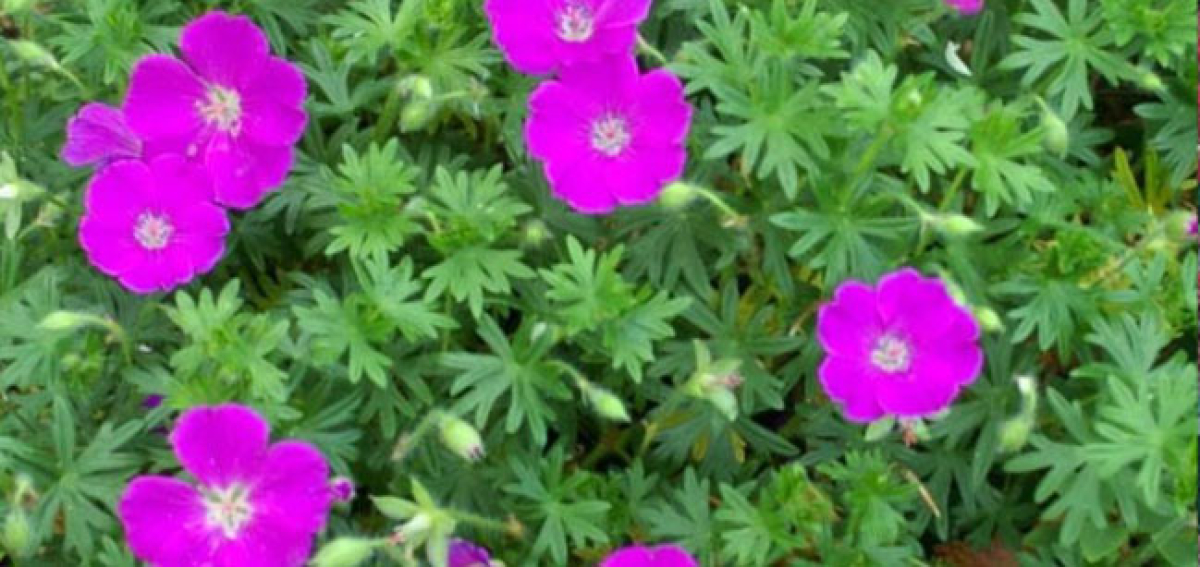
Hardy woodland native geranium with pink, purple or white flowers and attractive foliage. Long flowering and tolerant of a range of conditions.

A hardy, deciduous shrub with a densely growing habit that requires trimming on the pillars, however, it is well worth the maintenance. Clusters of white flowers set against three lobed foliage that is bright green in Spring/Summer before a brilliant red display in Autumn.
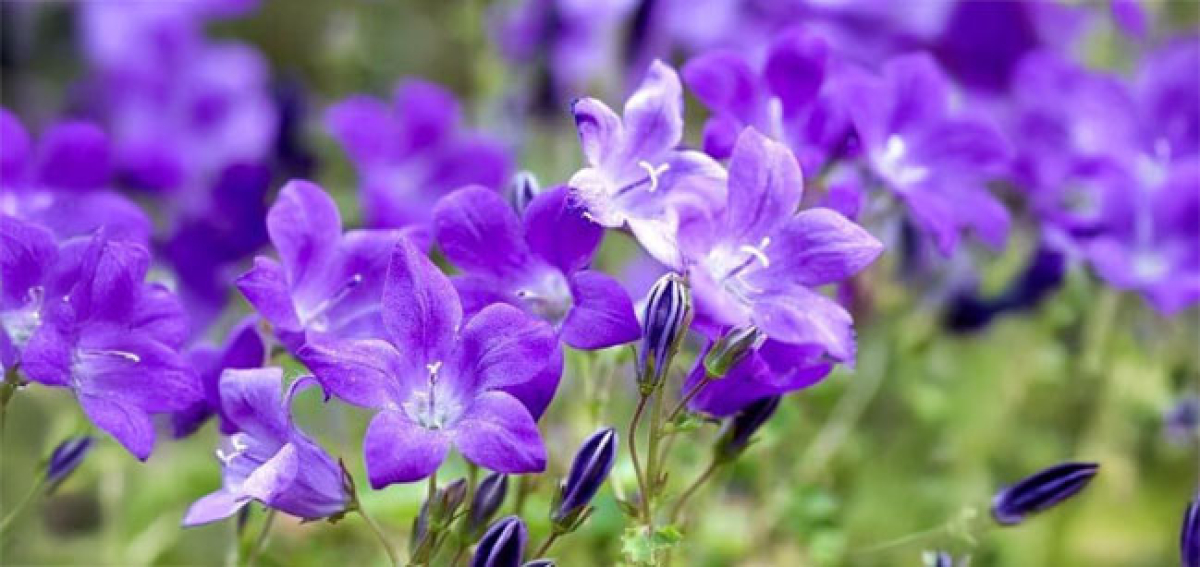
Starry or bell-shaped flowers in shades of blue, violet or white. Loved by pollinators and provides bursts of seasonal colour.
Download our Living Pillar plant brochure
Best Living Wall Plants for Biodiversity
With our drive to improve biodiversity levels in cities, we will always recommend a planting palette to encourage pollinators. A growing number of clients, especially architects and developers, are seeking solutions that support biodiversity net gain. The following green wall plants help support bees, butterflies, and urban wildlife in all our external installations:
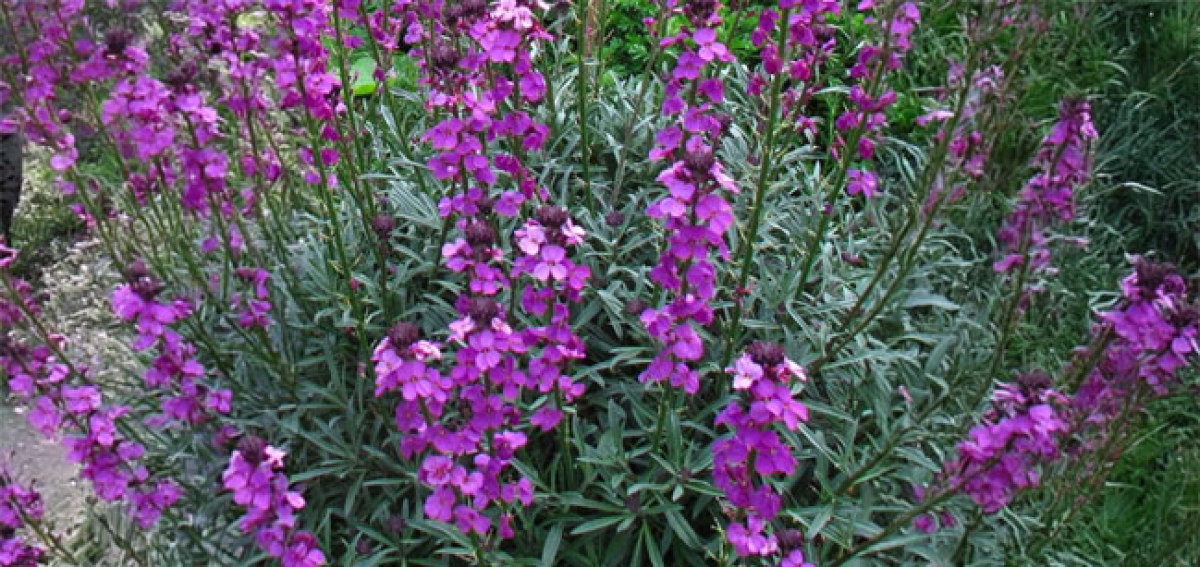
Long-flowering and bee-friendly. Its almost year-round blooms provide a reliable nectar source when other plants are scarce, helping sustain pollinators through spring, summer and autumn.
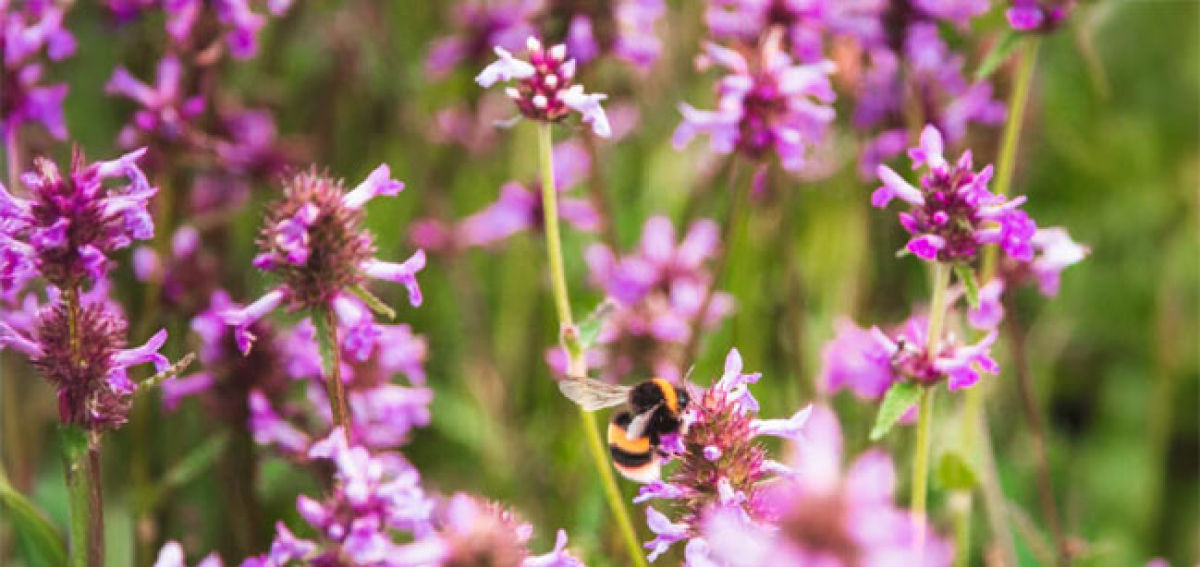
Native plant with purple-red flowers that is particularly valuable for bumblebees and solitary bees, and its long flowering season ensures a steady food supply.
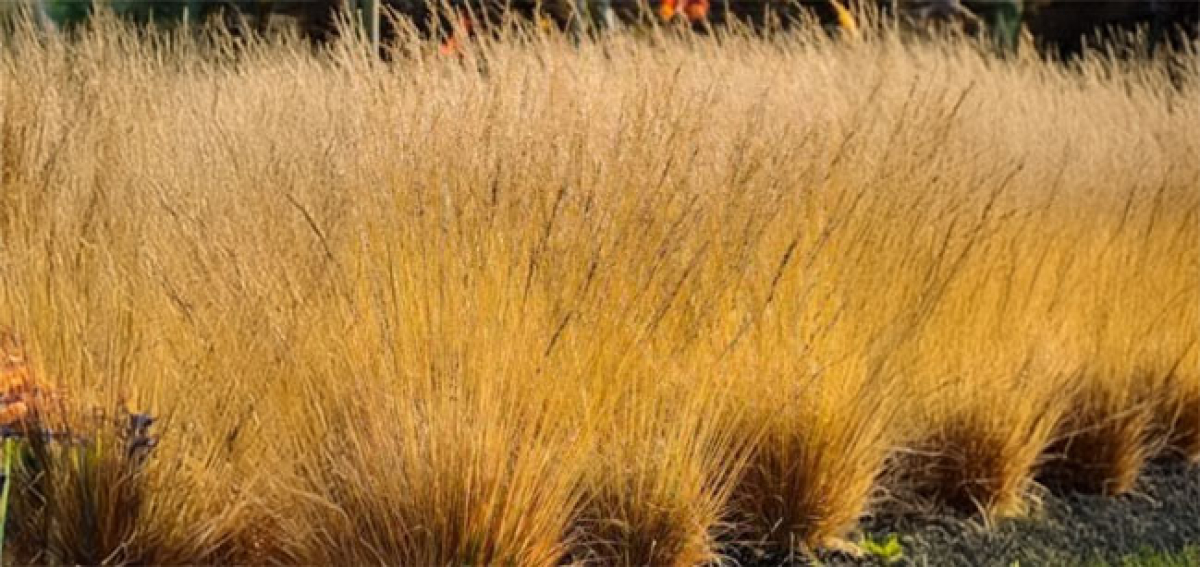
UK native grass that is particularly good for butterflies, moths and caterpillars, providing habitat. The dense tussocks also create shelter for overwintering insects, enhancing microhabitats within a living wall.
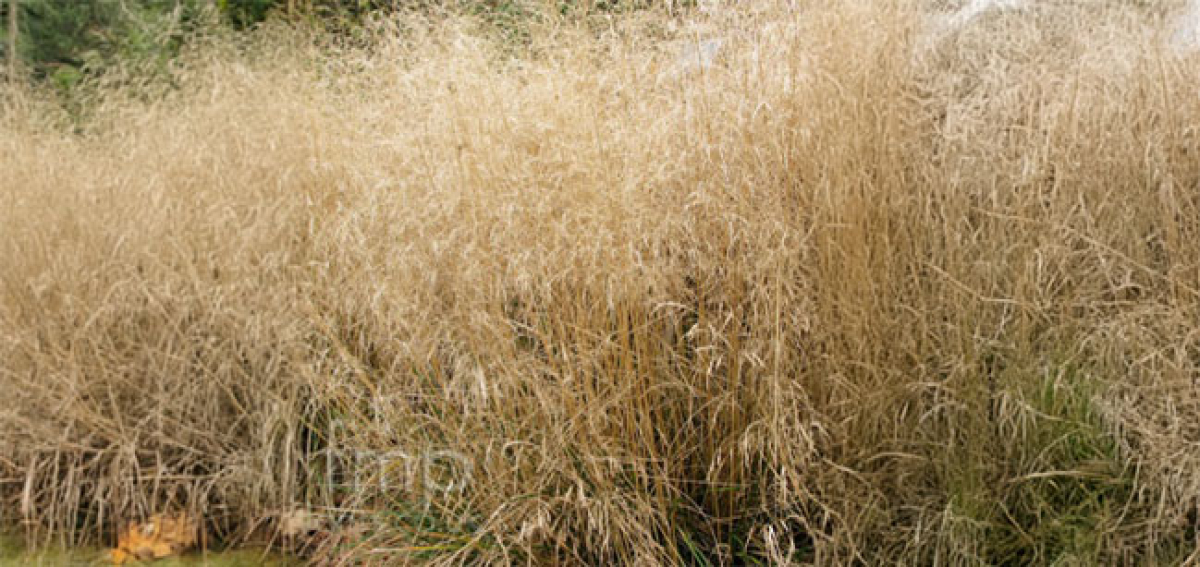
Native seasonal grass that provides habitat for moths, butterflies and caterpillars. Its airy seed heads attract seed-eating birds, making it beneficial across different levels of the food chain.
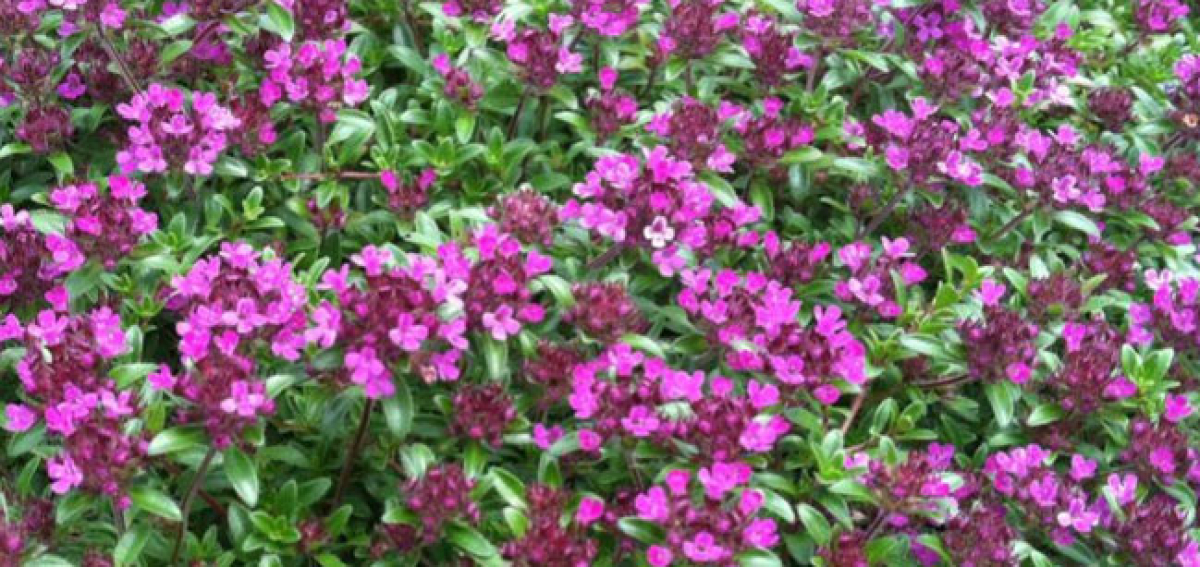
Fragrant thyme attracts pollinators. Its nectar-rich flowers are especially popular with bees and hoverflies, supporting pollination in urban landscapes.
Bellflower with a cascading habit. The starry violet flowers are highly attractive to bees, and their trailing form creates nesting niches for beneficial insects.
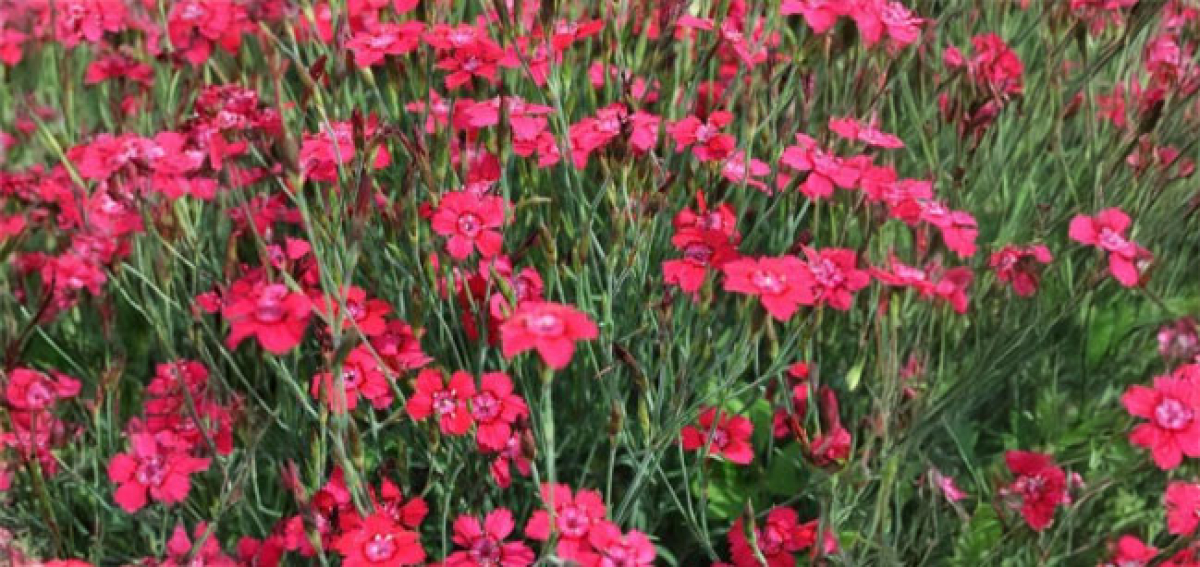
Bright pinks, reds, whites and cerise that thrive in sun. These low-growing flowers are excellent for butterflies, offering both nectar and resting spots in warm microclimates.
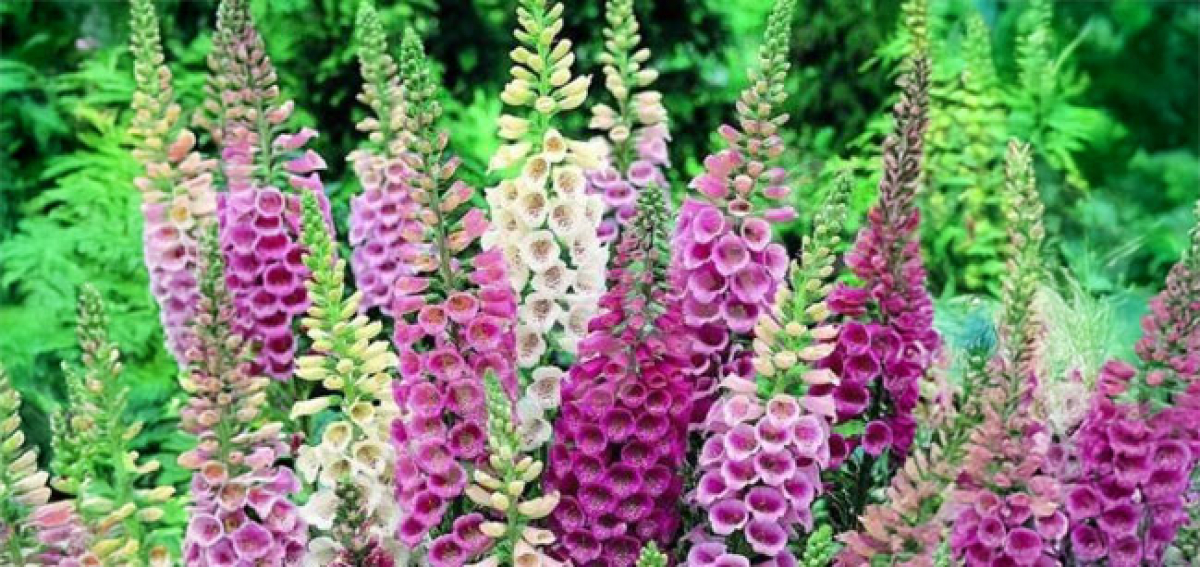
A wildflower classic supporting long-tongued bees. The tubular blooms are perfectly shaped for species like bumblebees, making it a keystone nectar plant in biodiversity planting.
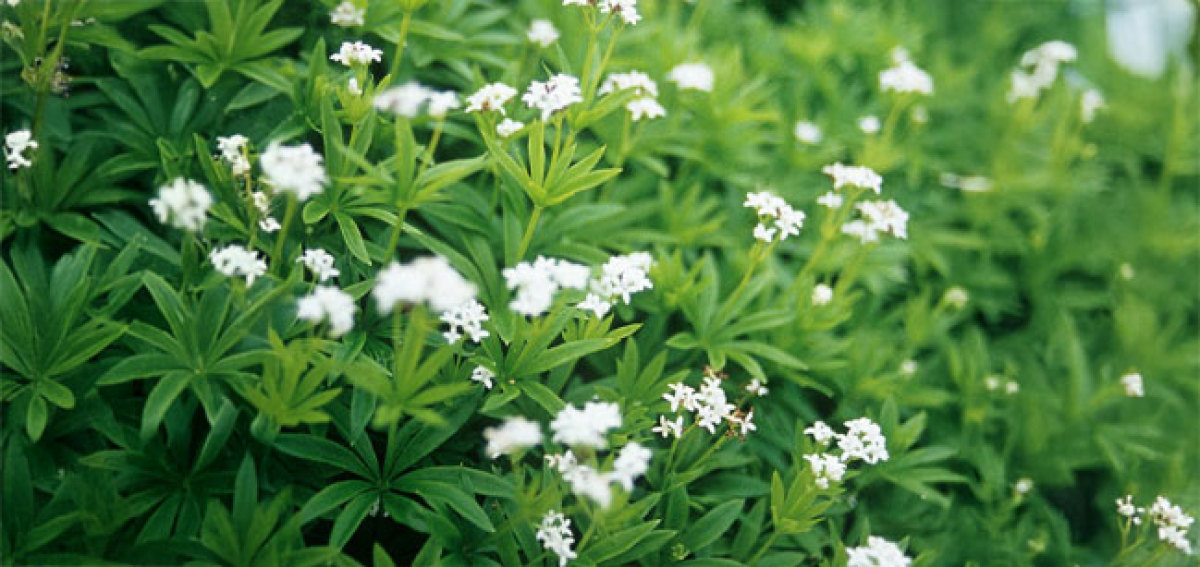
Shade perennial with white highly fragrant flowers. Its groundcover habit offers shelter for beetles and other invertebrates, while its flowers provide nectar in shadier living walls.
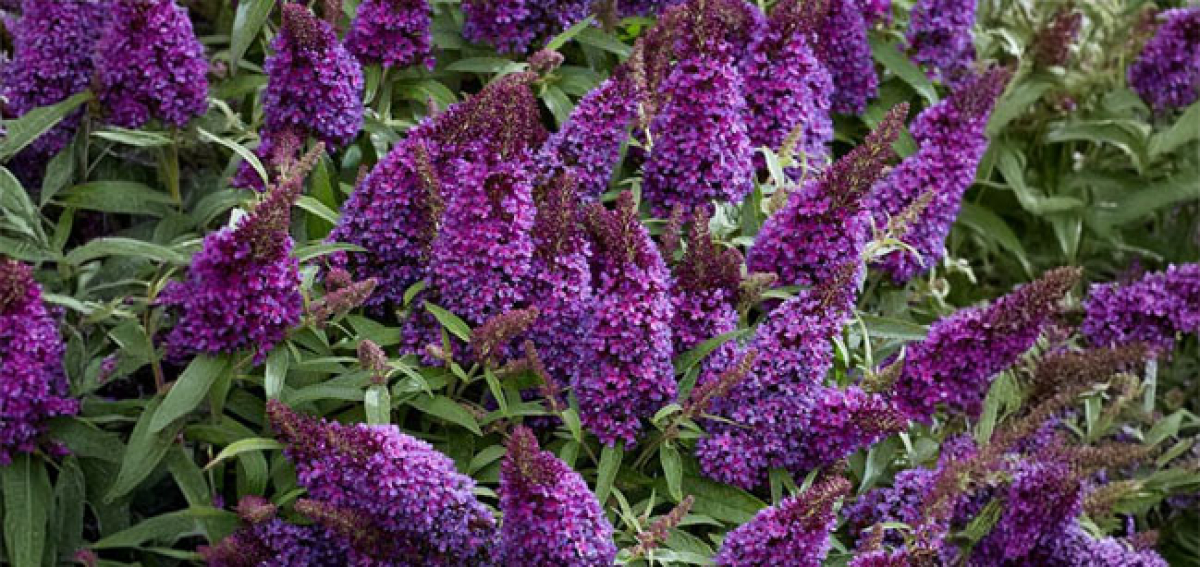
Dwarf compact buddleja available in a range of colours. Known as the “butterfly bush,” its nectar-rich flowers attract butterflies in abundance, while compact forms are perfect for space-limited living walls.
Download our Interior Plant Brochure
Download our Exterior Plant Brochure
Living Wall Plants for Lower Maintenance
By choosing slow-growing, robust species that require less horticultural attention, it is possible to keep maintenance costs in check. It is important to note that two horticultural visits per annum will still be required, and remote monitoring to ensure the health of the Living Wall.

Colourful foliage, low upkeep. Their semi-evergreen leaves stay attractive year-round with little need for trimming, making them easy to manage in living walls.
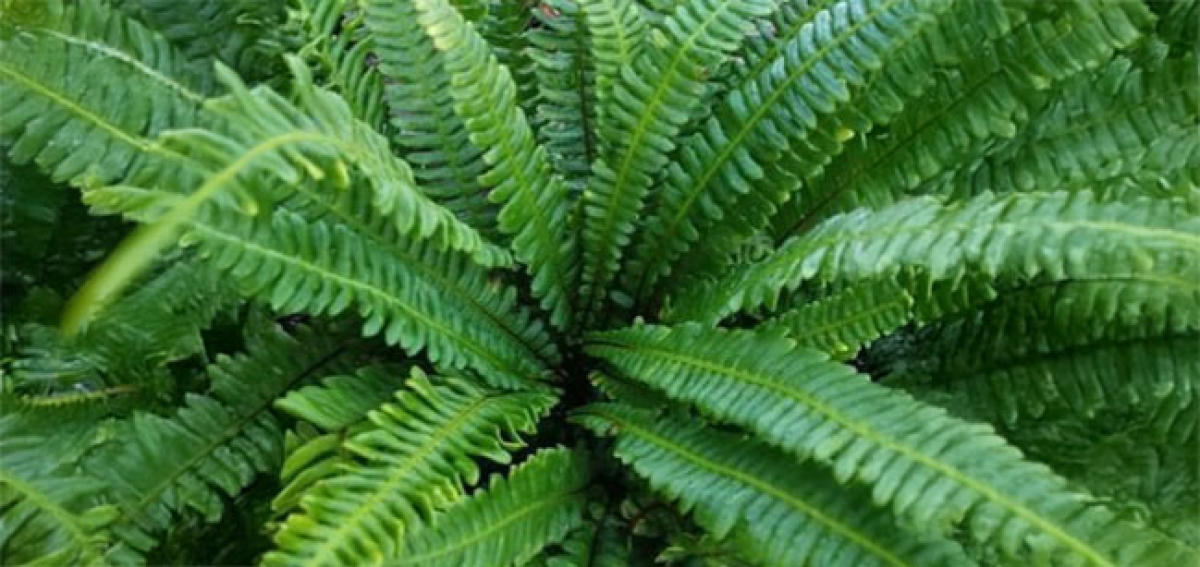
Evergreen shade fern with a rosette shape. Once established, it needs minimal intervention, as its tidy growth habit naturally resists pests and diseases.

An unusual plant with coppery red to brown foliage and an upright habit. Great for windswept landscapes or for a contemporary, elegant design. This grass thrives without deadheading and tolerates neglect, making it a reliable, low-input choice.
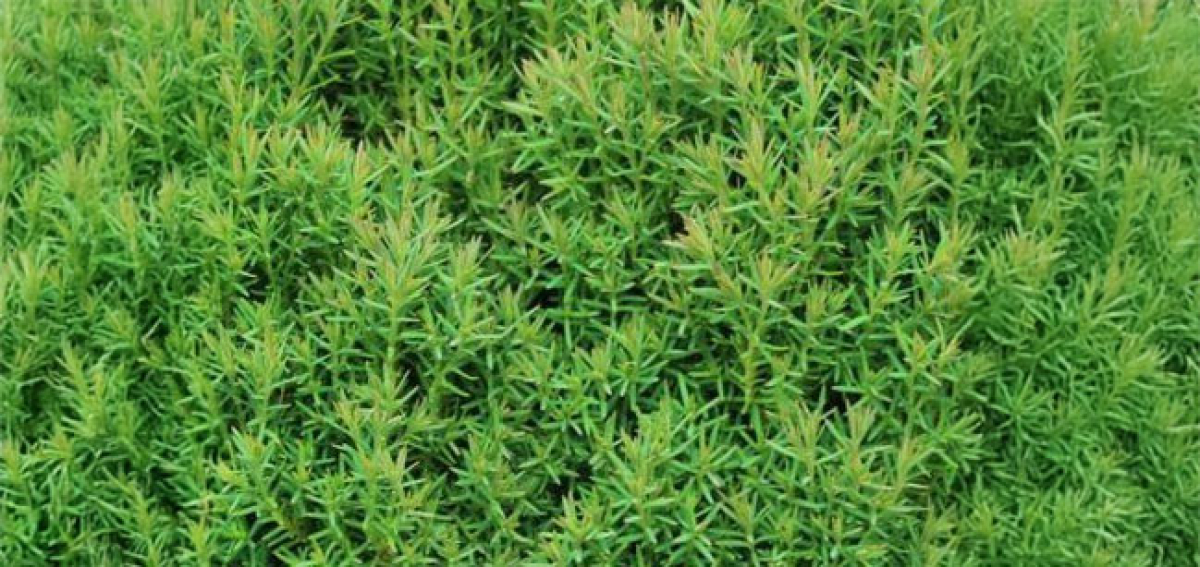
Evergreen dwarf conifer with a soft texture, growing in a neat ball. Its naturally compact form requires no pruning to maintain shape, keeping maintenance to a minimum.
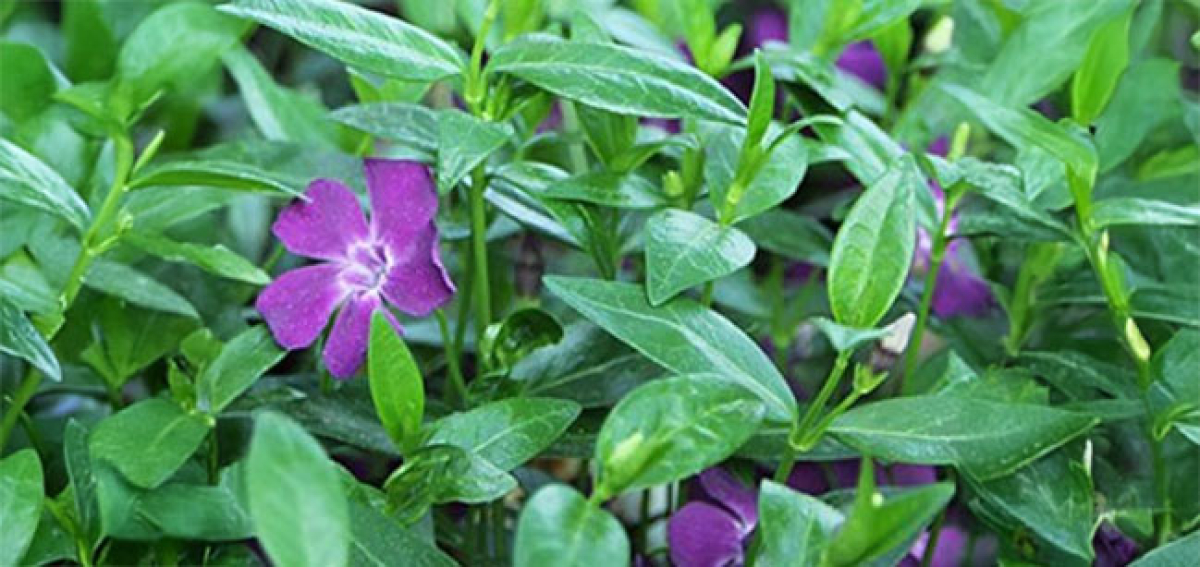
Self-sustaining and covers ground quickly. It suppresses weeds effectively, reducing the need for regular intervention or upkeep.
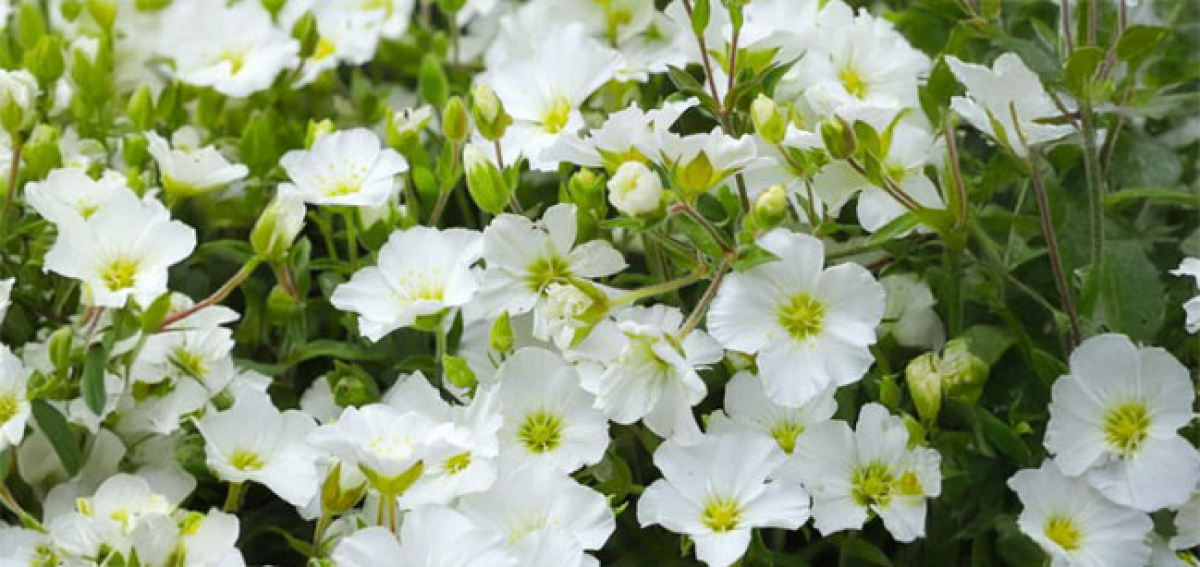
Resilient, evergreen groundcover with white flowers in summer. It tolerates poor soils and requires little more than occasional watering, making it very easy to care for.
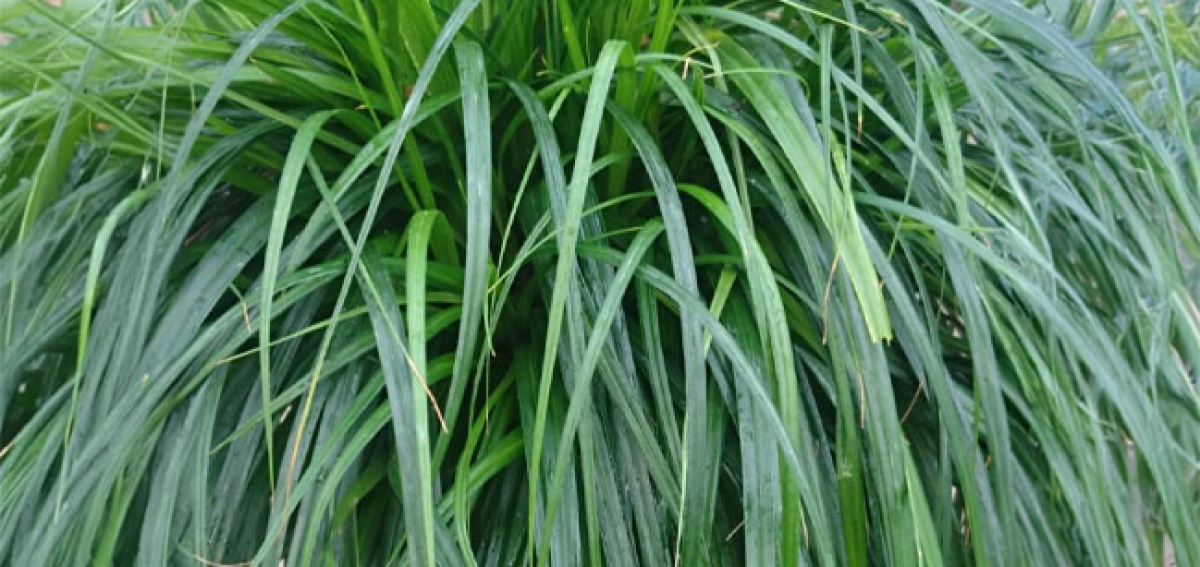
Green ornamental grass with soft cascading habit for shade to semi-shade. It stays neat without trimming and adapts well to varying conditions, ensuring effortless maintenance.
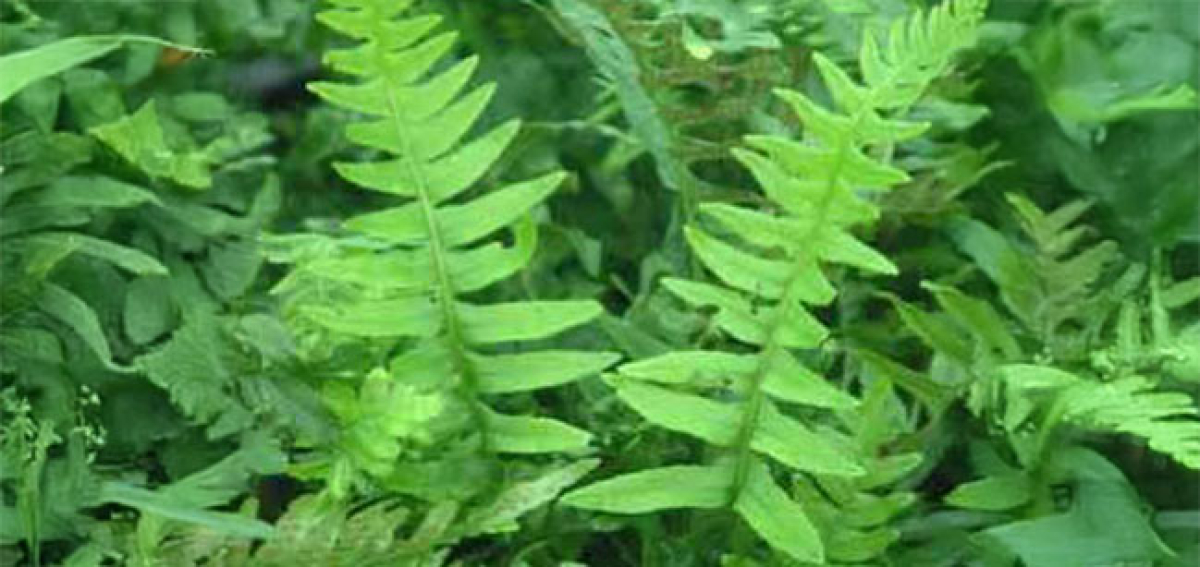
Thrives in tricky spots and will tolerate higher amounts of sun than other ferns. Being highly resilient, it asks for little attention once settled, making it ideal for low-care planting schemes.
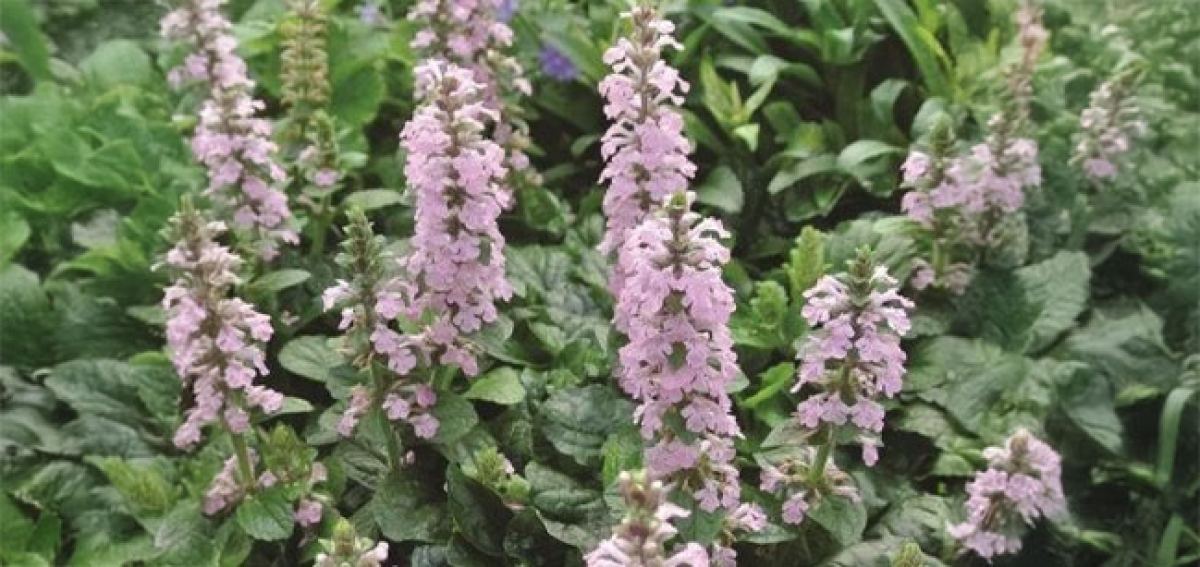
Evergreen trailing plant with flower spikes. It spreads steadily but not aggressively, forming groundcover that reduces the need for weeding or extra planting.

Needs no trimming or deadheading. This hardy ornamental grass retains its shape and colour year-round, requiring virtually no care beyond the occasional tidy-up.
Download our Interior Plant Brochure
Download our Exterior Plant Brochure
Let’s Get Your Living Wall Right from the Start!
Whilst this guide has been compiled to provide information on the best plants that we have researched and trialled for living walls, the most successful projects don’t start with plant lists; they start with plant design.

Living Wall Design CGI
At Scotscape, we work closely with our clients to understand the unique conditions of every site and develop a bespoke scheme that integrates the right plants, irrigation system and structural support.
Every site is different, in light levels, exposure, access, and goals. That is why we carry out a sunlight study and micro climate study on each project to help us curate a carefully designed planting scheme.
Whether you’re greening an interior for a healthier workplace, enhancing a development with direct greening, or meeting biodiversity targets with an outdoor living wall or LivingPillarⓇ, our design team ensures the planting design meets your goals and is built to last.
- Over 18 years of hands-on experience
- Unmatched plant knowledge from real-world trials
- Fully integrated sensor-driven irrigation systems and sustainable maintenance
- BNG-ready and biodiversity-friendly options
- Flexibility to include large shrubs, evergreens, and even small trees